
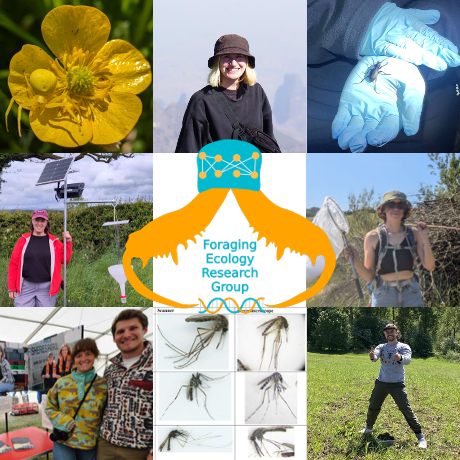
It’s been another busy month, with plenty of fieldwork underway, some new faces and some nice new outputs! Read below for all of the recent updates, some other things we’d like to share and a foraging logic puzzle to keep you busy!
New FERGers
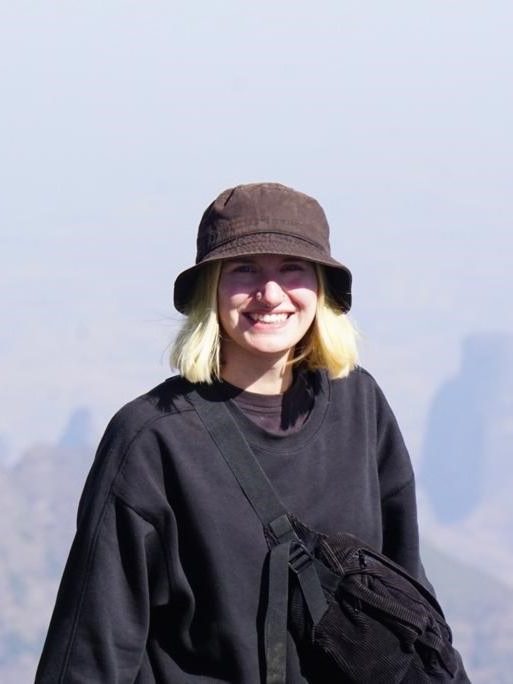
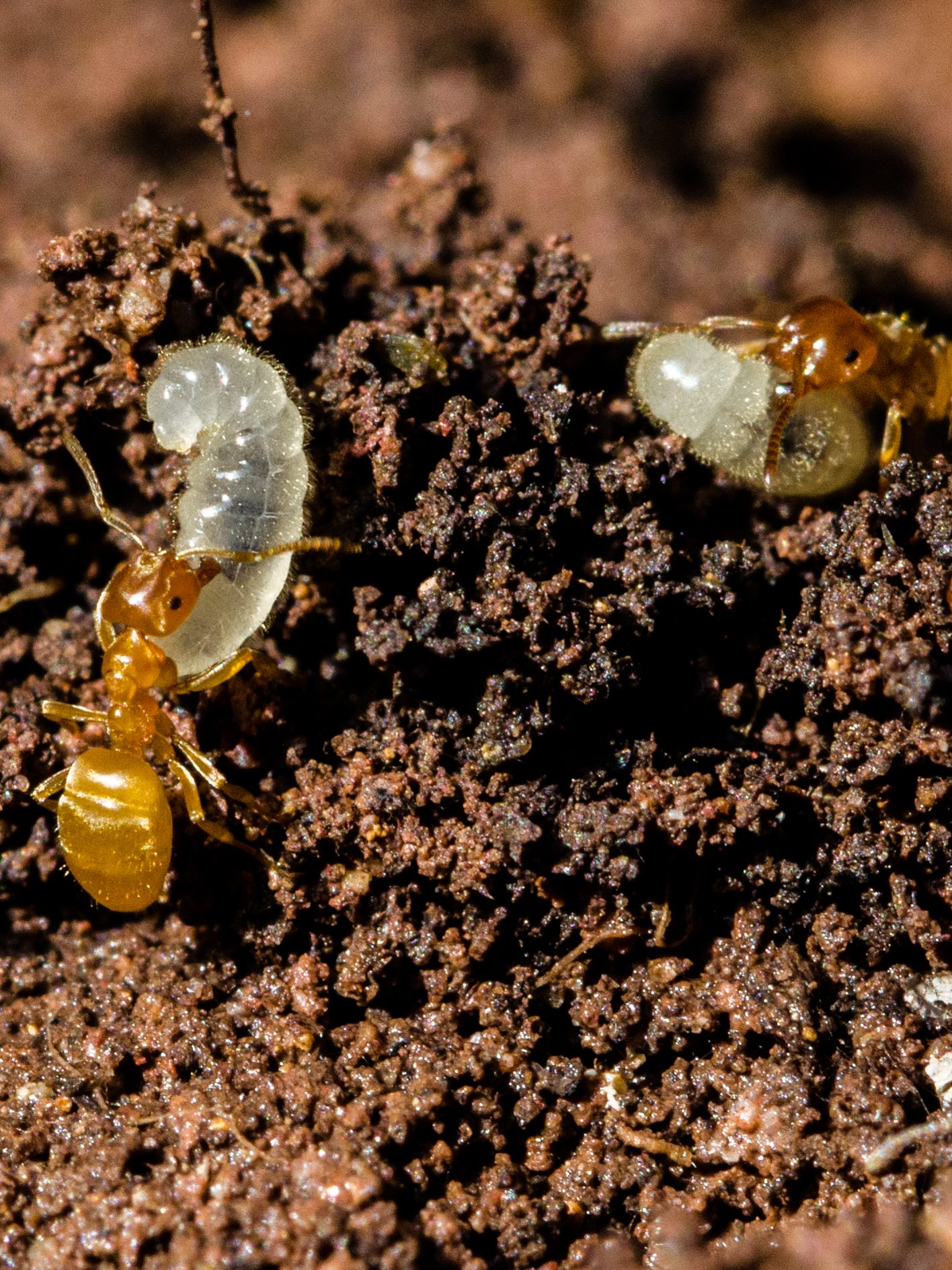
We have the immense pleasure of welcoming Eva Benkhoff to our ranks! Eva is primarily based at the Czech Academy of Sciences working with Petr Klimeš, but will be joining us in Newcastle to do some molecular work too. Until then, she is off to a busy start collecting ants and spiders from leaf litter in Taiwan for her project, titled “Impacts of drought on the community structure of ants and spiders in subtropical leaf litter and their food web interactions.”
Outputs and outcomes
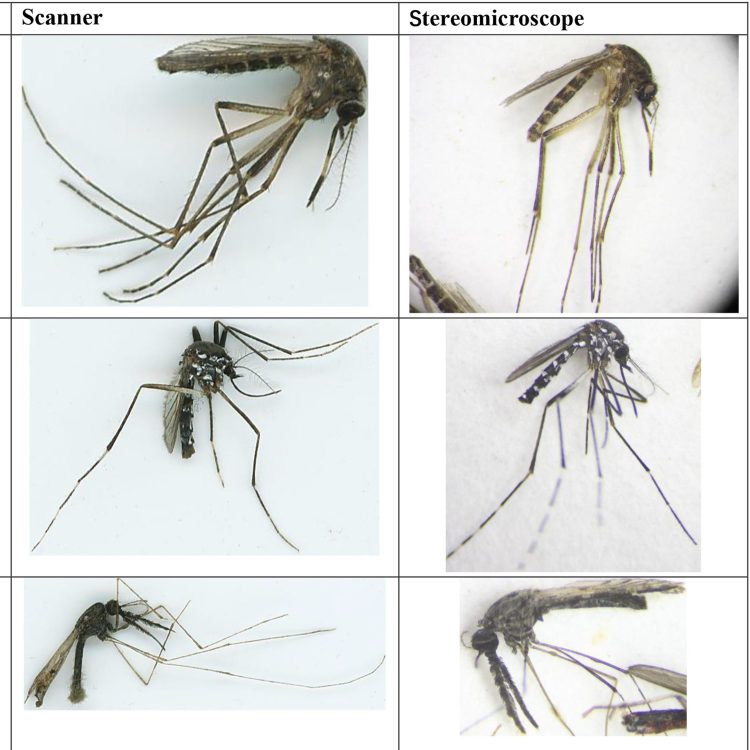
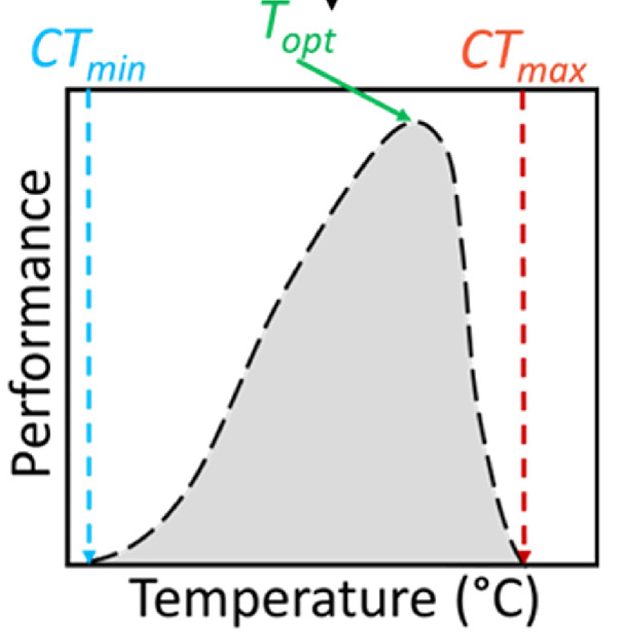
Some excellent outputs and other bits of news have come through in the last month! A new paper Jordan helped out with was published in the journal Current Research in Parasitology & Vector-Borne Diseases and presents a novel flatbed-scanner-based approach to imaging insect communities for deep learning-based identification. Will also published a paper on ant thermal limits in the Journal of Thermal Biology from his time at Cardiff University, which demonstrates some exciting ways of investigating invertebrate thermal biology! We have another couple of papers that were accepted recently and coming through to share very soon!
Rosy launched her ‘Spider Spies’ outreach scheme this month, which has been going very well! Check out the dedicated web page for it and consider sending in any records and even spiders if you live far south enough! Using photographic records, alongside existing natural history observations and field data that Rosy is herself collecting, Rosy will be exploring the range of commensal interactions between crab spiders and flowers, and how this is likely to drive ecosystem services and disservices by the spiders.

Ainsley was featured in Fishing News after presenting the Pride in the Seas II
photographic exhibition at the annual Cromer Crab and Lobster Festival! The exhibition is a call for reflection and action on problems and prospects for the inshore fishing industry. There was also a separate drop-in session for fishermen to give their views on the challenges they face (including being heard by policy-makers) as part of a series around the English coast which will feed into a Symposium for Inshore and Smallscale Fisheries which will take place this autumn within the university. Ainsley did well to compete for attention against people dressed as larger-than-life crustaceans!

FERG in the wild
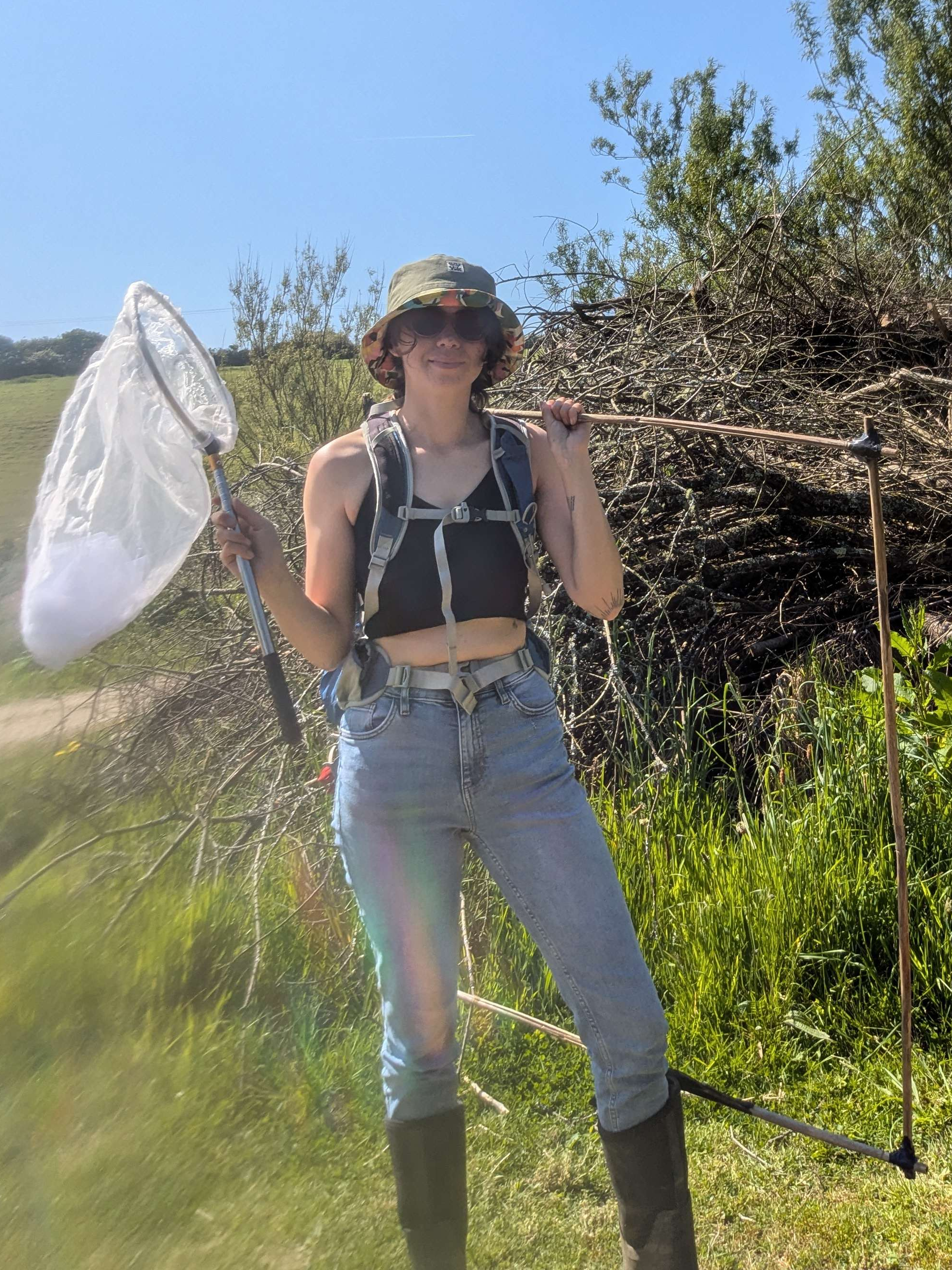
It’s been another busy month out in the wild! All sorts of exciting field experiments have been starting up! Linked to the Spider Spies project above, Rosy started fieldwork looking for crab spiders in Cornwall. She is collecting these camouflaged critters for molecular gut content analysis, but also looking at how a range of ecological processes shape these interactions, from nutrition and floral diversity, to competition and second-order interactions. It’s all going great, with plenty of spiders coming home to Newcastle at the end of the month!

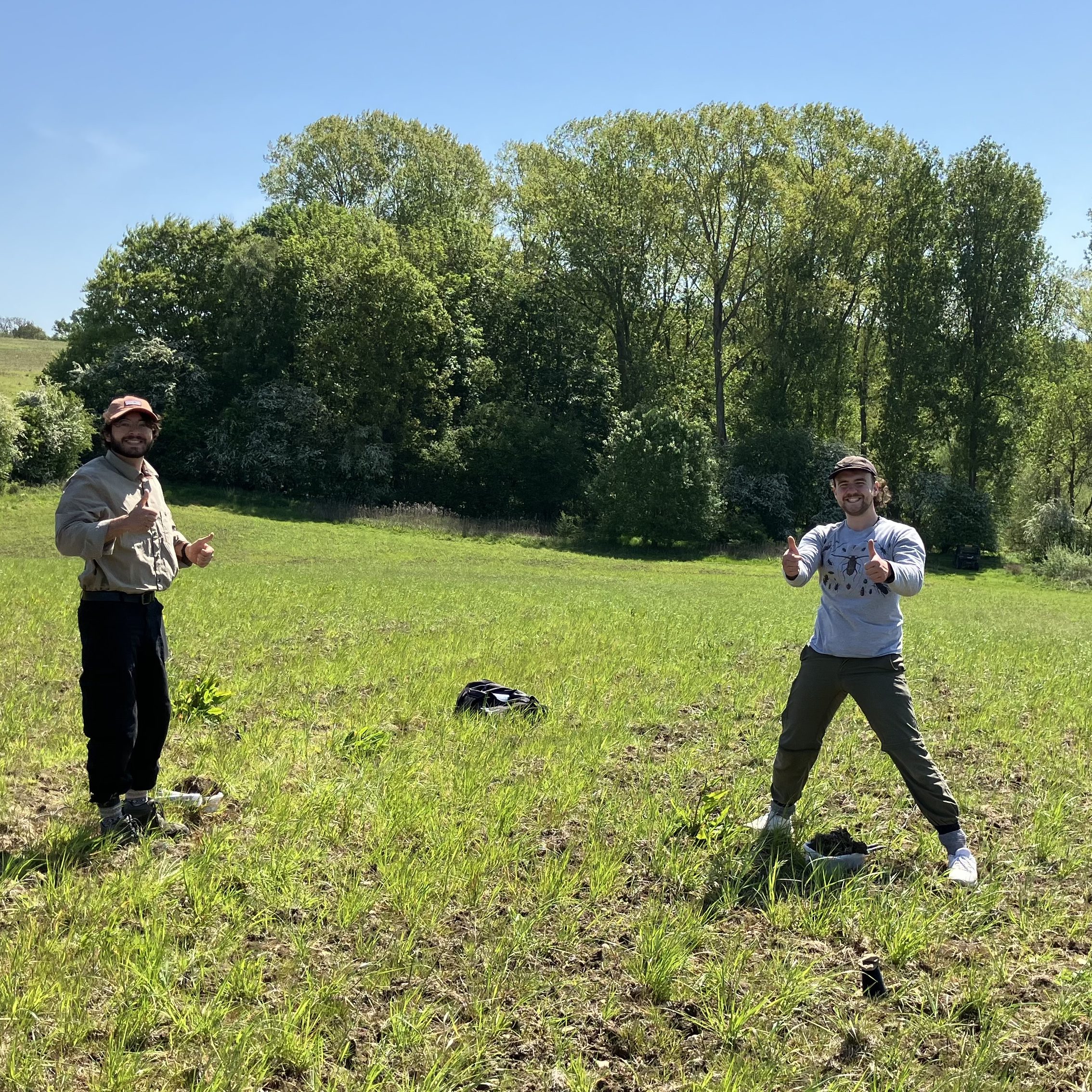
Will also started fieldwork for not one but two of his experiments (in consecutive weeks no less)! Will has been setting his soil ecoacoustics kit up at Newcastle’s long-term Palace Leas to look at year-round changes in soil communities and how long-term fertiliser applications may impact them. In parallel, he’s been using the same equipment to establish some potential long-term monitoring at Fera Science’s Bog Hall rewilding site to assess how the soil fauna of different habitats respond to rewilding. All of this has already begun to generate loads of samples and data, which Will has made a great start on!
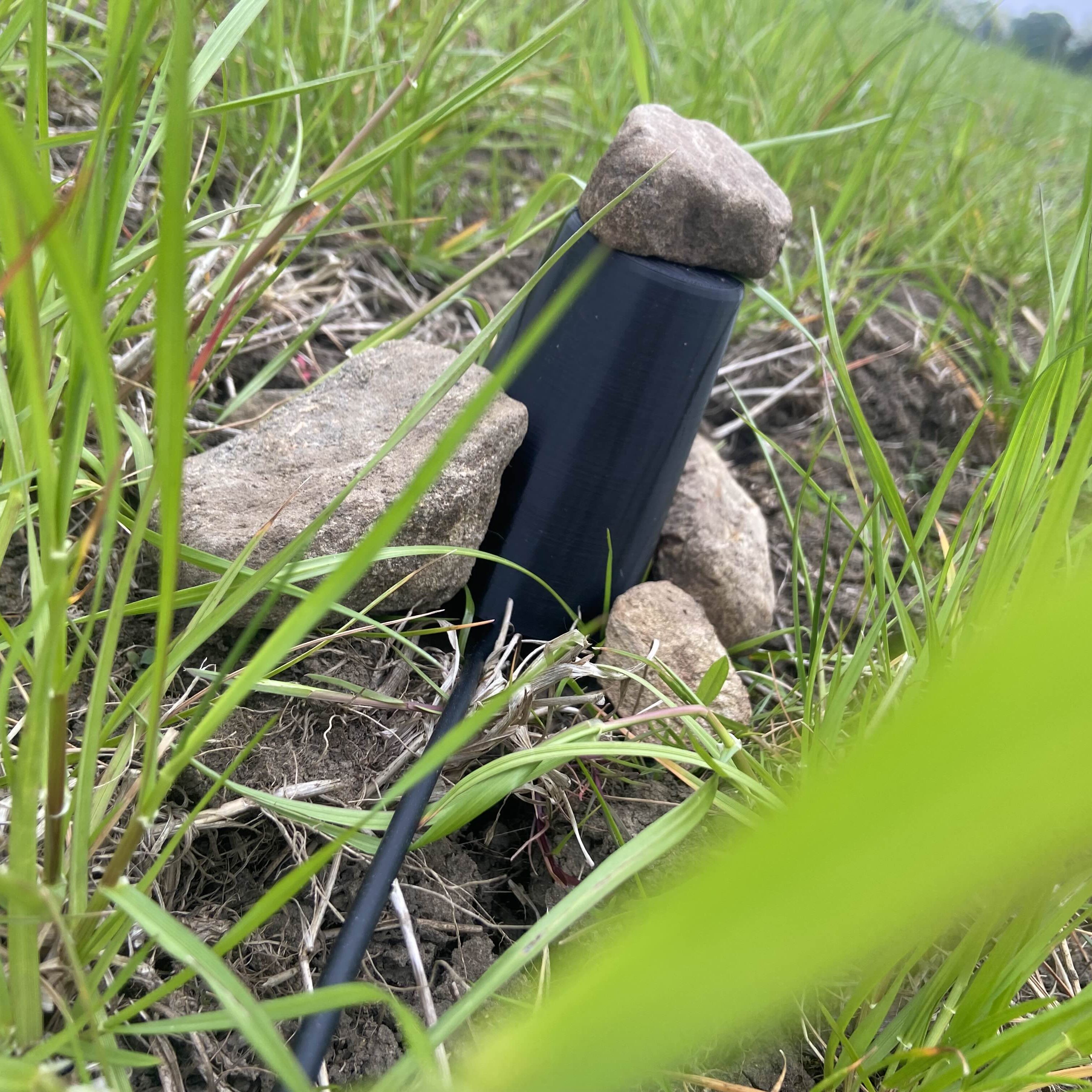
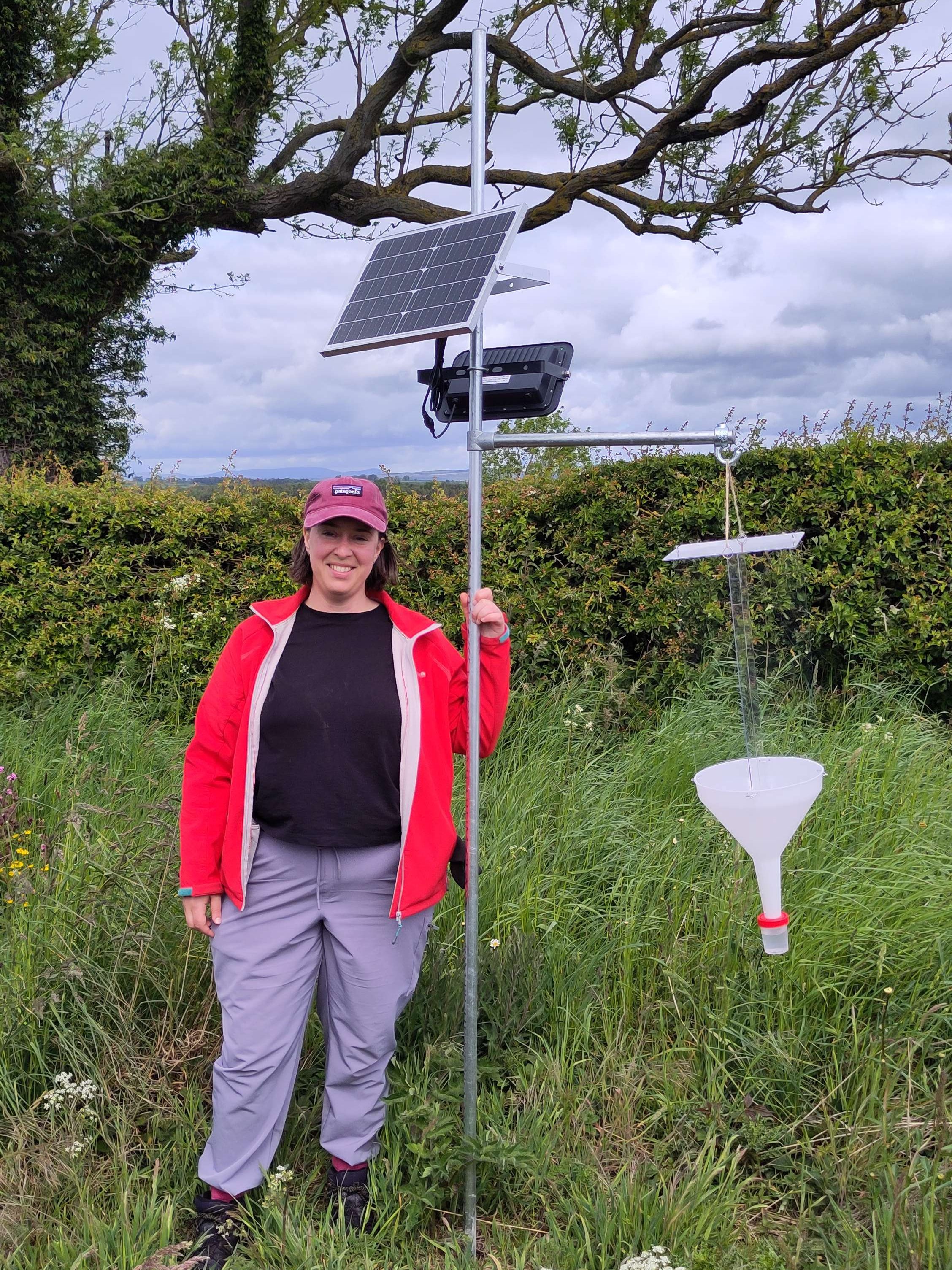
Mia has also officially started fieldwork, so has finished setting up her solar-powered lamp posts (image below). Following a baseline round of sampling, these are now on and dazzling the Northumberland countryside! Mia’s sampling is off to a great start, with various invertebrates ready for molecular or nutritional analysis in the months ahead. Mia also attended the inaugural symposium for the Status of Insects Research Coordination Network’s Light Pollution Working Group, hosted at University of Exeter’s Penryn campus. Mia got plenty of inspiration from this ahead of getting fully stuck into the field season, and was even successfully awarded a Royal Entomological Society Conference Participation Grant to go! Woohoo!
Mia, Rosy and Will all attended some bioinformatics training from NERC’s Environmental Omics Facility. It was a useful dive into techniques they will all be using later in their PhDs, and a great way of connecting with the wider research field. On the topic of connecting with the wider field, Broghan has had her abstract accepted for a talk at “SilviLaser 2025” in Quebec, so stay tuned for more on that in the near future! Jordan was busy a the start of the month leading a molecular ecological field course activity on the Isle of Cumbrae which used a BentoLab to do some dietary molecular diagnostics on carabid beetles.


Thought for the month
Does the preference of invertebrates for colours/patterns vary between individuals when choosing flowers to visit? Do they have favourite colours?
Fun with FERG
This month, we have a foraging logic puzzle for you!
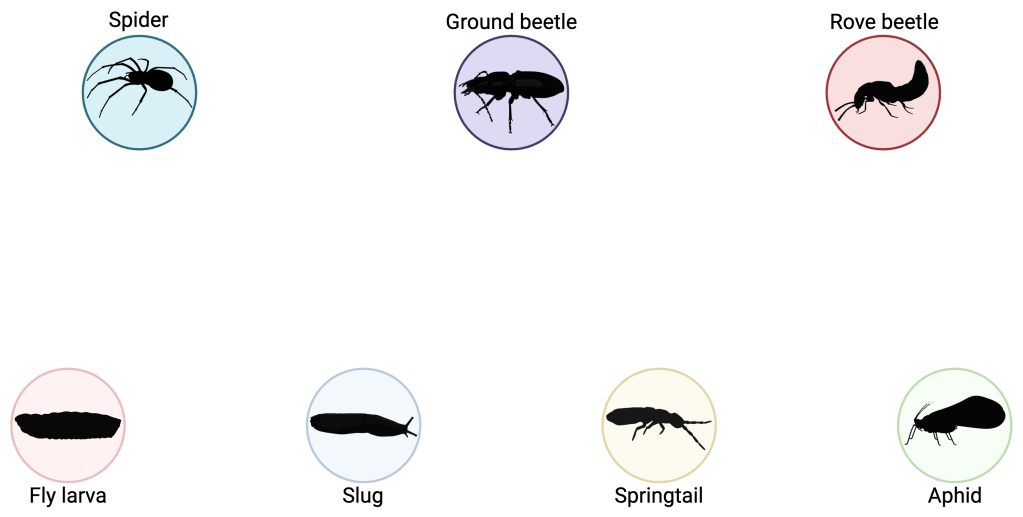
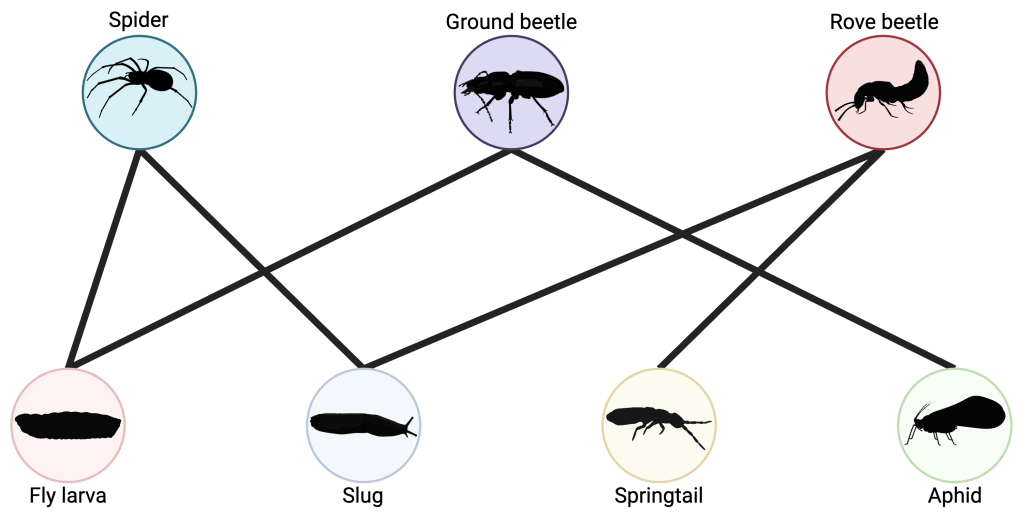
Three predators are foraging in close proximity to eight individuals of four potential prey species. The predators are a spider, a ground beetle and a rove beetle. The prey are two slugs, two springtails, two aphids and two fly larvae.
Each predator eats exactly two prey, prey can be eaten by one or more predators and some prey will survive.
After a week in the wild:
- The slugs and fly larvae are gone.
- At least one aphid survived.
- The rove beetle shared exactly one prey species with the spider.
- The ground beetle didn’t eat anything that the rove beetle ate.
- The spider eats no springtails.
Fill in the ecological network below with links! See the bottom of the post for the answer!
Species of the month
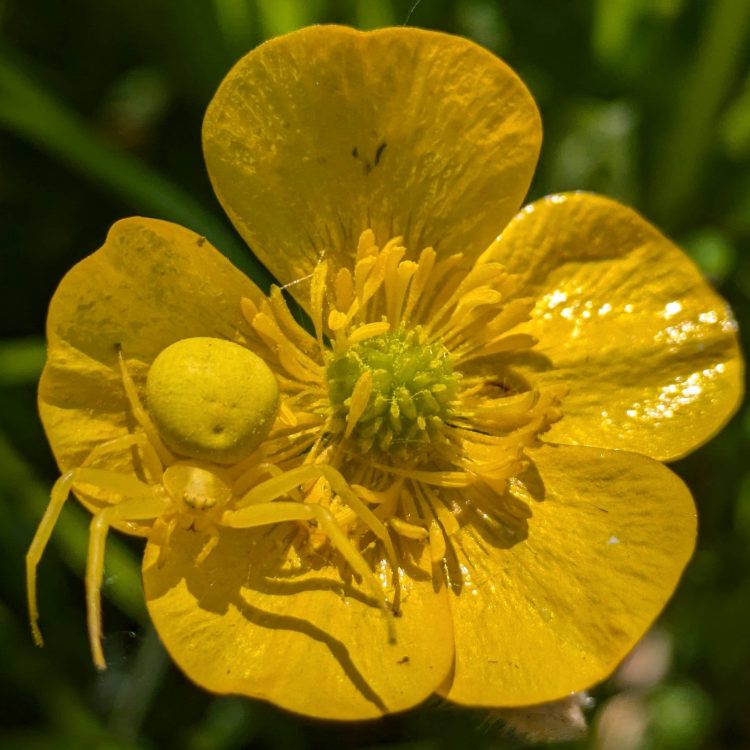
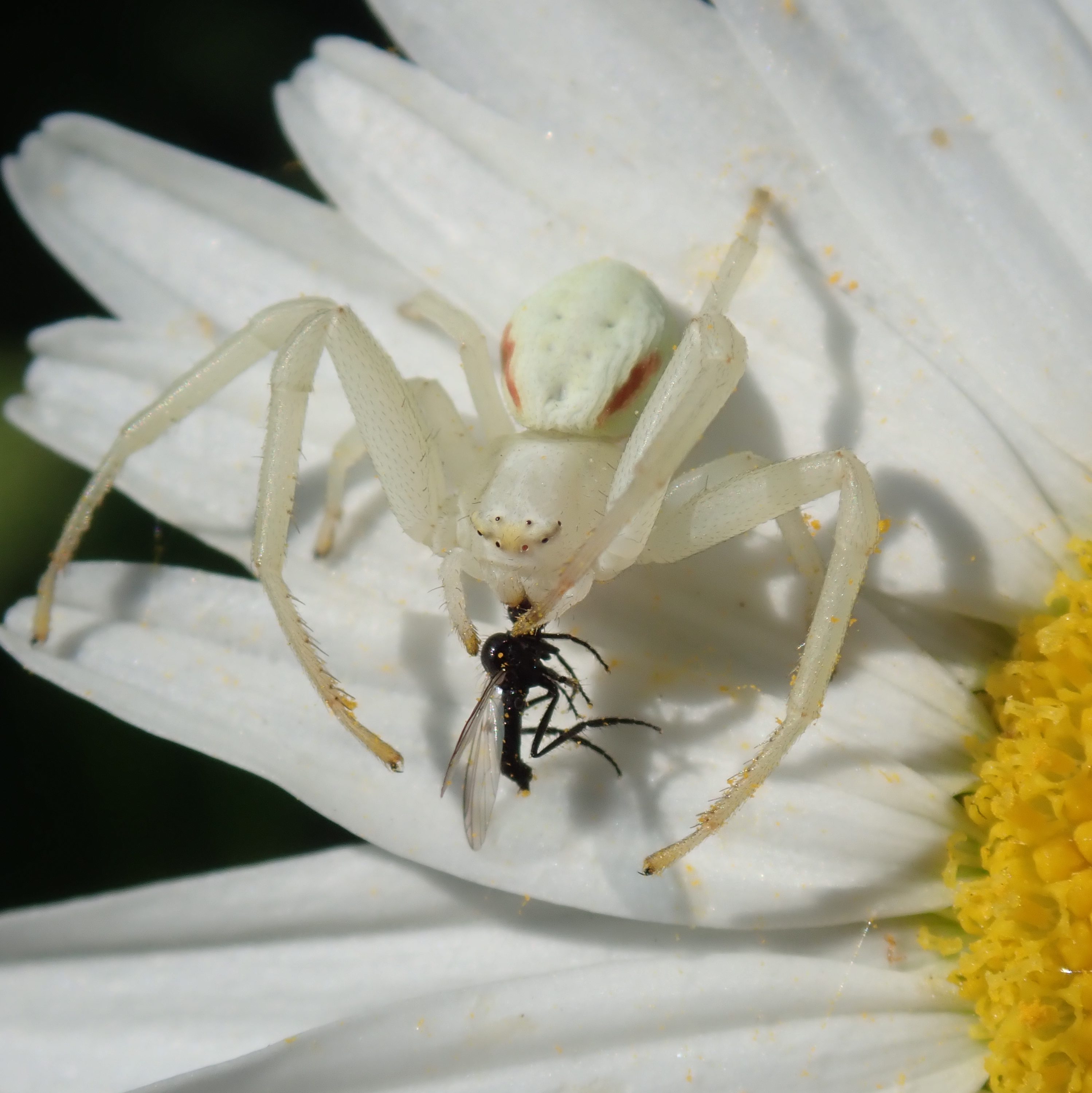
This month, our species of the month is Misumena vatia, the flower crab spider! This is the focus of Rosy’s Spider Spies outreach project. Flower crab spiders (Misumena vatia) love to live in flower verges, which are great for pollinators, biodiversity buffer zones and natural pest control. These spiders can camouflage themselves against the flowers they sit on and pounce out at unsuspecting flower visitors! Is this impacting ecosystem services? Rosy is hoping to find out and can use your help collecting records!
Research spotlight
This month, we want to highlight this paper from Pedro Cardoso and co-authors: Automated biodiversity research critically requires multidisciplinary expertise
This is a great thought-provoking read as we tip ever deeper into automated and ‘big data’ ecology. We need to keep sight of the limitations of our methods and data, and maintain collaboration and input from a broad range of researchers spanning various disciplines if we are to safeguard the accuracy, relevance and utility of our findings. The article provides some excellent practical guidance to help with this.
Here’s the solution to the foraging logic puzzle:
 Foraging Ecology Research Group
One thought on “FERG News June 2025”