It’s been such a busy month that this is almost an August news update! Most of us have been busy in the field or lab lately, so there’s a little less to update you all on from June, but plenty going on and lots of exciting things to come from it all soon! Read below for some highlights!
Outputs and outcomes
Ben finished in the lab last month, having pioneered the application of DNA metabarcoding to a wide range of entomological sample types! This has required all sorts of optimisation and troubleshooting, which Ben has conquered at every turn. He’s onto bioinformatics and data analysis next to see what it all means!
On the topic of finishing things, Rosy has finished this year’s round of crab spider fieldwork linked to the ‘Spider Spies‘ project shared in our last news post! The next couple of months of her work will be focused on the candy-striped spider, Enoplognatha ovata/latimana, before returning to the crab spiders next spring. It’s been a brilliant adventure so far, with some excellent samples to bring into the lab! Keep your eyes peeled for crab spiders in the mean time – it’s never too late to submit records to Spider Spies!
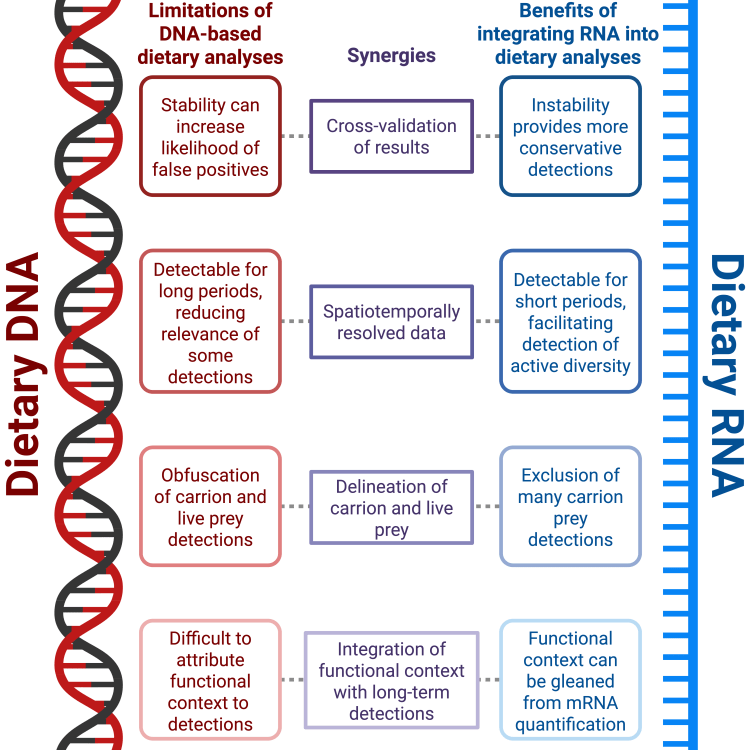
Check out our new preprint, “Dietary RNA: diagnostic and functional RNA offer a potential paradigm shift for molecular dietary analyses“, published on the Open Science Framework Preprints repository. This work, which proposes and describes the conceptual underpinnings of applying RNA analysis to trophic ecology, is the outcome of some discipline-hopping workshops that Jordan got funding for NERC from a couple of years back. The ideas have since been enhanced through collaboration with Michael Traugott and his group at Universität Innsbruck. The preprint signposts some exciting directions for FERG to explore in the coming months and years.

FERG in the wild
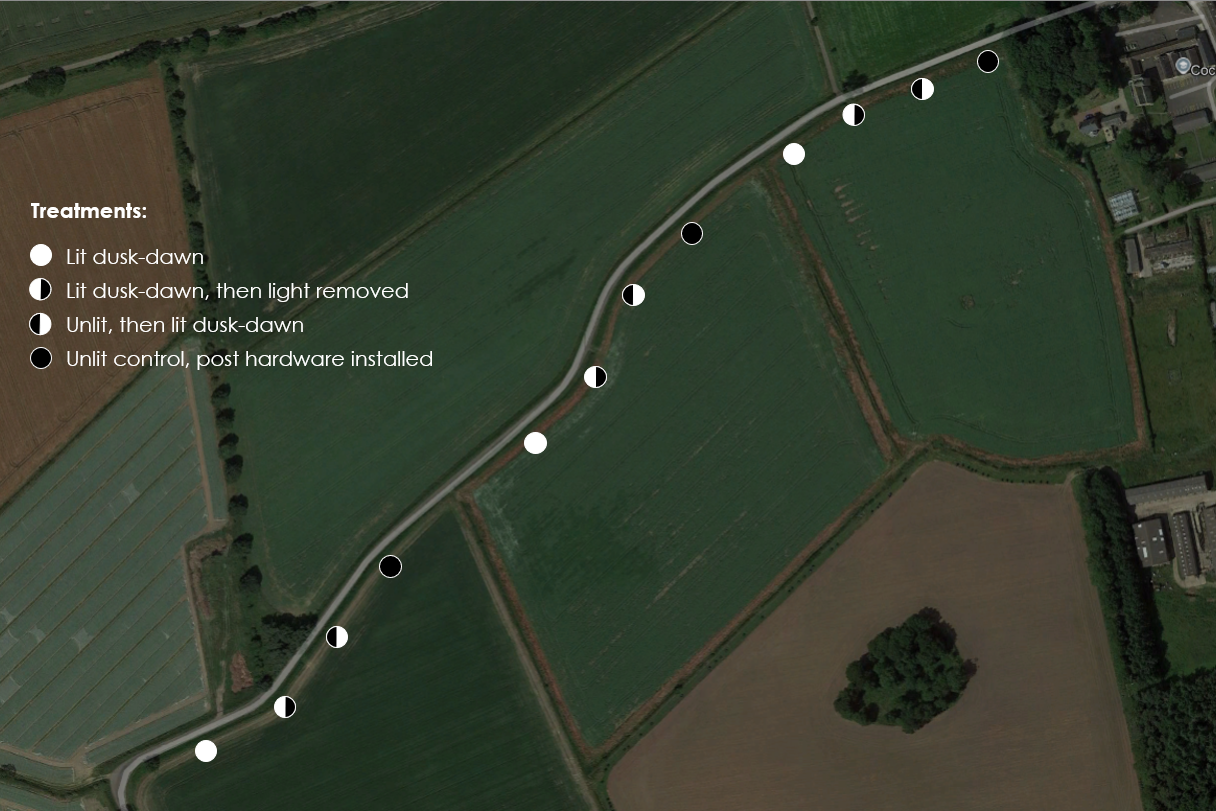
To add to Mia’s wonderful artificial light at night lamp posts at Newcastle University’s Cockle Park experimental farm, she has been putting up some information sheets about the project which link to this very website! Check out the new web page for ‘Bright Lights, Bug City’ to learn more about the ins and outs of what Mia’s up to in the field: Bright Lights, Bug City

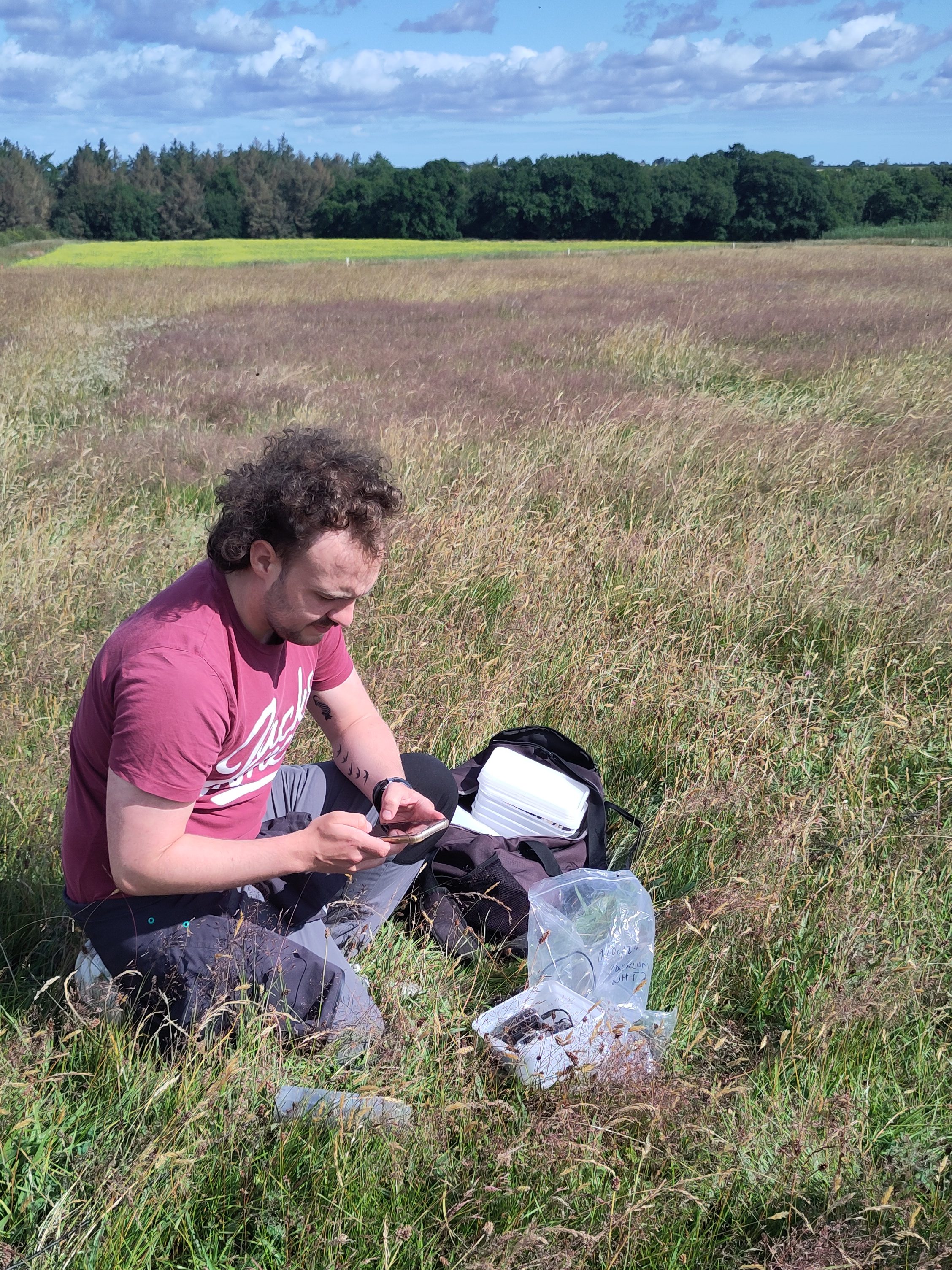
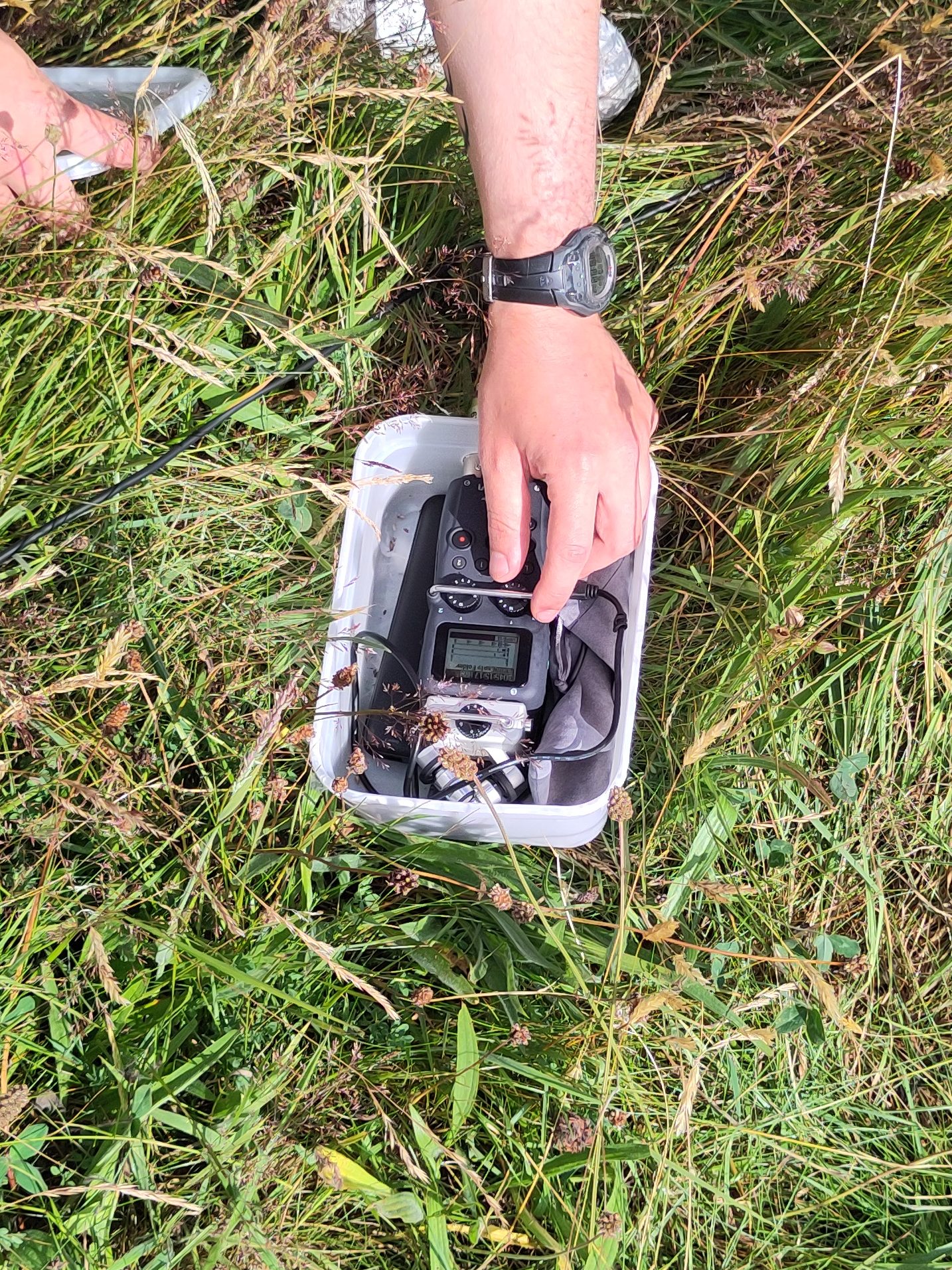
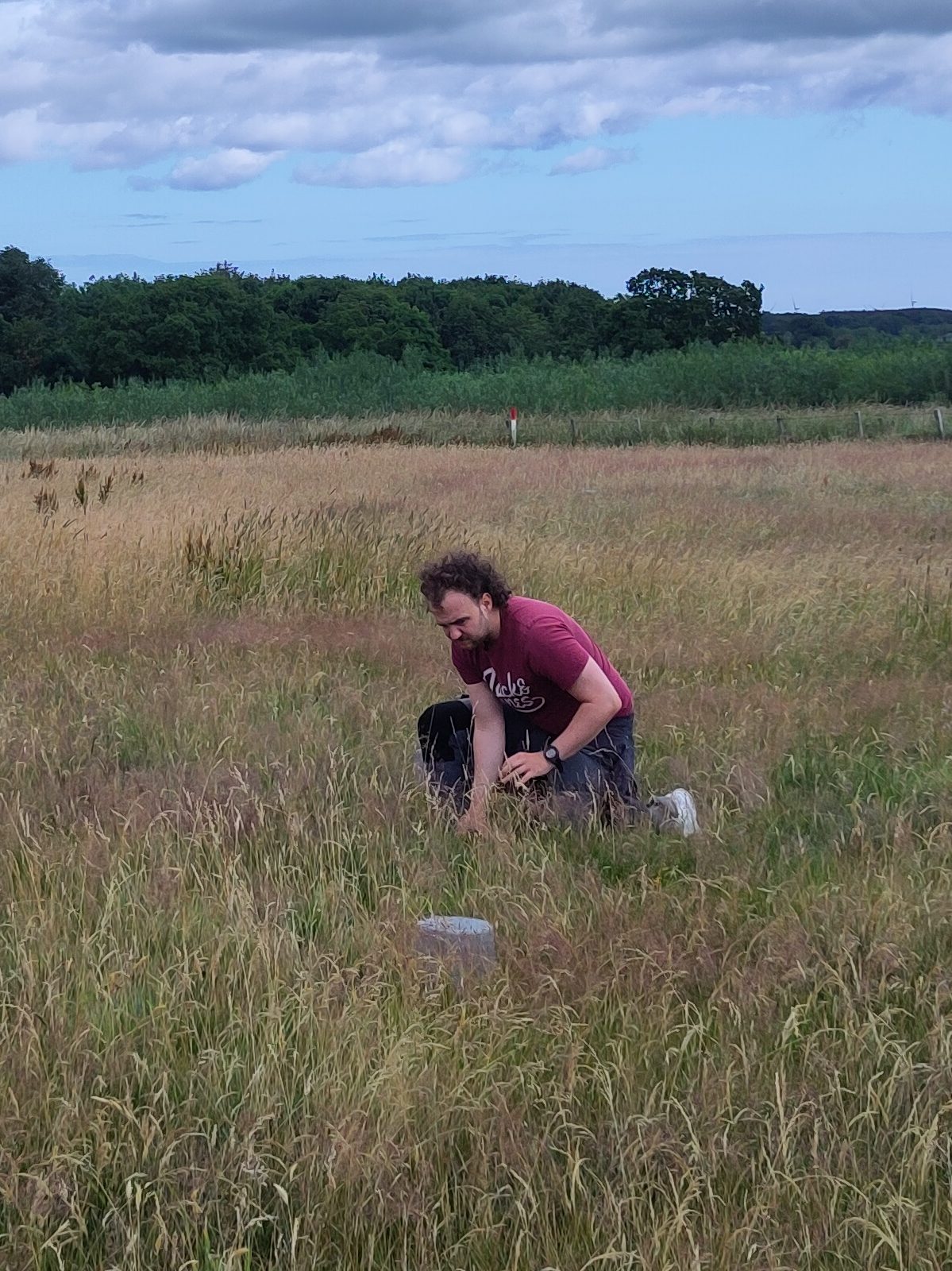
Alongside Mia’s work, fieldwork has been carrying on steadfast for the rest of the group! As well as Rosy finishing her crab spider surveys, and Mia with her wonderfully labelled lamp posts, Will has been back out with his ecoacoustic setup at the Palace Leas long-term grassland fertilisation experiment. Soon enough he’ll be taking the kit back to Castle Howard’s Bog Hall rewilding site for another round of sampling there!
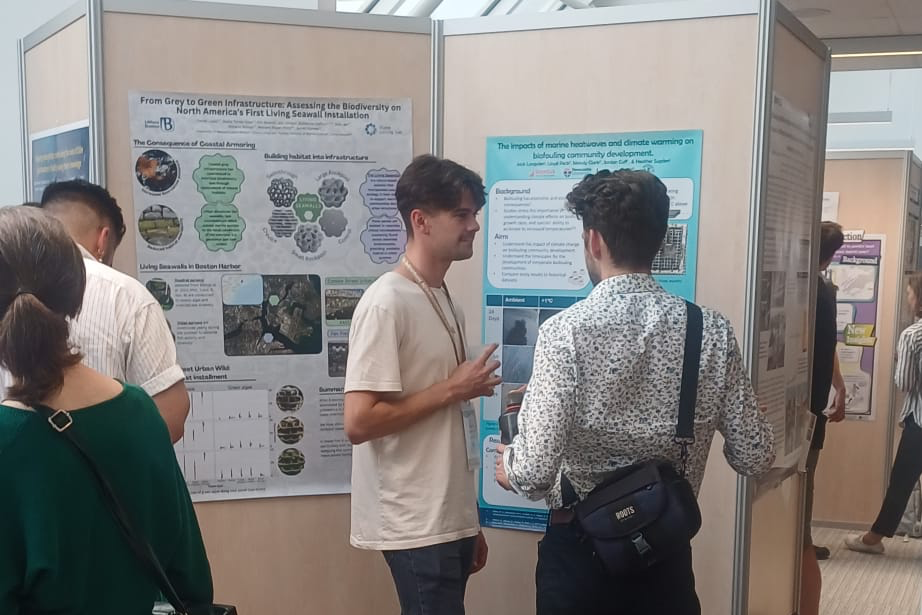
Jack took to the International Temperate Reefs Symposium in Brest, France, where he presented a poster titled “The impacts of marine heatwaves and climate warming on biofouling community development.” Jack’s panels, featured in a recent news post, are thriving (or at least the biofouling organisms that live on them are) out in the ocean, so he had plenty of exciting things to show the academic community!
Thought for the month
Would you prefer to be taxidermied or fluid-preserved? (FERG was very divided on this)
Species of the month
A common sight in early summer across the UK, this month we’re spotlighting the red soldier beetle, Rhagonycha fulva, sometimes colloquially referred to as the ‘bonking beetle’ due to their overt sexual aggregations atop tall plants. Despite being entirely harmless, it’s also sometimes referred to as ‘the bloodsucker’, likely due to its strong colouration. It can be found relatively easily on open flowers between June and August.

Research spotlight
This month, we want to highlight a less recent (but perpetually relevant) paper from Matthew Lau and co-authors: Ecological network metrics: opportunities for synthesis
We’ve been busy writing a few upcoming articles that apply network science to foraging ecology, and we refer to this paper very regularly given its clear and nicely formatted list of different network metrics and what they mean. It’s a great introduction to what the metrics of network ecology mean for newcomers, but also a fabulous refresher for those who need it!
 Foraging Ecology Research Group