
After a quieter newsletter last month, with everyone out in the field, stuck into their lab work or away at conferences, we’ve had all sorts coming through in July! From new papers, through graduations, to various field adventures, read on for a full update! We have a fun puzzle based on degenerate DNA sequences this month too, for the keen molecular ecologists among you (and anyone else who fancies giving it a go – no prior knowledge assumed)!
Outputs and outcomes
We’ve had a few exciting papers published in the last month across a broad range of topics! First up, a collaboration with Shawn Wilder’s group in Oklahoma State University led to a paper bridging digestive physiology and foraging ecology, published in Journal of Experimental Biology. This paper discusses the synergies between physiology and ecology, particularly in the context of micronutrients, symbiomes, behaviour and the Anthropocene, and proposes some future priorities to advance research at this interface.


Next, a collaboration with Jenny Coomes that started when both her and Jordan were doing their PhDs with Bill Symondson led to a paper on great tit foraging ecology in Ecology and Evolution. This paper uses molecular dietary analysis to describe the trophic interactions of great tits and compare them between forest types, seasons, ages and sexes, providing some valuable context for wider avian and foraging ecology.


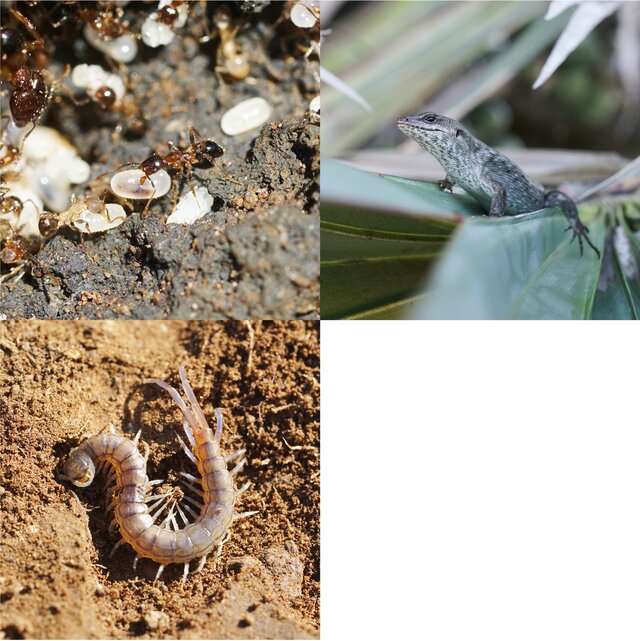
A paper on the trophic ecology of non-native ants and co-occurring native consumers led by long-term FERG collaborator Max Tercel which Jordan contributed to was published in Ecology! This is a deep dive into the trophic ecology of consumers on Round Island, Mauritius, where non-native ants are highly prevalent alongside various endemic species in the last remaining remnant of native lowland palm forest in the Mascarenes. The results show that the diets of these consumers are fairly well partitioned, but also that non-native ants comprise a large proportion of the diets of local consumers.

Another new paper has come out of a new collaboration led by Josie South at University of Leeds and is published in Trends in Ecology and Evolution! This paper explores the mechanisms by which aquatic ecological invasions may lead to deepening health and nutritional inequalities by altering the flow of nutrients from ecological systems to humans. This extension of nutritional networks into social-ecological networks marks an exciting step forward for the concept with incredible potential to deliver impactful and unprecedented insights into the links between social and ecological nutrition.

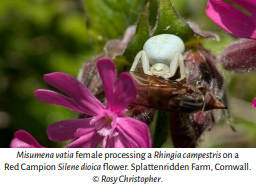
Rosy had an article published in the British Arachnological Society Newsletter about her crab spider research! This links to her outreach project and linked fieldwork exploring the mechanisms and outcomes underpinning crab spider-flower commensalisms. Read the full article in our recent blog post about it!

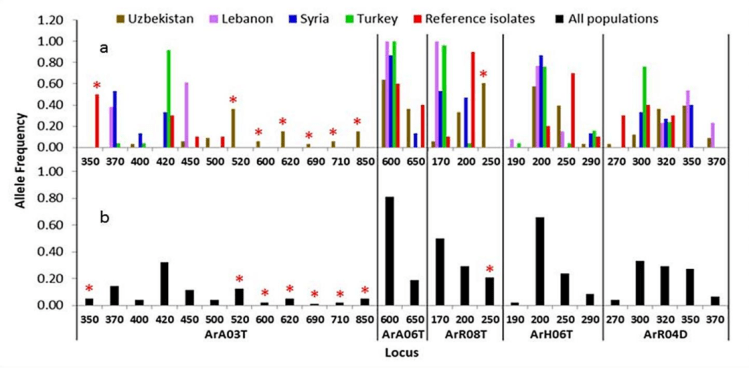
Basem also published a paper in the Arab Journal of Plant Protection linked to his previous work on chickpea Ascochyta blight at ICARDA in Lebanon! Read more about the article in one of our recent blog posts!

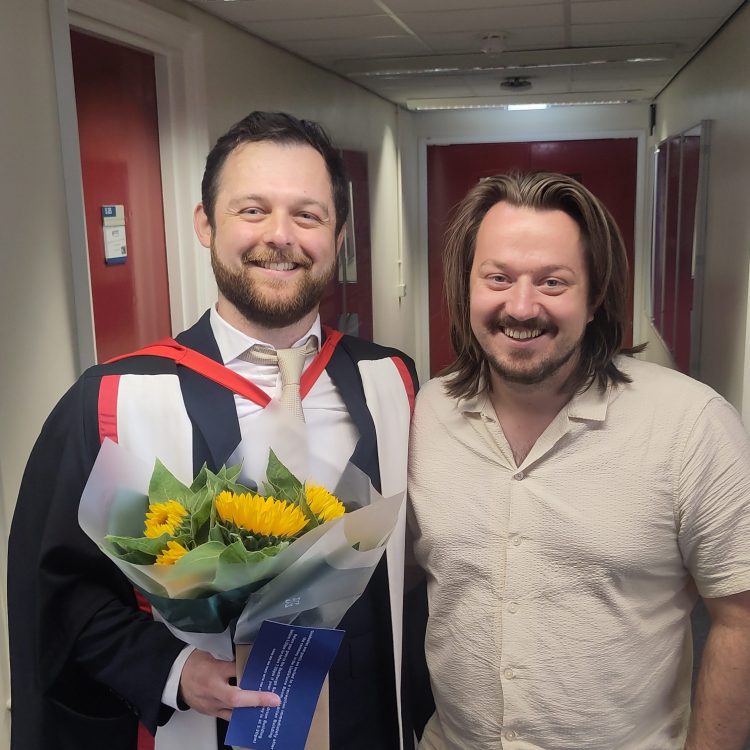
We’ve had some graduations too! Here in Newcastle, Maggie and Lucy both graduated from their PhDs, and our close collaborator Kyle Miller graduated from his PhD too! Further afield in Cardiff, Rosy graduated from her MSc in Global Ecology and Conservation at Cardiff University! Massive congratulations to everyone – all richly deserved and incredible achievements!

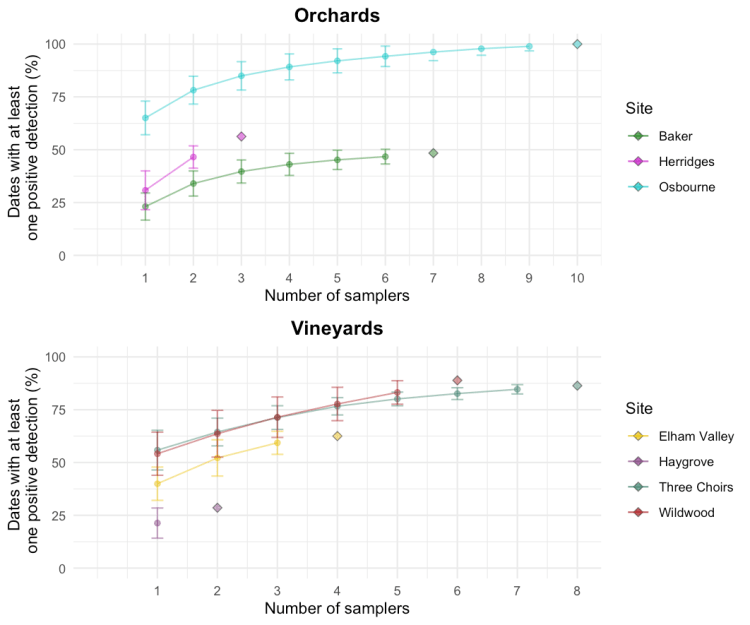
As well as graduating, Lucy’s been busy analysing data with Jordan linked to the SporeDetect project. Lucy’s off to Hawaii to present at The American Phytopathological Society’s Plant Health 2025 conference in Honolulu and, in preparation, has put together a new page on this site to show some of the cool results!

FERG in the wild
It’s been a climactic month for some new field experiments starting and the conclusion of others! Alongside his usual fieldwork, Will has been helping to run a field course and survey various invertebrates across the Knepp Estate’s rewilding project as part of their work with Operation Wallacea. Will delivered some of the course materials alongside collaborators from the Natural History Museum and had a great time!
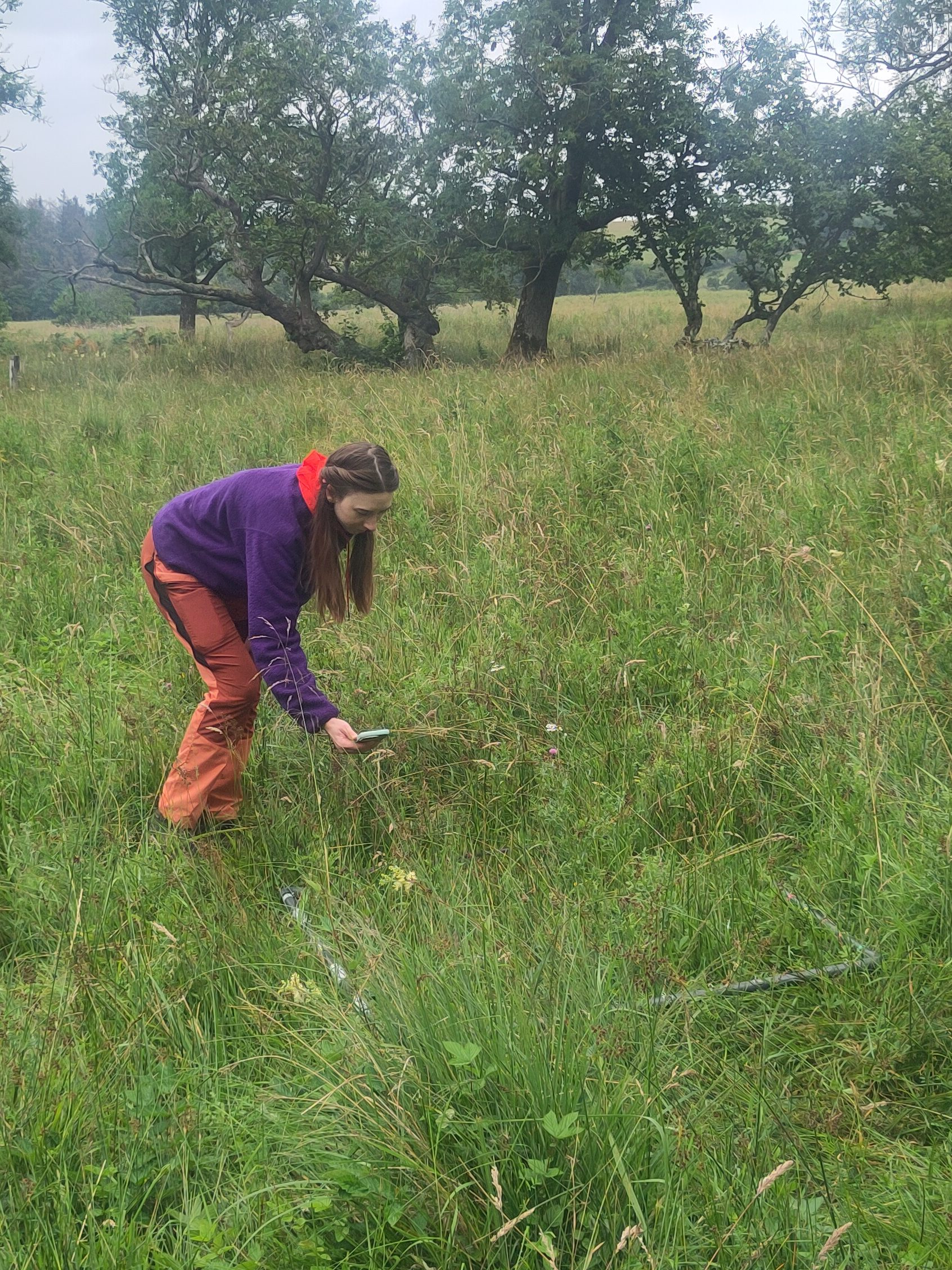
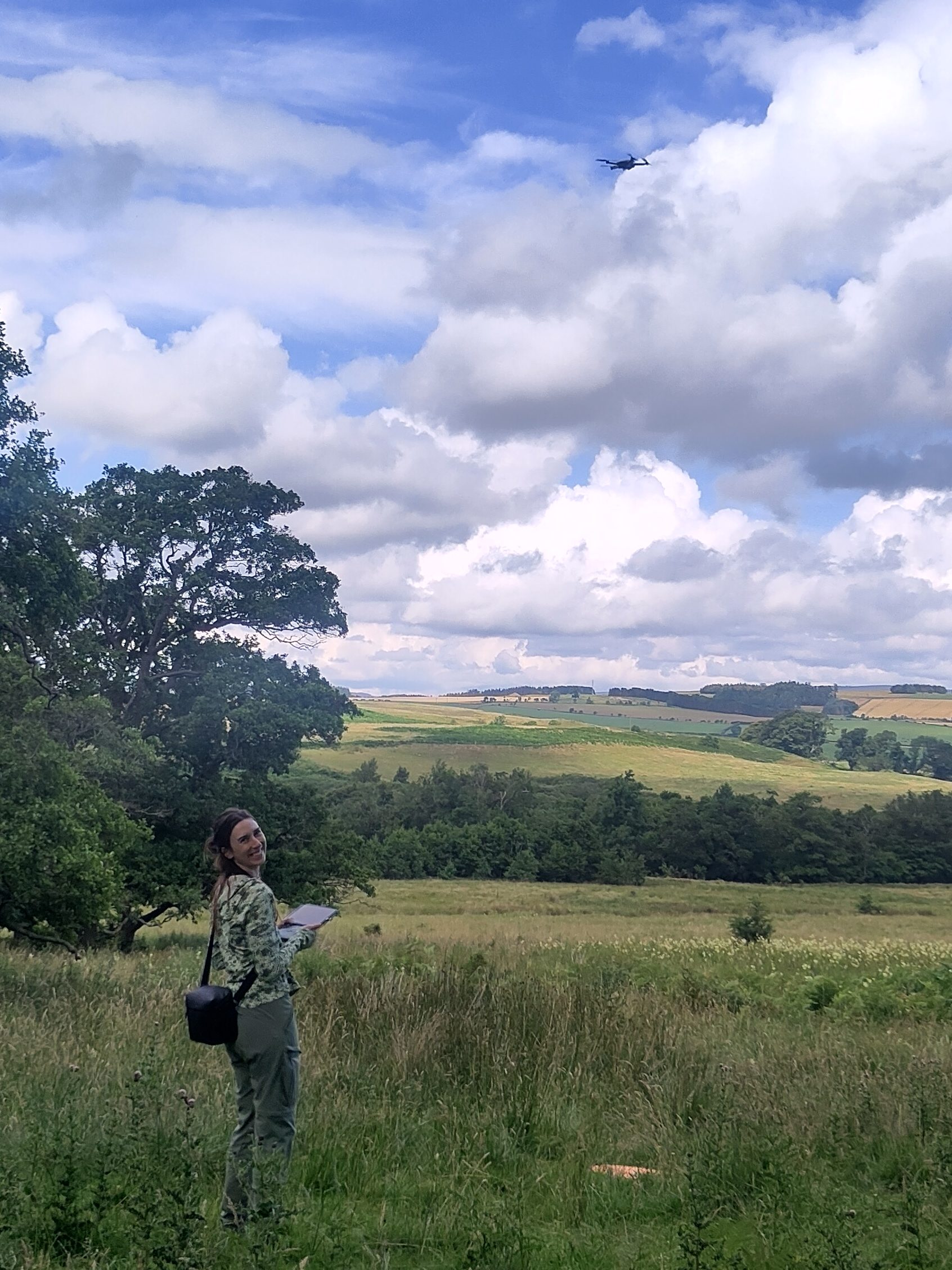
Broghan and Jordan went up the Hepple Estate in Northumberland to run the final field experiment for Broghan’s PhD. Surrounded by beautiful scenery (and highland coos), Broghan scanned the vegetation using two drones and her innovative iPhone-based method, which will be used to assess patch optimality for foraging invertebrates! Some really exciting stuff to come, but first, some data processing!
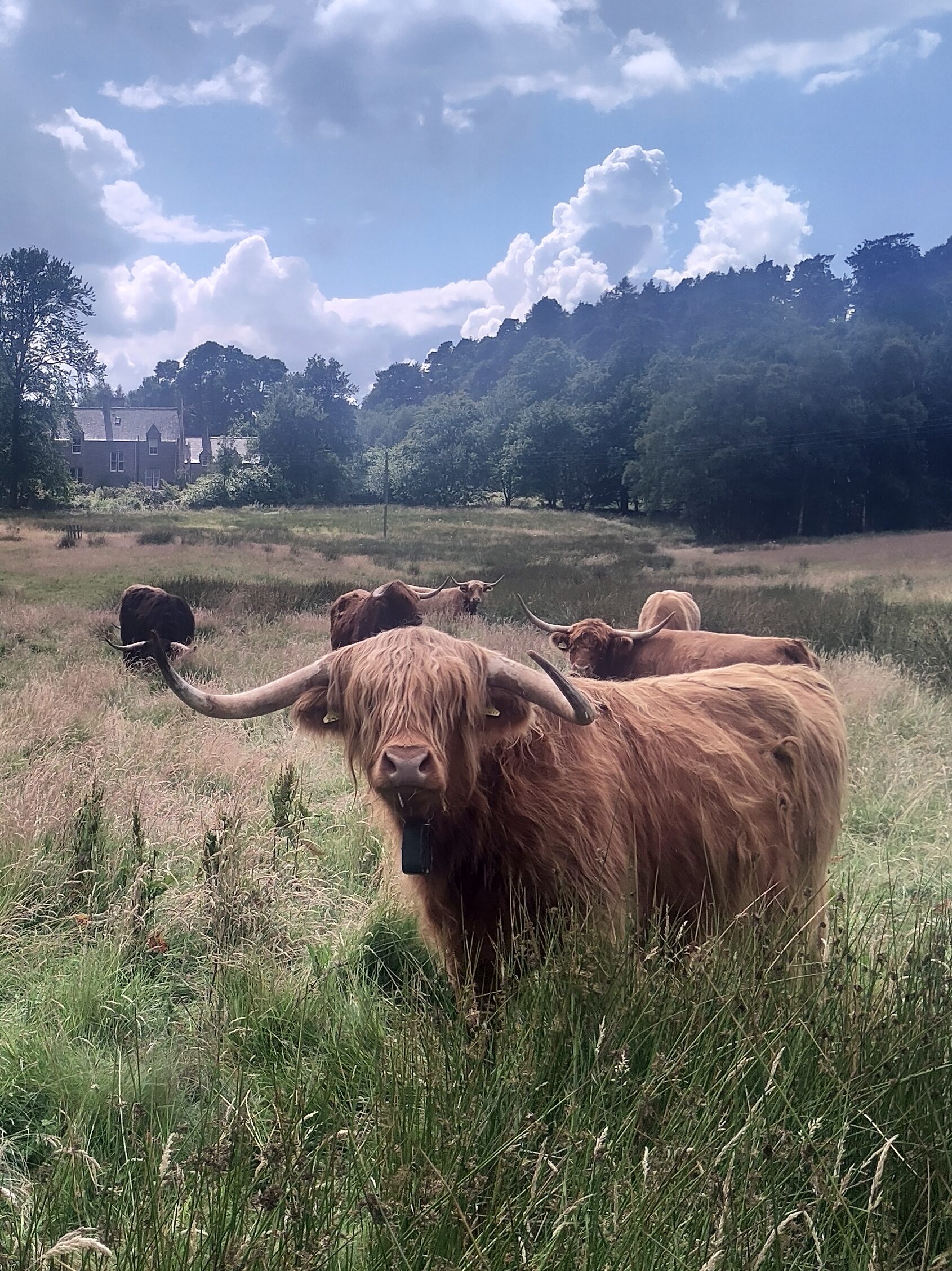
Mia’s been continuing her surveys under her new artificial light setups, and the results are coming in nicely (we may even share some preliminary insights in a future newsletter)! This month, Mia’s been collecting spiders and other foliar arthropods by beating hedges adjacent to the lighting rigs. Despite the threatening stance, no photographers were injured in the taking of this photo.

Rosy has made a start on collecting candy-striped spiders for the second field experiment of her PhD! She’s finding and collecting spiders and their prey out at Newcastle University’s Cockle Park experimental farm, ready for some molecular dietary analysis in the coming months. If you want to read more about candy-striped spider ecology, check out Jordan’s paper from a few years back about them.


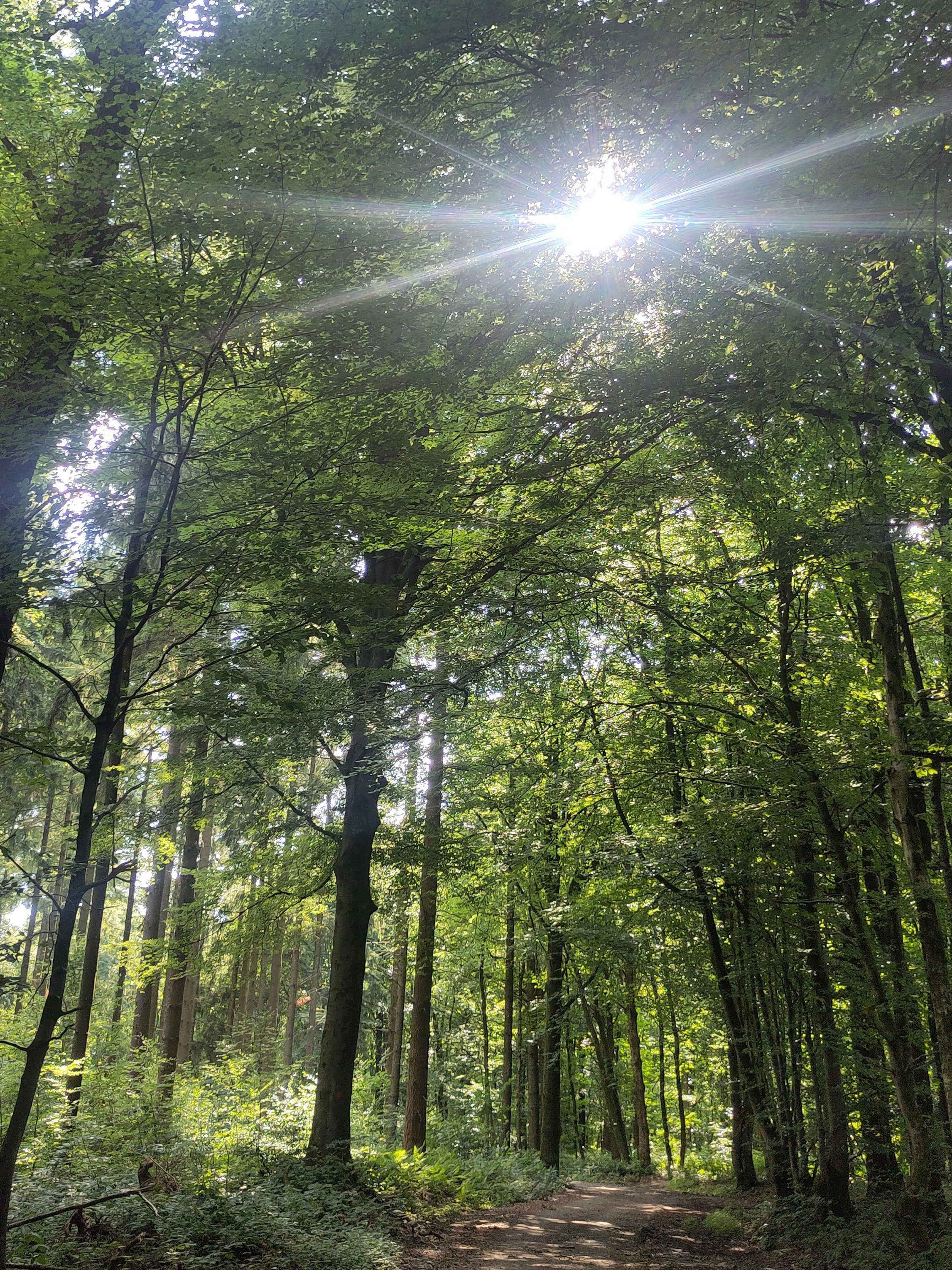
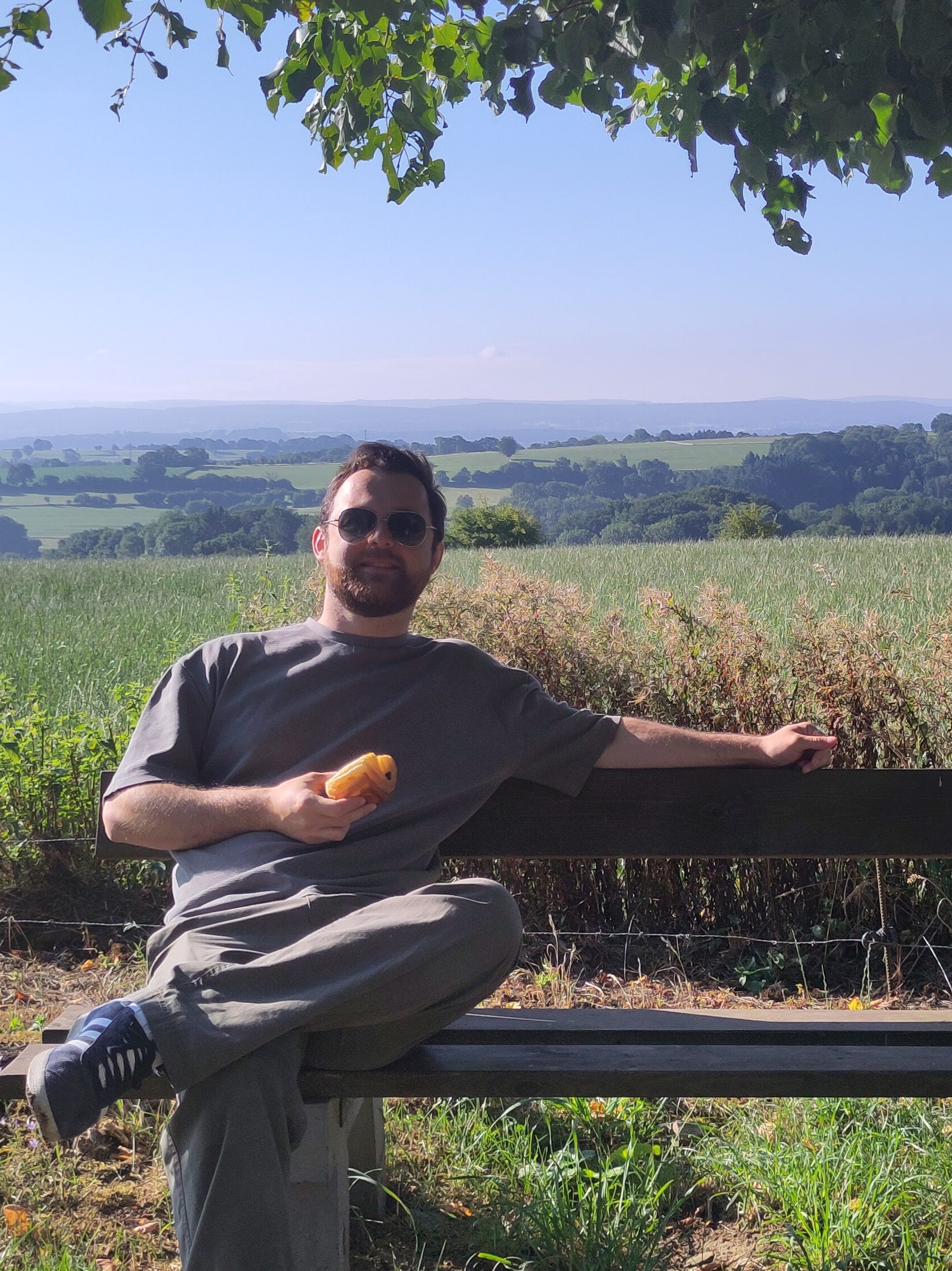
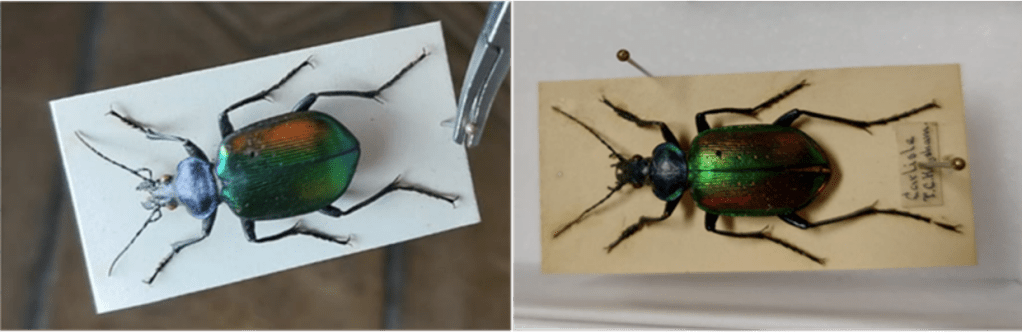
Jordan has also been fieldworking abroad this month! Alongside Kyle Miller from Forest Research, he visited various forest patches near Durbuy in Belgium on the hunt for the forest caterpillar hunter, Calosoma sycophanta. It was a great opportunity to visit some truly beautiful forests and collect lovely regurgitates from some exceptional beetles!

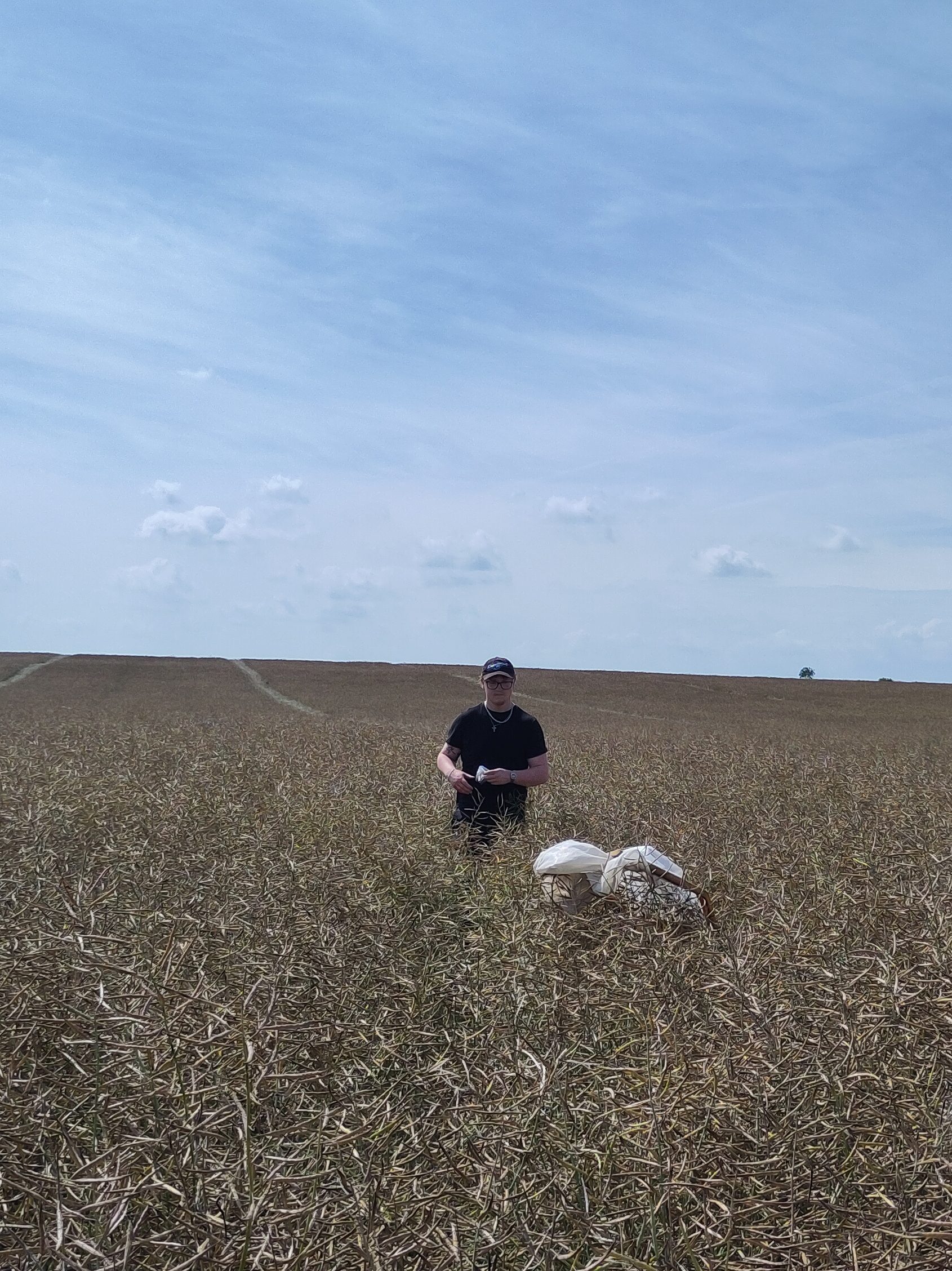
Jordan has also been out in oilseed rape fields at Newcastle University’s Nafferton experimental farm along with BSc student Ali to investigate the impact of distance from field margins on ecological interactions. As always, being in the field was an inspiring way to witness and contemplate the complexity of the natural world, including some incredible webs in the canopy of the late-stage crop which were lined with various pests and predators.

Jordan had the immense pleasure of giving the keynote talk for Durham University’s Biosciences Researcher Symposium! Jordan spoke about his research on nutritional networks and the journey that involved, but also how his career was shaped by experiences as a postdoc, and what that has meant for his work since, particularly related to research culture and researcher development. If you want to see more about the nutritional network research, why not come along to Jordan’s upcoming free and online talk for entoLIVE, which will be all about that?

Thought for the month
Do spiders that build webs on the same plant have neighbourly interactions or maintain strict boundaries?
Fun with FERG
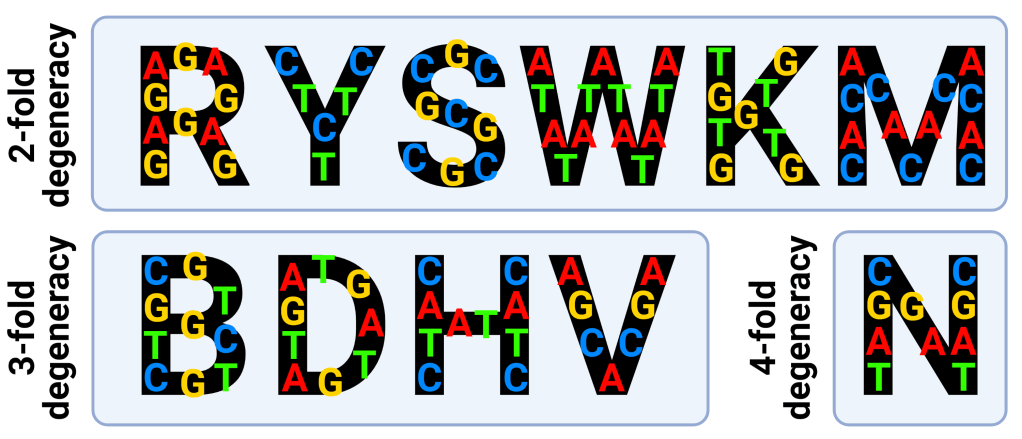
In molecular ecology, we often find ourselves using sequencing data, comprised of As, Cs, Gs and Ts, but these can sometimes include additional letters called ‘degenerate bases’ which represent uncertainty or variation which mean that the base in question could be any one of two, three or four of these different letters (or bases). So, ‘RMB’ could represent ‘AAG’, ‘GCT’ or a few other other sequences, since ‘R’ can be ‘A’ or ‘G’, ‘M’ can be ‘A’ or ‘C’, and ‘B’ can be ‘C’, ‘G’ or ‘T’. The figure below is a nice visual guide for what each letter corresponds to.
Your task this month is to identify three different three-letter English words comprised of ‘A’, ‘C’, ‘G’ and/or ‘T’ which could be represented by the degenerate sequence ‘HMK’. The answers are at the bottom of the page!
Species of the month
This month, our species of the month is Calosoma sycophanta, the forest caterpillar hunter! This was the beetle that Jordan and Kyle went looking for in Belgium. It’s a large ground beetle (Carabidae) which may have previously resided in Britain but has likely become nationally extinct. Across its broad geographical range, it has a beautiful shiny metallic green morph and a sleek black morph (perhaps for attending formal beetle events). We will hopefully be sharing more about this beetle in the next couple of years as we work with Forest Research on some projects related to it.
Research spotlight
This month, we want to highlight this paper from Hannah Hoff and co-authors: The apportionment of dietary diversity in wildlife
This is a great thought-provoking read which challenges the perceived delineation of guilds in mammalian herbivores. Hoff et al. found that interspecific dietary similarity was sometimes as high as intraspecific dietary similarity, and that the traditional taxonomy-based diet classification schemes were not as strong as seasonal effects in explaining the interactions of a given individual. Understanding the determinants of the roles that species play within ecological networks is key for advancing our broader understanding of ecological theory, and these results provide vital context on those roles for large mammalian herbivores.
Fun with FERG: solution!
Answers: CAT, ACT and TAG
The sequence ‘HMK’ can represent any one of twelve different sequences (i.e., the degeneracy value is 12; we can reach this by multiplying up each individual degeneracy value – the number of bases each degenerate base can correspond to – which, in this case would be 2 * 2 * 3). Specifically, ‘H’ can be any base apart from ‘G’ (so, ‘A’, ‘C’ or ‘T’; all of the three-fold degeneracies are just the letter in the alphabet after the base that they exclude, bar ‘V’ since ‘U’ was already taken by uracil, which is present in RNA), ‘M’ can be ‘A’ or ‘C’, and ‘K’ can be ‘G’ or ‘T’. Of the possible combinations, cat, act and tag are all fairly standard English words (although some of the other combinations may have regional or archaic meanings too).
 Foraging Ecology Research Group
One thought on “FERG News August 2025”