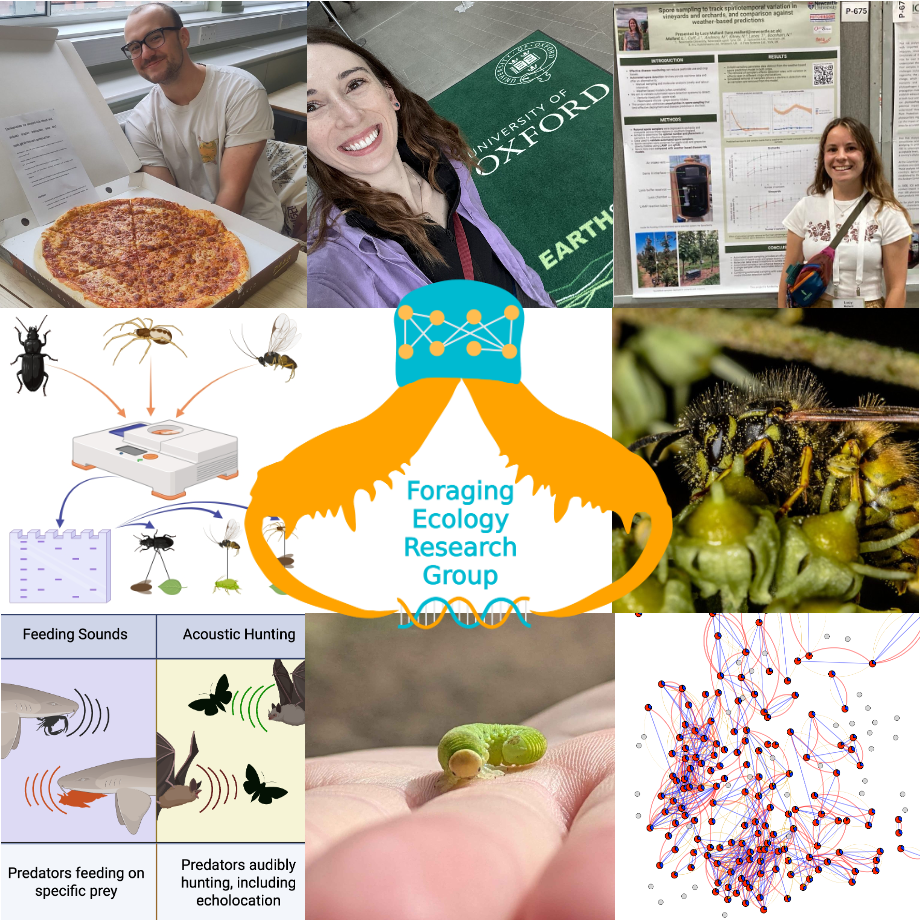
Another month of fieldwork and fun here in FERG! Alongside all of the various field experiments well under way, we’ve had some exciting adventures to conferences and courses, some new articles and protocols, and even a new (non-human) member of the group!
New FERGers
Welcome to our new trusty fieldwork trolley, Selina Go-mez! She’s been put to work already, ferrying equipment and samples around the university’s experimental farms to support our field experiments. After some deliberation (and a group poll), Selina was named after the goddess and personification of the moon in Greek mythology and religion given her primary role in helping Mia with her artificial lighting experiments. Go-mez was an inspired addition from Ben, because this trolley is going places (and carrying plenty en route)!


Outputs and outcomes
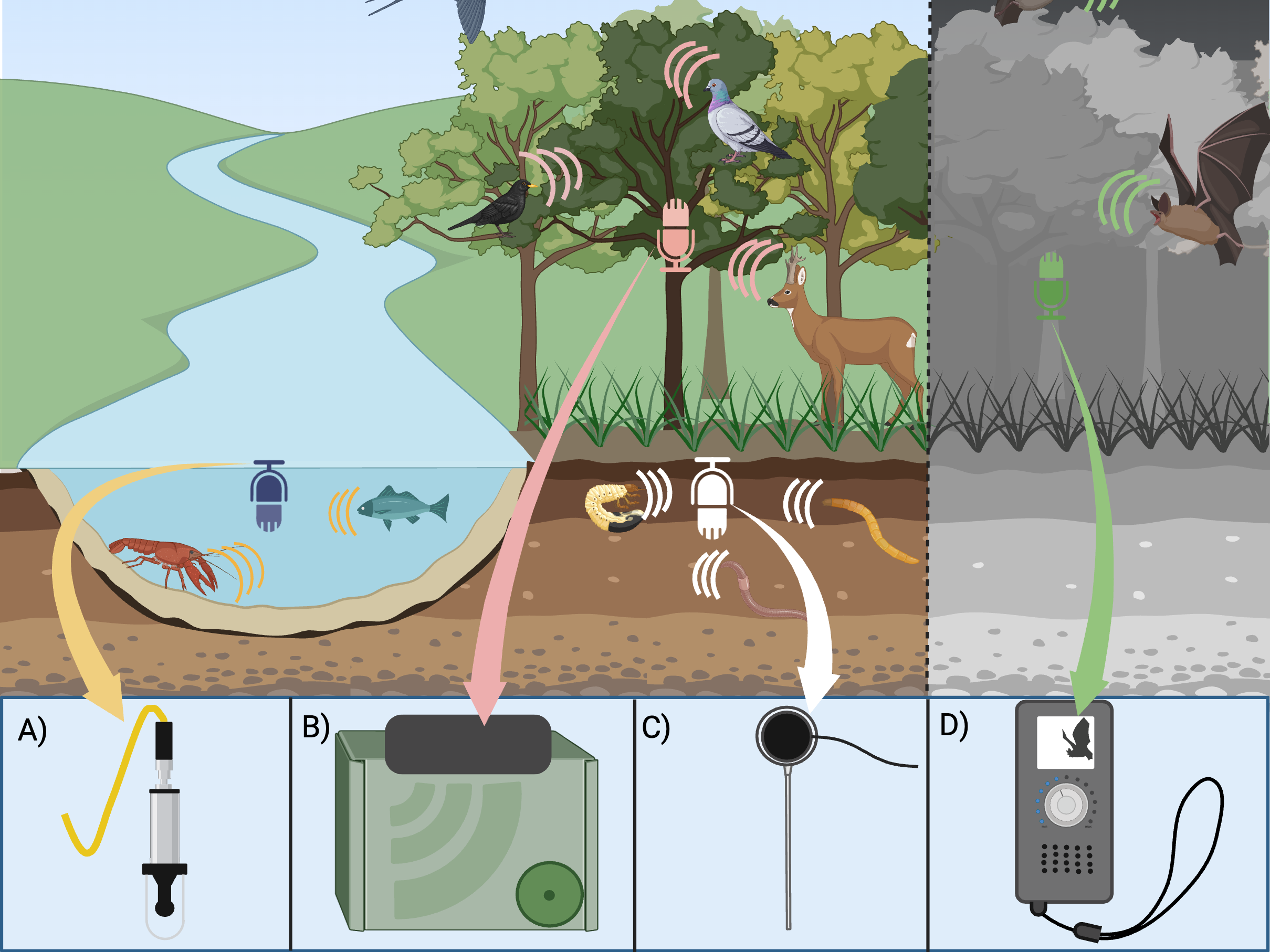
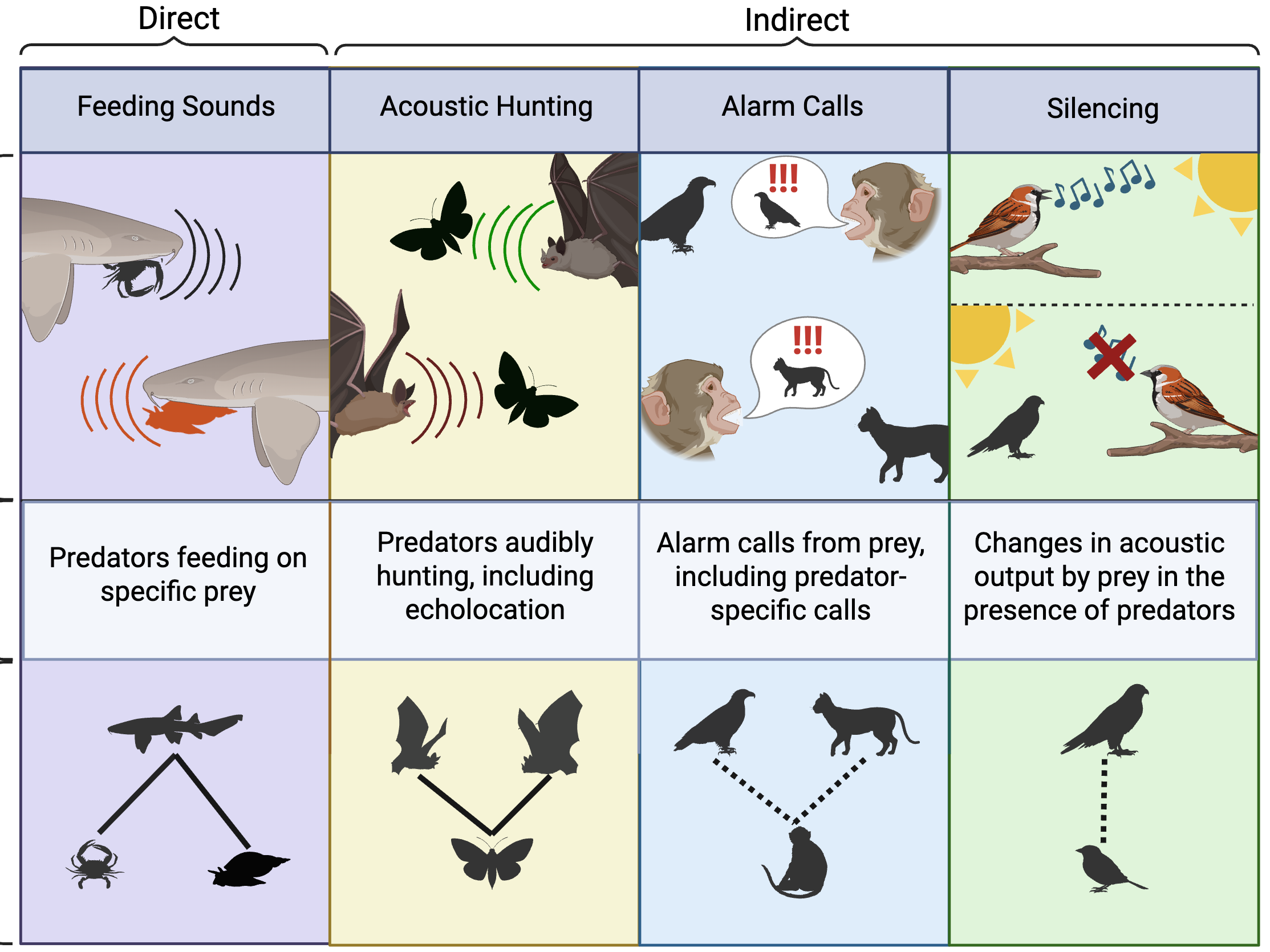
Will published a preprint of the first chapter of his thesis, titled “Ecoacoustics for context-rich direct and indirect trophic interaction data and ecological network construction“! The article discusses how ecoacoustics can be used to identify predator-prey interactions and guide inference of wider ecological networks by inferring their properties from acoustic indices. It sets the scene for much of the research Will has been launching this year for his PhD, so keep your eyes peeled for more! As a testament to Will’s efforts on this, it was the most viewed preprint from Newcastle University on ResearchGate on the week it was published!

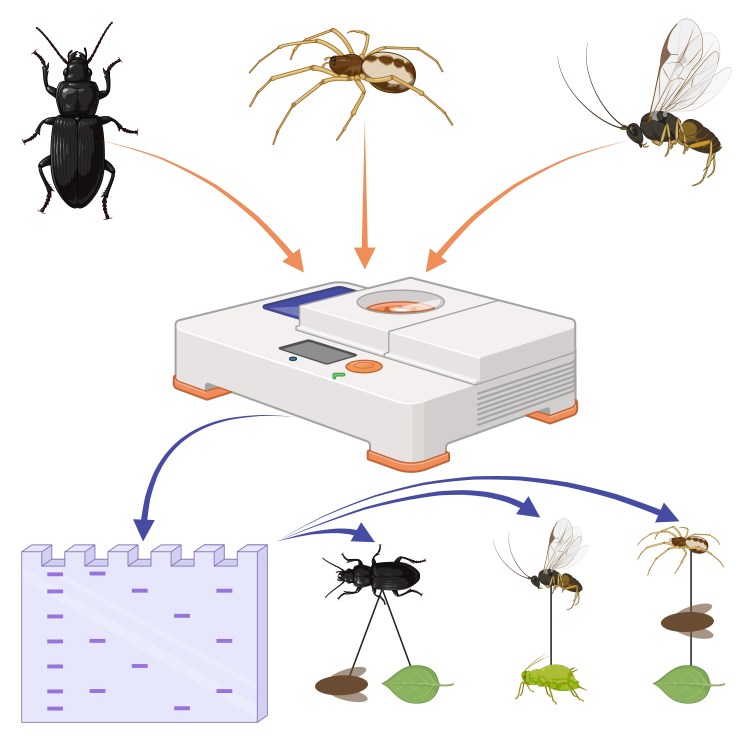
Ainsley co-authored an article in The Conversation based on his recent paper in Fish and Fisheries on the decline of UK fisheries! The article explains the problem succinctly and accessibly and has been one of the most-read articles in The Conversation from Newcastle University since it came out! Ainsley was determined to make August extra special, so he also finished the lab work for his DNA metabarcoding, which is now on its way through a sequencer! Results to come soon!
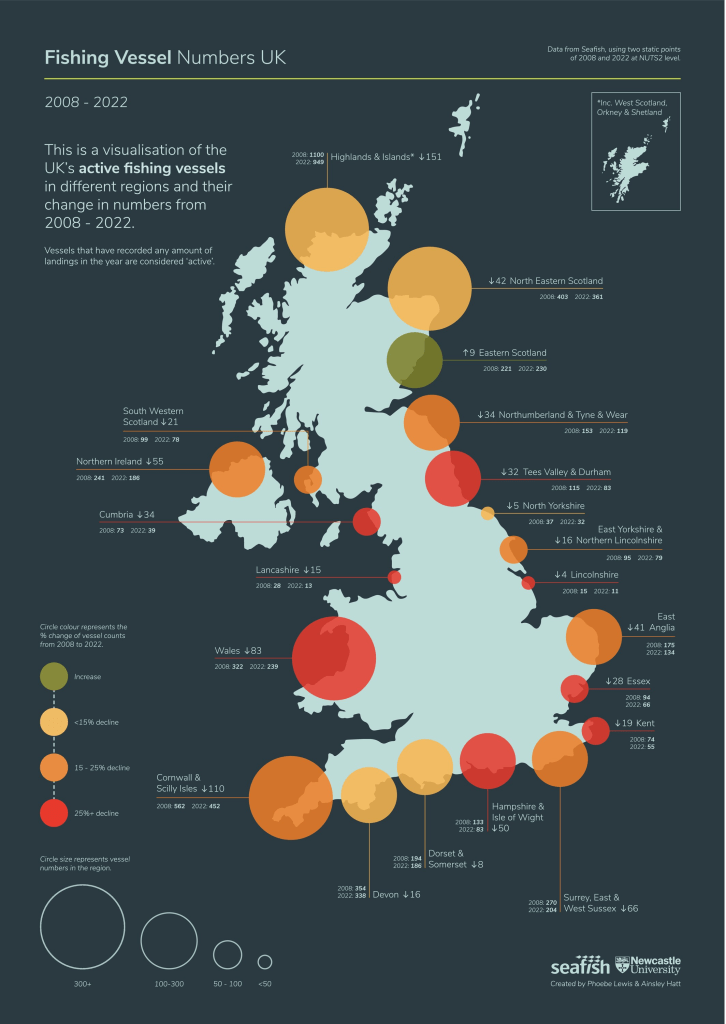
Jordan was awarded the 2020 Royal Entomological Society Alfred Russel Wallace Award in August for his PhD thesis, titled “Nutrient-specific foraging and the role of spiders as biocontrol agents”, after a pause on announcements since the 2019 round. You can access Jordan’s thesis via the Cardiff University online repository.

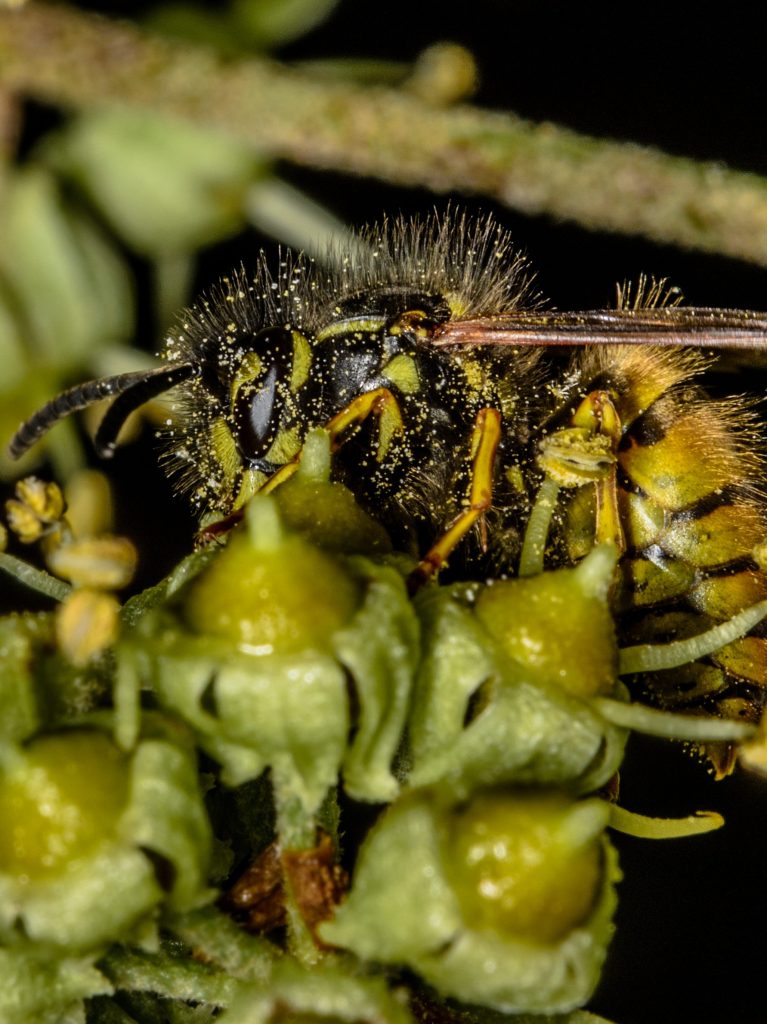
We have a couple of new open protocols out on Protocols.io too! Firstly, a protocol for dietary metabarcoding of wasp larvae gut contents, led by Romuald Tcheutchoua, who visited us for some lab work last year. This was the protocol developed for his lab work during his visit, the results of which are coming together quickly now! We also have a protocol for the analysis of


FERG in the wild
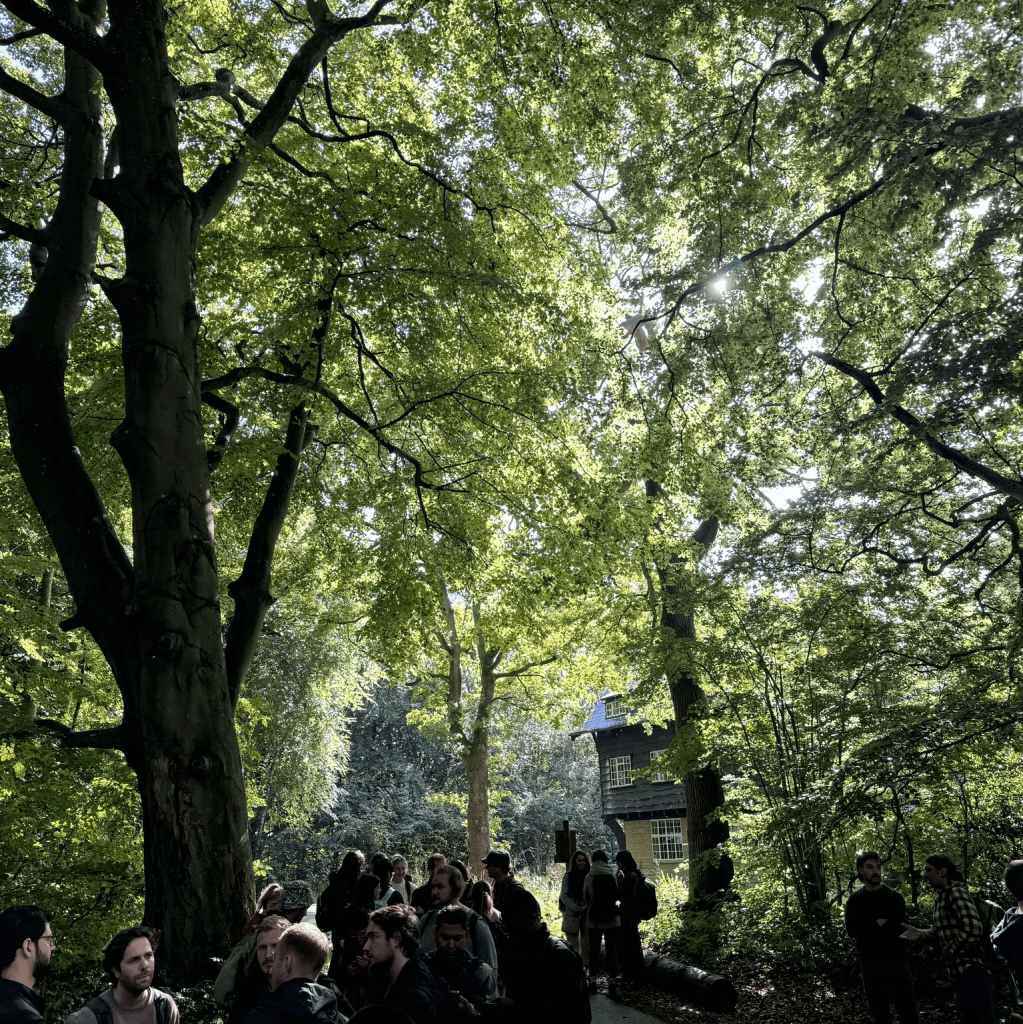
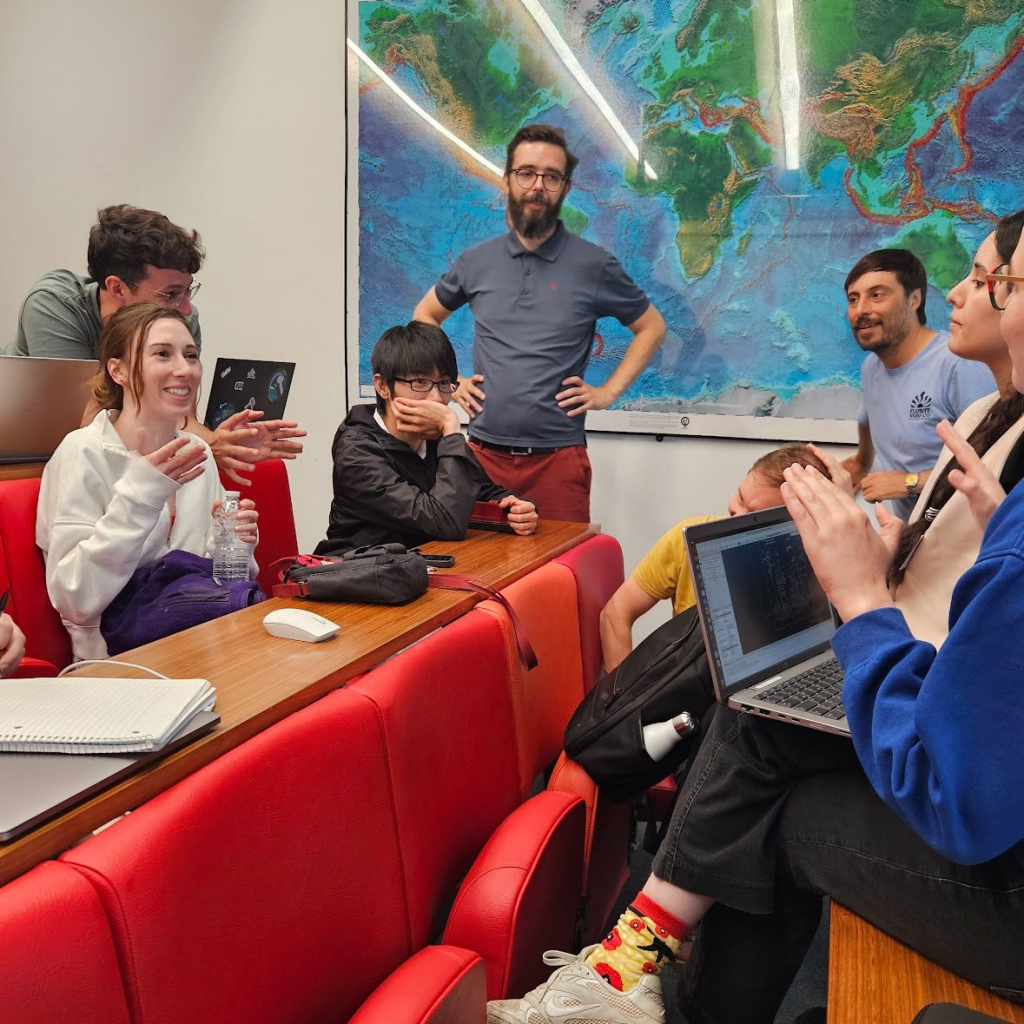
At this point, it’s a given that everyone’s been busy in the field for this time of year! Whilst many of us are out collecting the last bits of data ahead of stopping for the winter (mostly – Will is sampling year-round!), others have been off to conferences and meetings! Broghan has been at the 3rd Interdisciplinary Summer School on Forest Ecosystems, a summer school run jointly by four EU COST Actions: 3DForEcoTech, ARiF, CLEANFOREST and PANGEOS. The event was held at the University of Oxford and Wytham Woods, and had Broghan interacting with fellow early career researchers and world leaders in forest research. Perfect food for thought ahead of thesis write-up!

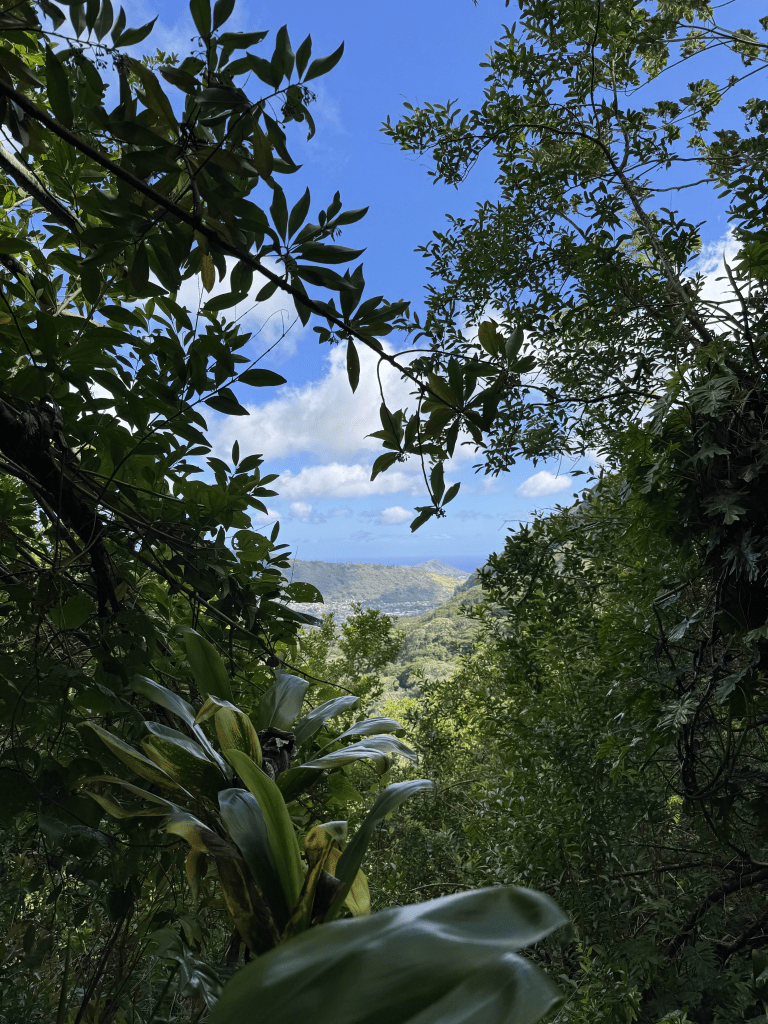
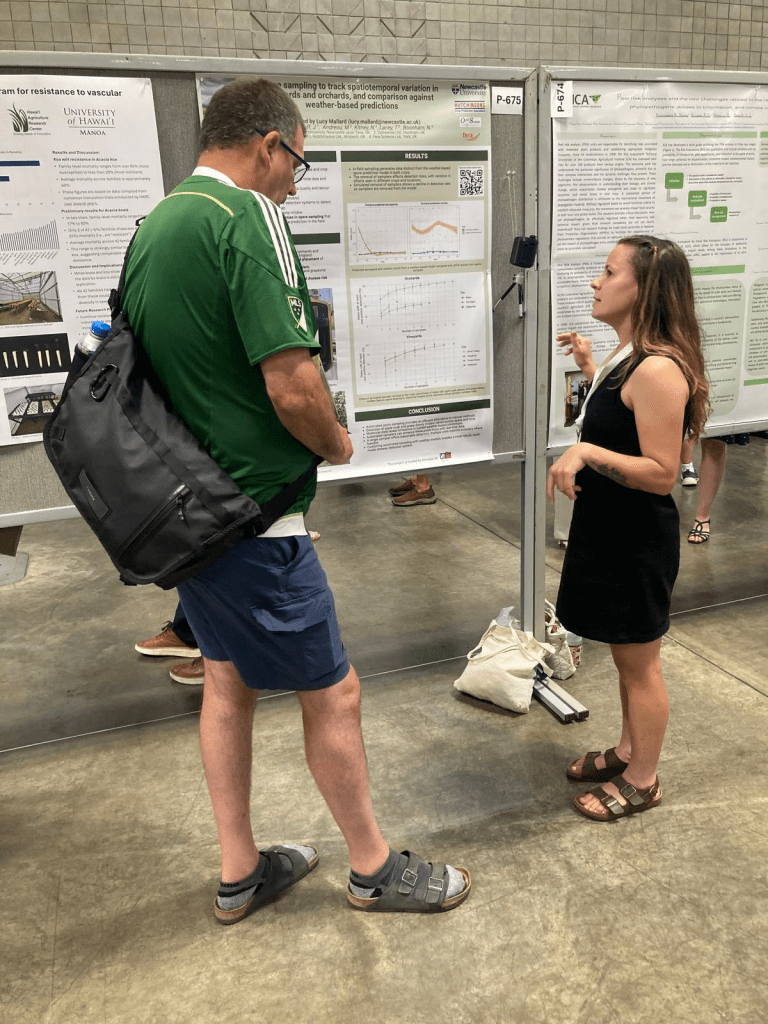
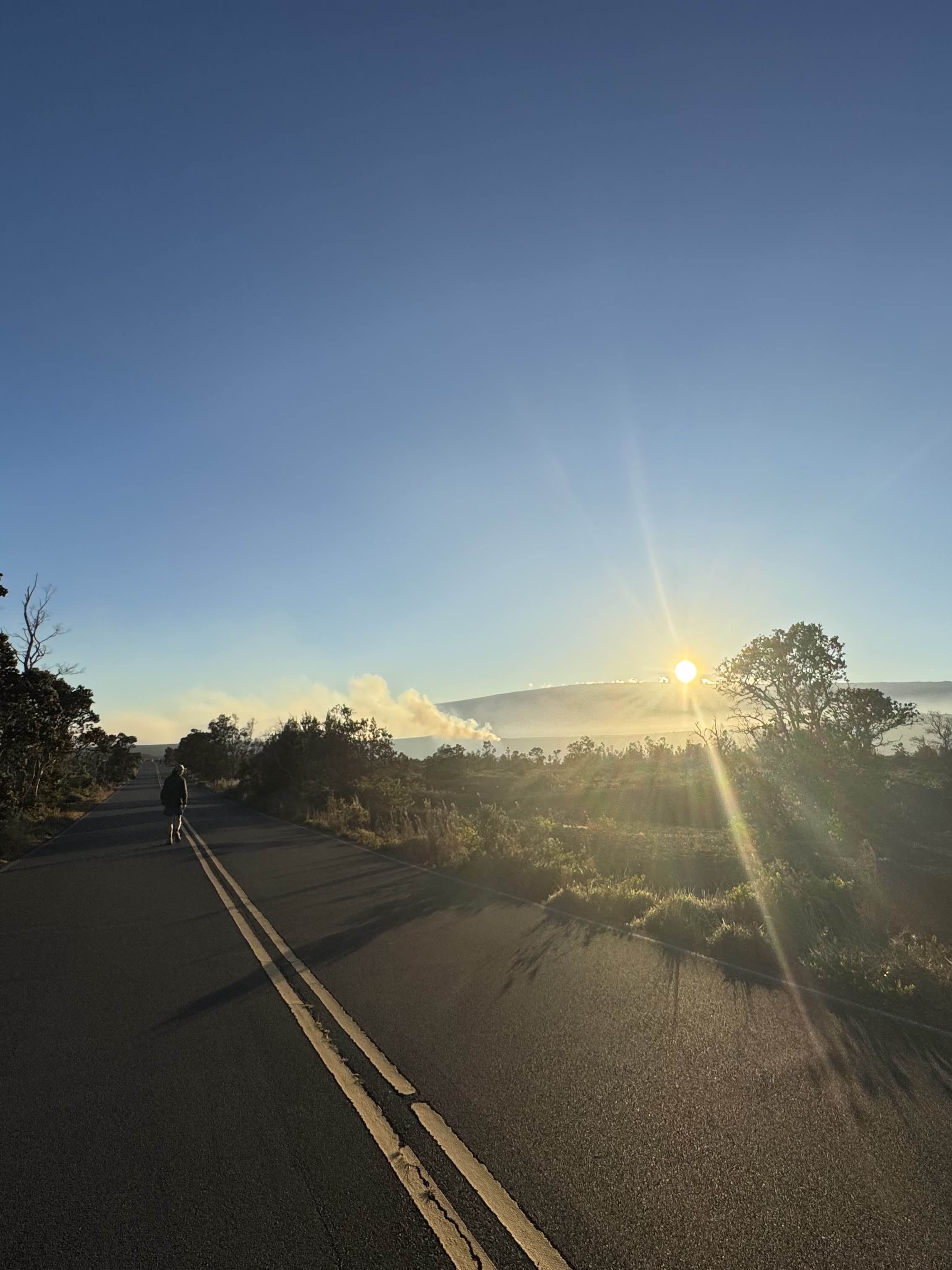
Lucy has been out in Hawaii for the American Phytopathological Society’s Plant Health 2025 conference in Honolulu – a whopping conference with 40 different sessions and over 1,000 attendees! Lucy had plenty of engaging discussions with fellow researchers and world leaders in phytopathology (whilst also getting to see Hawaii’s incredible flora and fauna, of course)! If you want to see more about Lucy’s work, check out our webpage dedicated to her current research on automated disease spore sampling and detection.
Jordan gave a talk for entoLIVE focused on the ongoing work on nutritional networks across FERG. The talk goes through some of the underlying data and preceding work, the development of the concept and some of the ongoing applications and ideas! Check it out below!
Thought for the month
If a hypothetical disconnected future civilisation found all of today’s research, would they be able to organise the various disjointed strands enough to make sense of any of it?
Fun with FERG
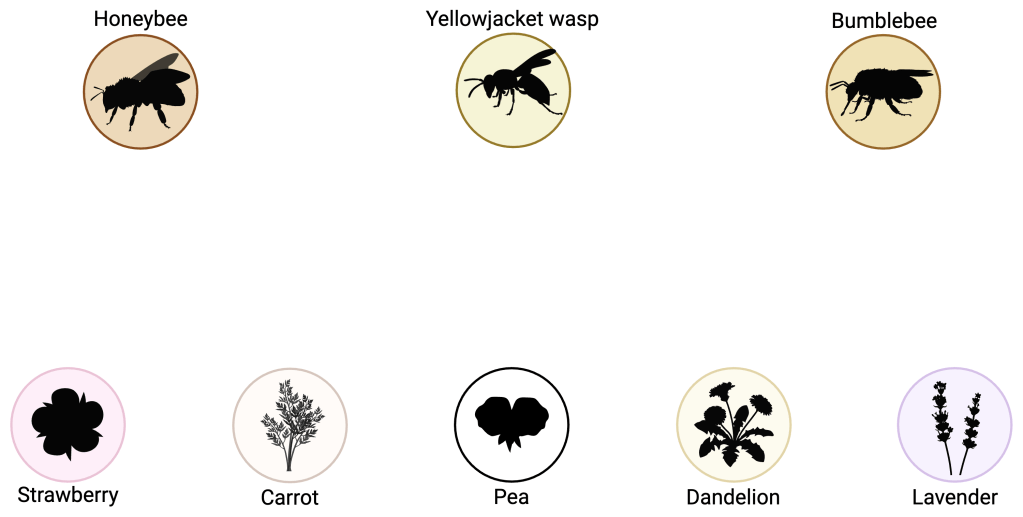
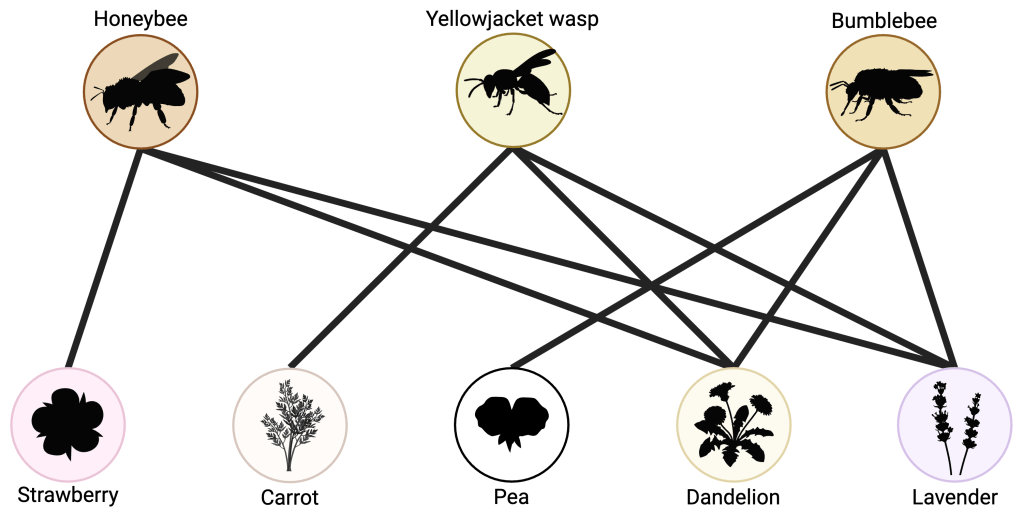
We have another logic puzzle for you, this time focused on pollinators! Complete the network using the information below – the answer is at the bottom of the page!
Three pollinators are foraging in close proximity to five species of flowering plant. The pollinators are a honeybee, a bumblebee and a yellowjacket wasp. The flowering plants are strawberry, carrot, pea, dandelion and lavender.
Across the day, each pollinator visits exactly three plant species. Fill in the ecological network below with links based on the following rules:
- Every pollinator visits lavender and they all share one other plant.
- The bumblebee is the only pollinator that visits pea.
- The honeybee never visits carrot.
- The wasp and the honeybee share exactly two plants.
- The strawberry plant is only visited by a single pollinator.
- The bumblebee and the honeybee both visit dandelion.
- The wasp and the bumblebee overlap in exactly two plants.
- Carrot is only visited by one pollinator.
Fill in the network and check it against the answer at the bottom of the page!
Species of the month
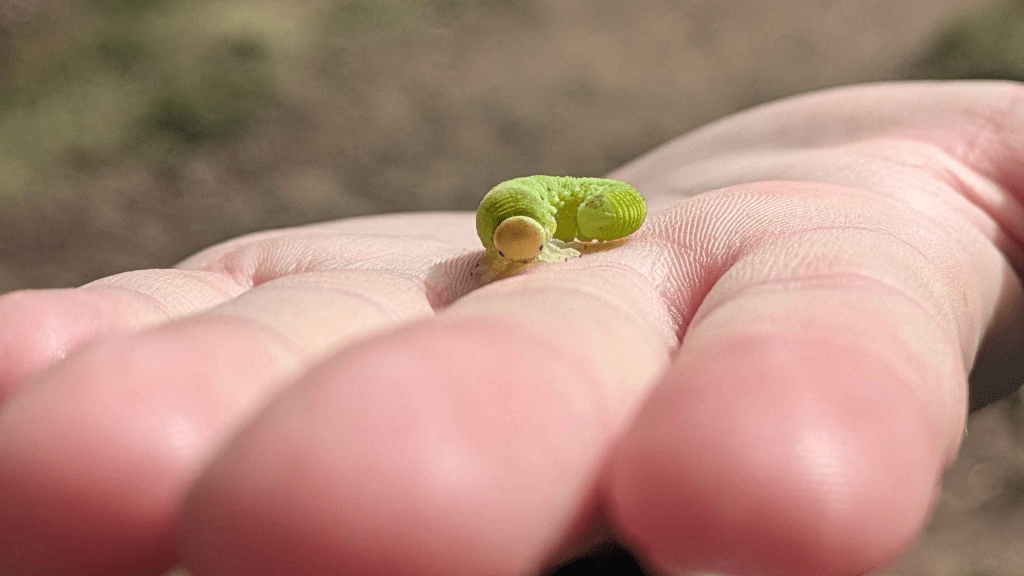
This month, our species of the month is not a single species, but a large group! Symphyta is a suborder of Hymenoptera commonly referred to as the sawflies. This name is based on the saw-like ovipositors of adult females, which they use to cut into plants to lay their eggs. The adults can be differentiated from their fellow hymenopterans by their lack of a narrow waist, whereas the larvae are often misidentified as caterpillars. The larvae have various incredibly effective anti-predator strategies, like clustering together and regurgitating irritating compounds. They can be pests in some contexts, but are always a joy to see from an entomological perspective!
Research spotlight
This month, we want to highlight this paper from Nathan Viel and co-authors: What is on the menu when you move far away? Realised diet niche in a geographic-range-expanding ant-eating spider
This paper explores some really important fundamental questions related to the trophic ecology of range-expanding species, with important application to migrants, invasives and non-native species. The paper demonstrates that Zodarion rubidum Simon, 1914 (Araneae: Zodariidae), a myrmecophagous (ant specialist) spider, is strictly myrmecophagous across its expanding range, with similar dietary niches between populations, but feeding more on Myrmicinae (Tetramorium ants) toward north-east Europe. Dietary specialism could prevent many species from expanding their ranges, but this doesn’t seem to be the case for Z. rubidum.
Fun with FERG: solution!
How did you do? Let us know!
 Foraging Ecology Research Group
One thought on “FERG News September 2025”