
Following the last Symposium on Ecological Networks (EcoNet) in Israel in 2023 (which was the topic of one of our first blog posts), Darren Evans of the Network Ecology Group (NEG) was approached to host the next EcoNet. Darren asked Jordan, Katherine Baldock of Northumbria University, Madeleine Fabusova from NEG and Shai Pilosof from the Ecological Complexity Lab, Ben Gurion University to co-host and organise the event, which was an absolute blast! Across the week, Jordan ran a two-day molecular analysis of trophic interactions workshop with help from Ben, Rosy and long-term FERG collaborator Max Tercel, and the three day conference, focused on network ecology in the Anthropocene, concluded with a trip around the beautiful Bamburgh Castle!

The workshop: molecular analysis of trophic interactions
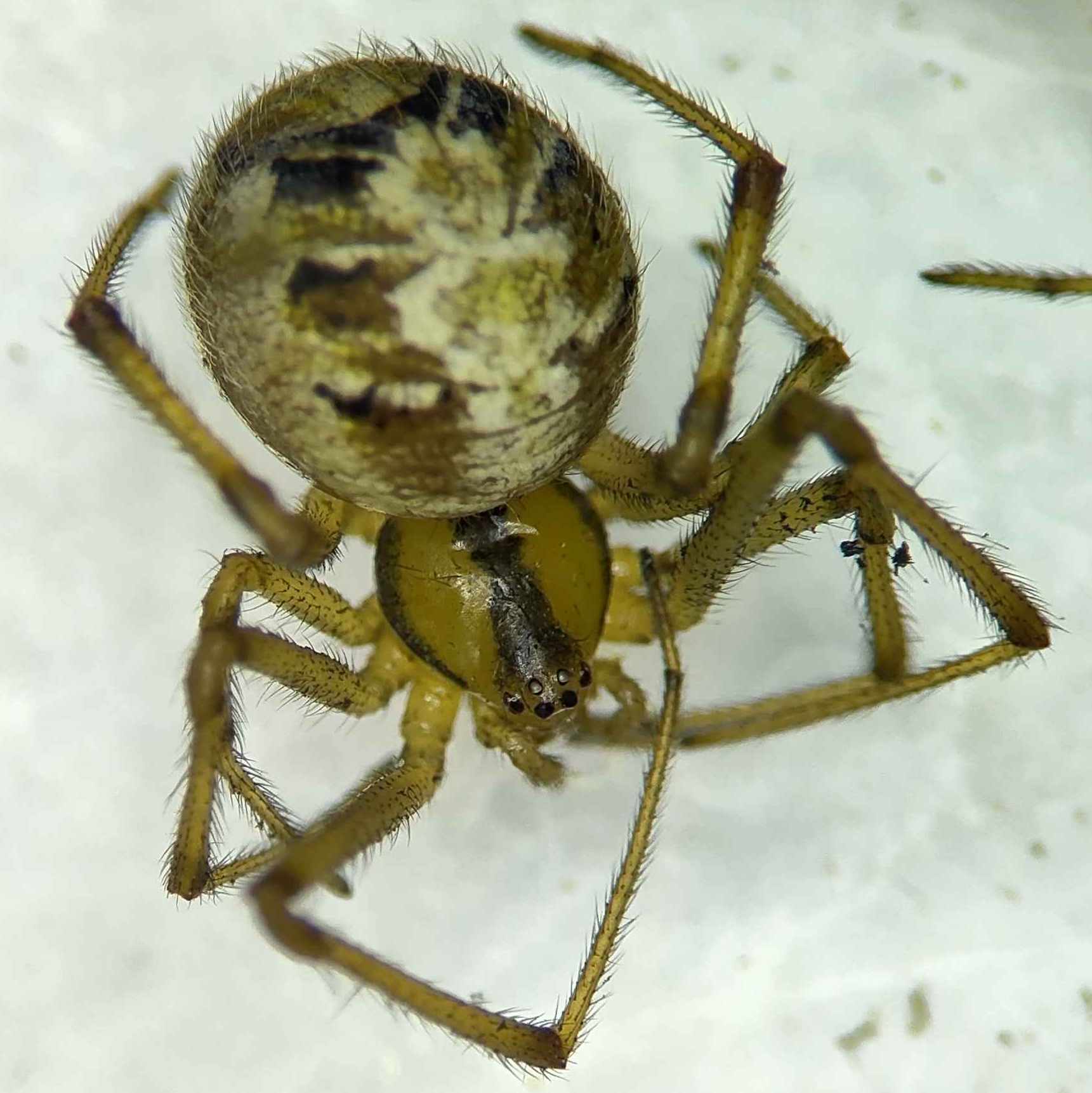
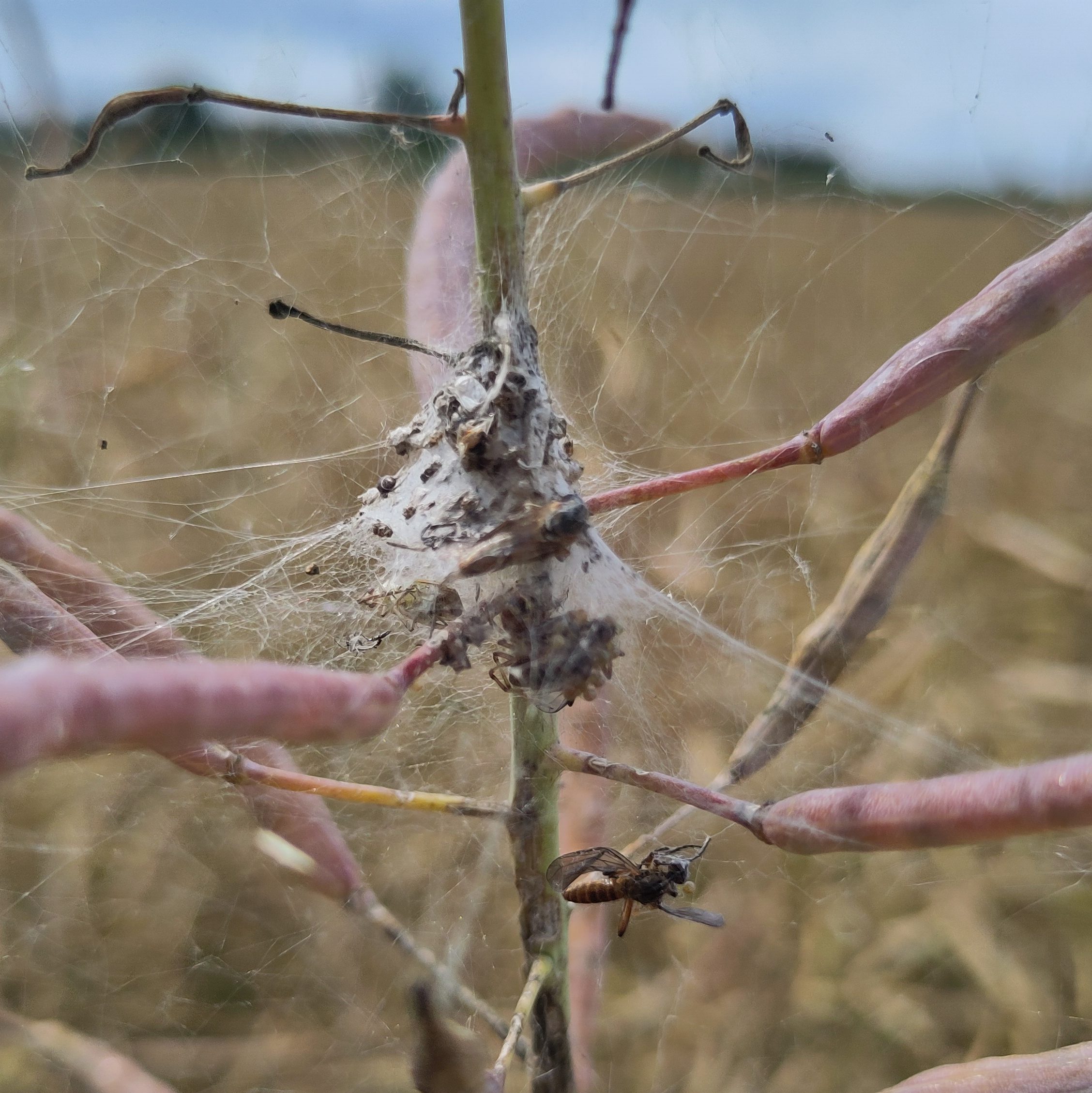
The workshop, set up for 15 participants, sold out incredibly quickly! The participants were a global group spanning five countries and included everyone from undergraduates to professors! We had an absolute blast going from samples to sequences across just two days using Newcastle University’s Molecular Diagnostics Facility’s robotics alongside some tips and tricks Jordan has developed over the years. To exemplify the process, the workshop used 78 Theridion cf. varians (Araneae: Theridiidae) spiders collected from oilseed rape crops at one of our university-run experimental farms. If you want to see the full run-down of what we did, check out the open protocol associated with the workshop over at Protocols.io.
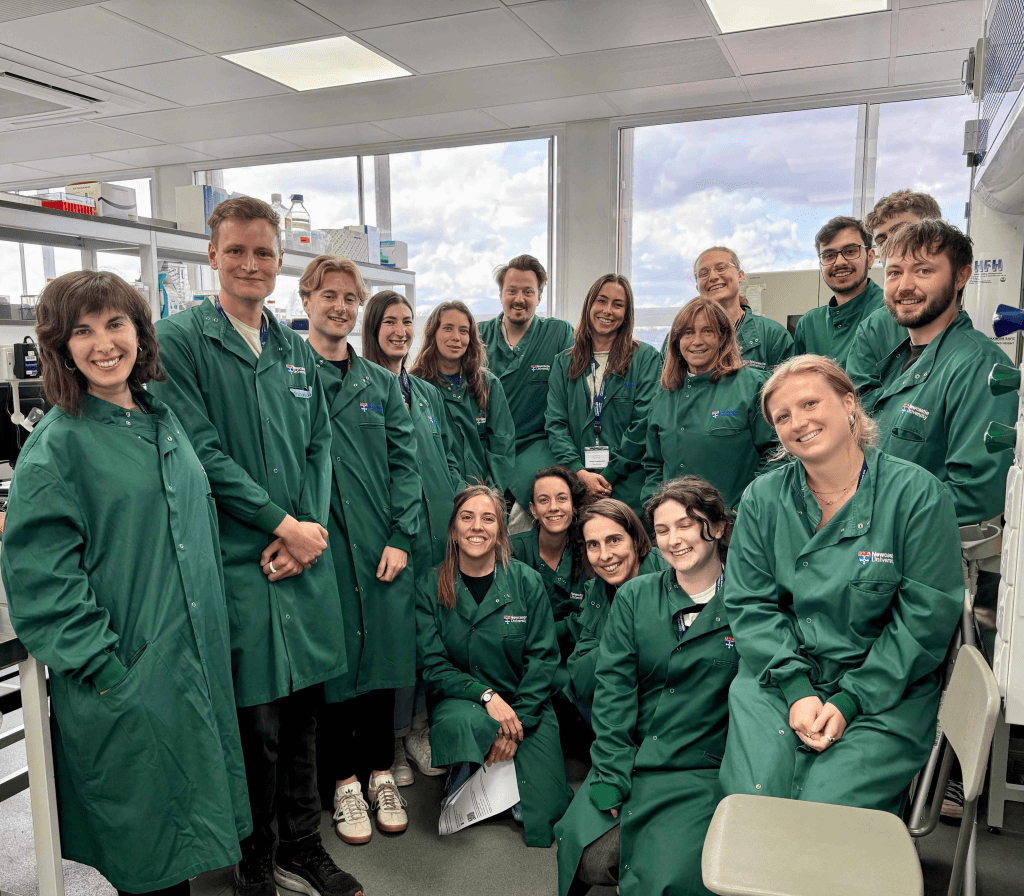
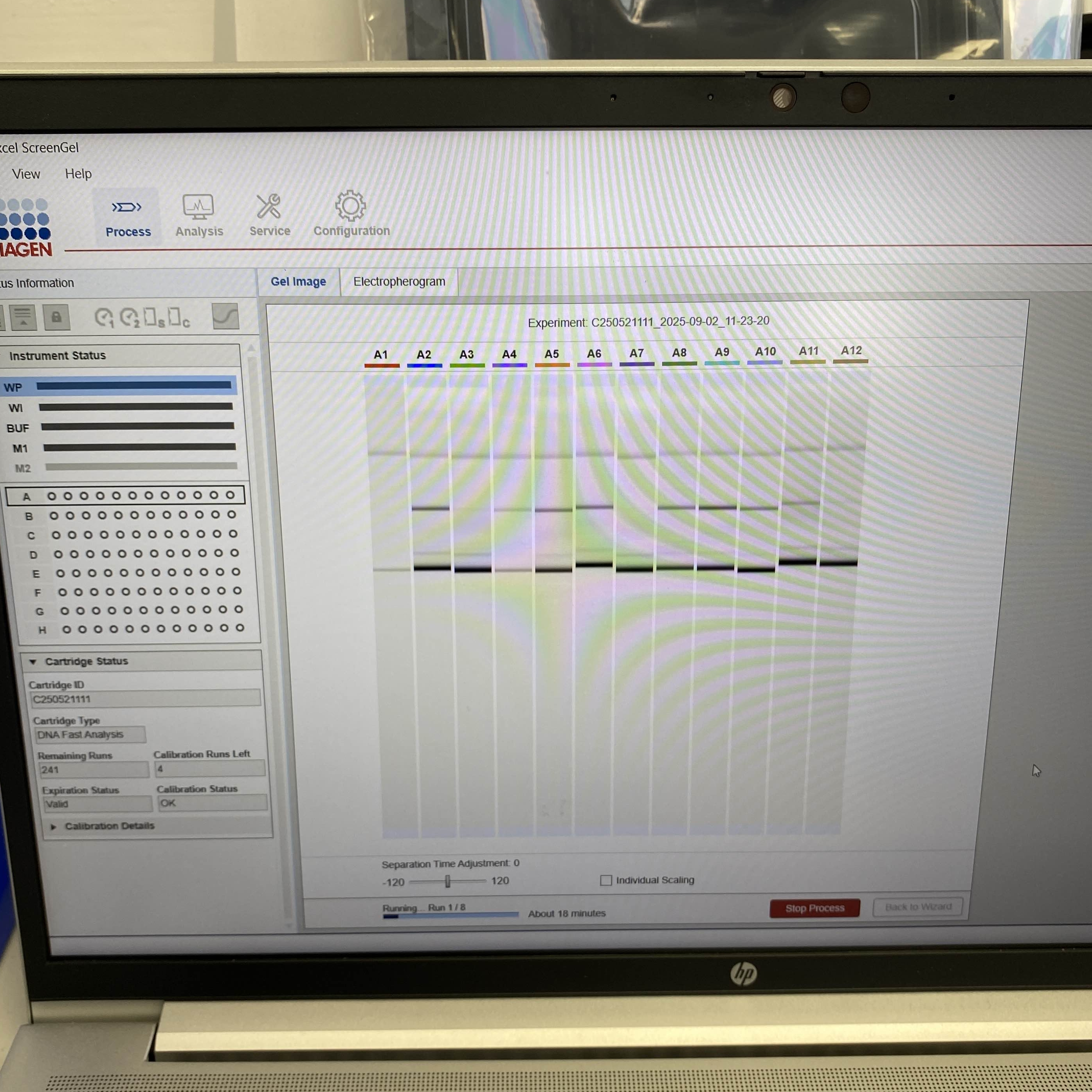
The workshop was primarily structured around the lab protocol, starting off with sample lysis and quickly progressing to PCR in day one. Day two then involved digital electrophoresis (using our Qiagen Qiaxcel), pooling based on the Qiaxcel output to achieve equimolarity and, following a bead clean to remove primers and enzymes, the Oxford Nanopore Technologies Ligation Sequencing Kit. Between these steps, alongside coffee breaks (featuring national cake icon Colin the Caterpillar), we had two lunchtime seminars to go through some of the more conceptual challenges involved. On the first day, Jordan gave an overview of some of the conceptual limitations of dietary metabarcoding and some of the challenges involved in merging it with observational data to construct ecological networks (based on a 2022 paper he led in Methods in Ecology and Evolution). On the second day, we were joined by Max Tercel, who gave a talk about the ‘problem of omnivory’ and some of the challenges involved in dietary analysis of omnivores using metabarcoding (based on a 2021 paper he led in Molecular Ecology).
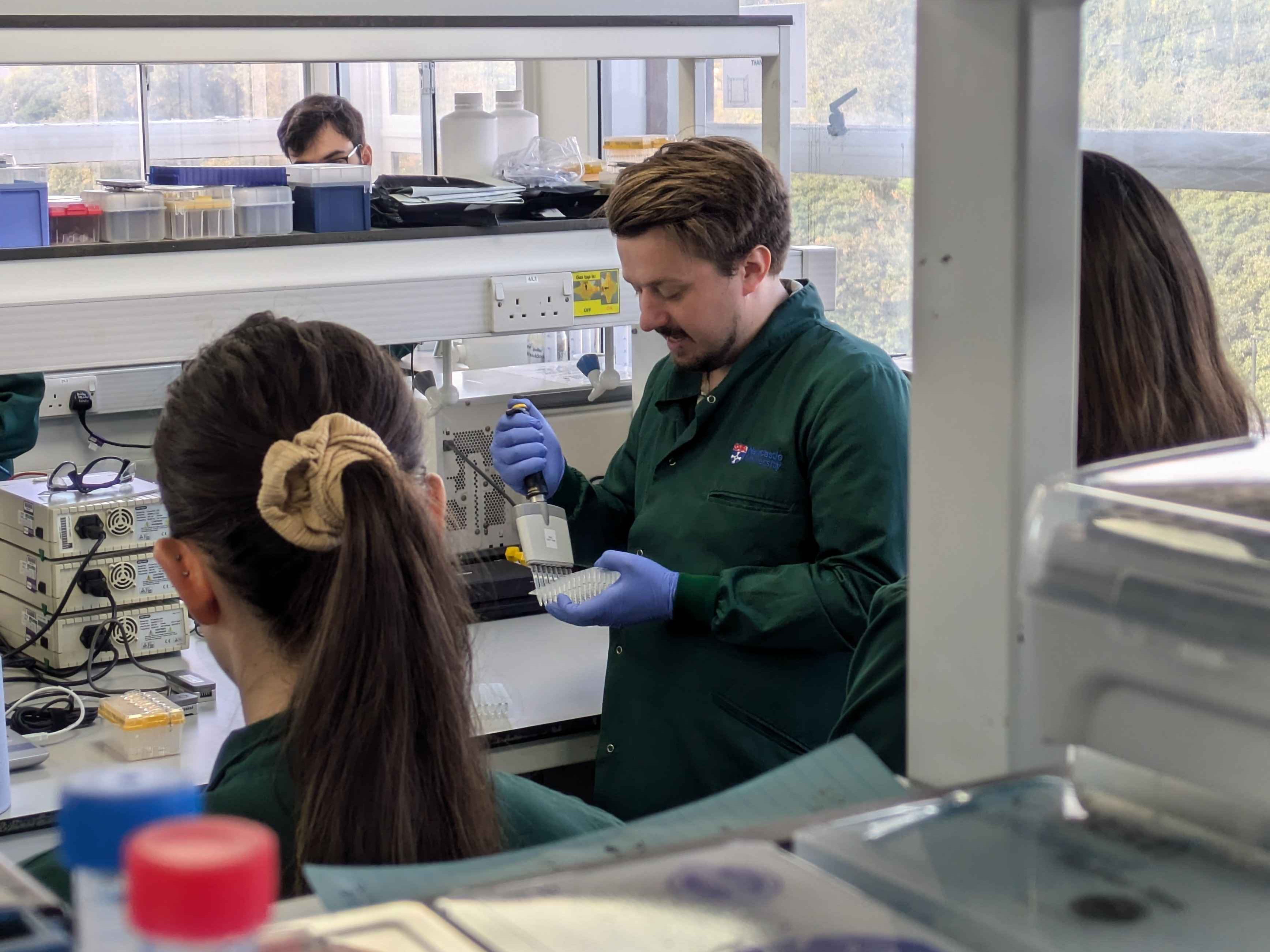
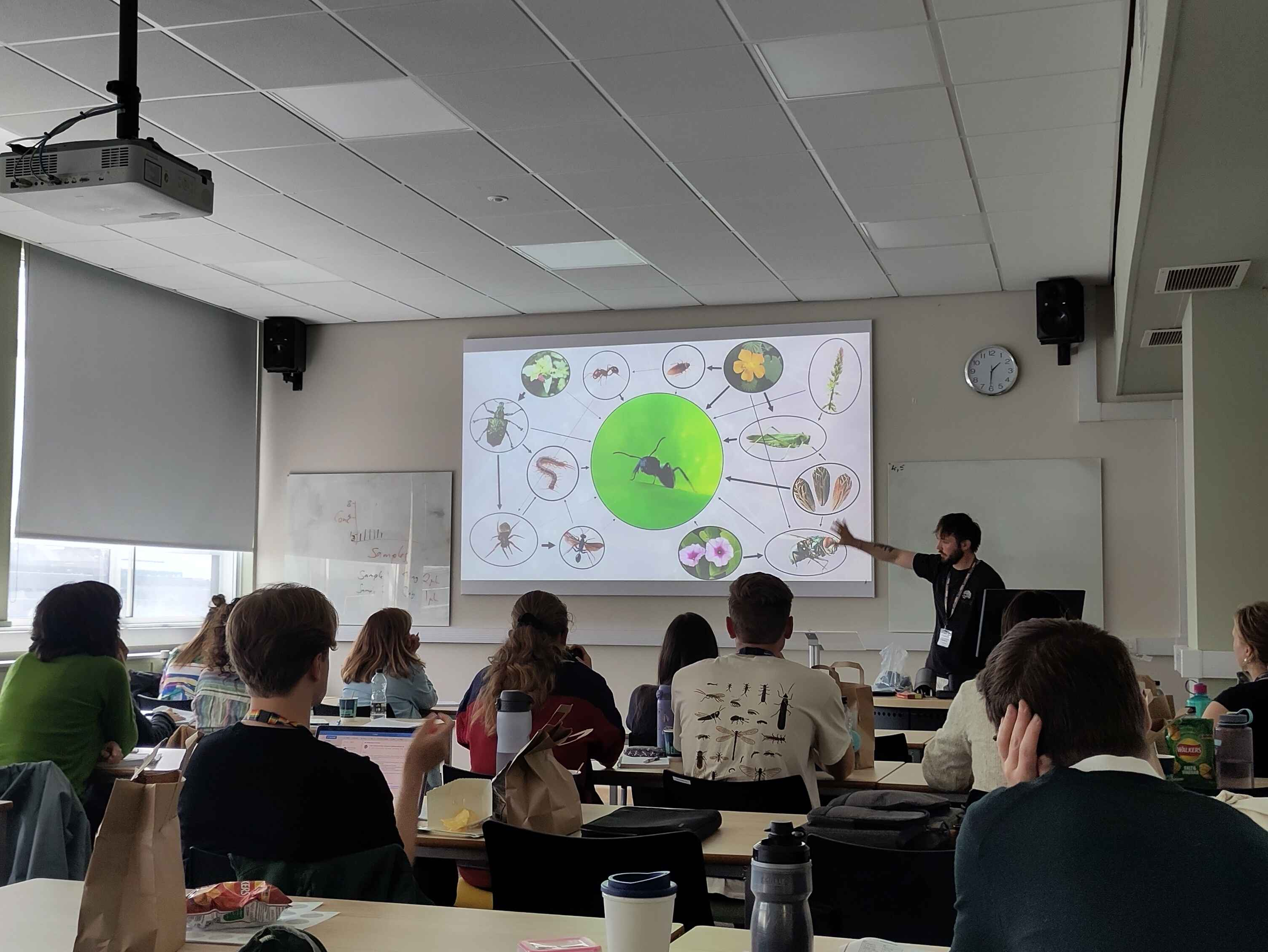
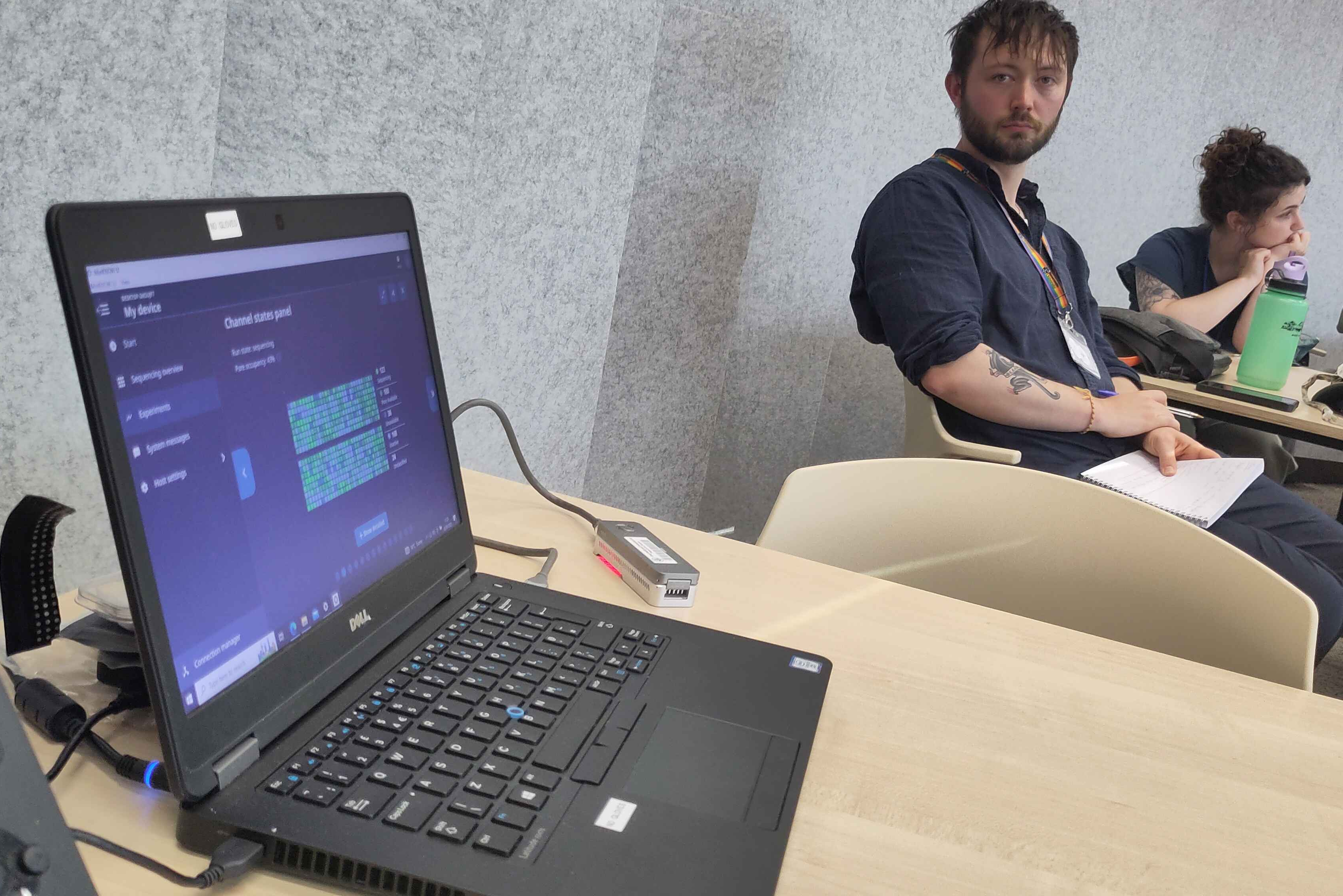
It was an ambitious plan with little room for error, simply because of the conference schedule that it led directly into, but it all went brilliantly with only a couple of minor hiccups throughout. On the Wednesday, immediately before the conference proper began, the workshop team loaded the DNA into a MinION sequencer in the symposium lecture theatre, allowing everyone to keep a close eye on the outputs as the conference progressed. Many of the wider delegates came to take a peak too, given that it was a fairly unique quirk to the conference and relevant to several of the talks across the sessions.
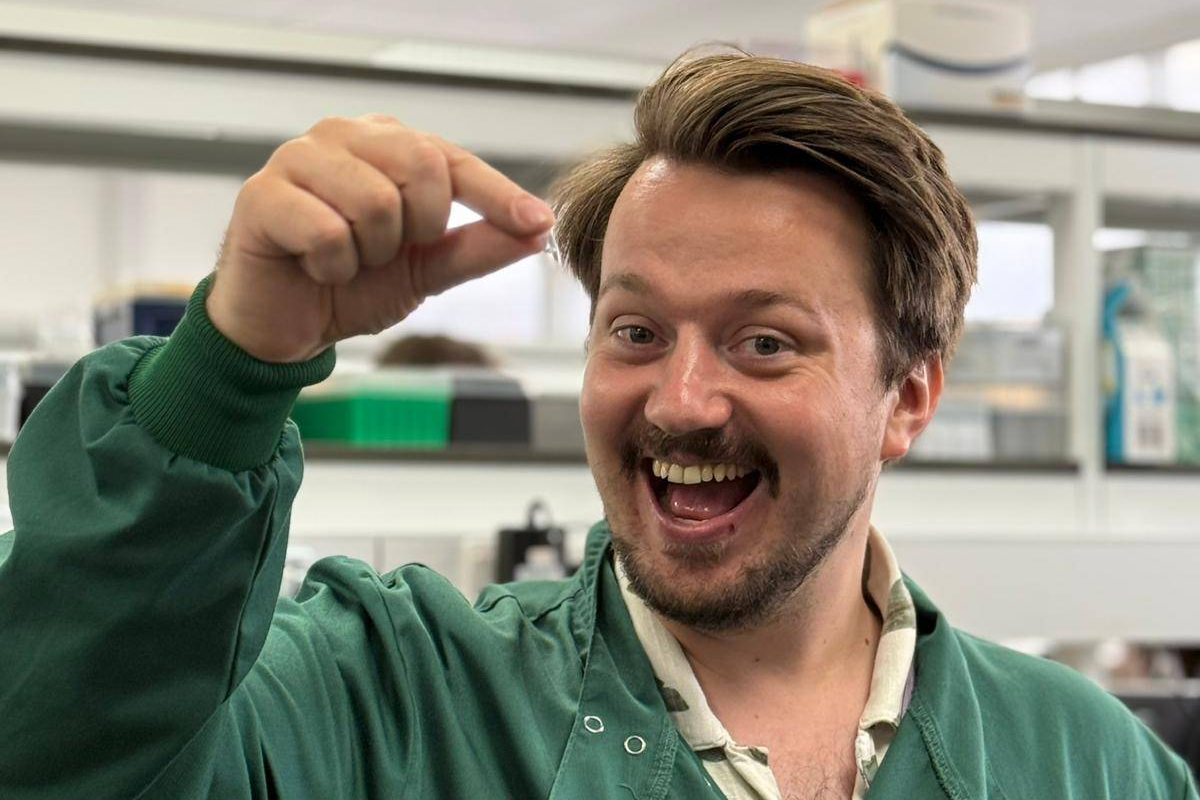
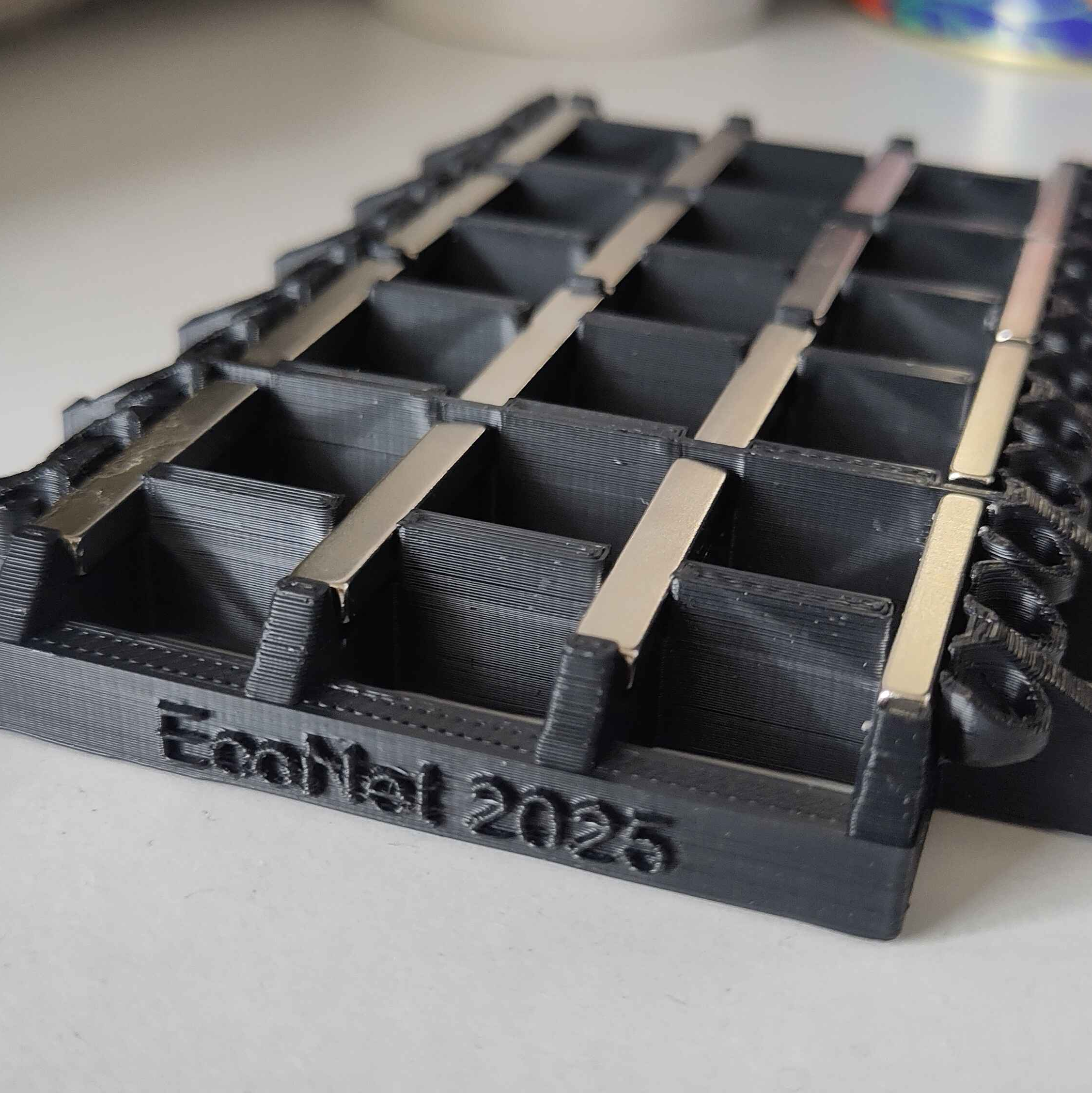
The workshop was a great opportunity to show off some of our cool technologies like the Kingfisher Apex and the Qiagen Qiaxcel, but the focus was on building capacity and knowledge to conduct these techniques with or without these machines. To this end, we pulled out one more toy, our 3D printer, to 3D print a 96-well magnetic plate rack for all participants of the workshop. These relatively unassuming small plastic trays can cost a great deal (the best budget option usually around £70, but other models upwards of £300 and even as high as £2000), but are crucial for much of our lab work, especially when our robots are busy or misbehaving. These plates were even embossed with the conference title, hopefully making it a valuable keepsake for years to come!
The conference: The VII Symposium on Ecological Networks
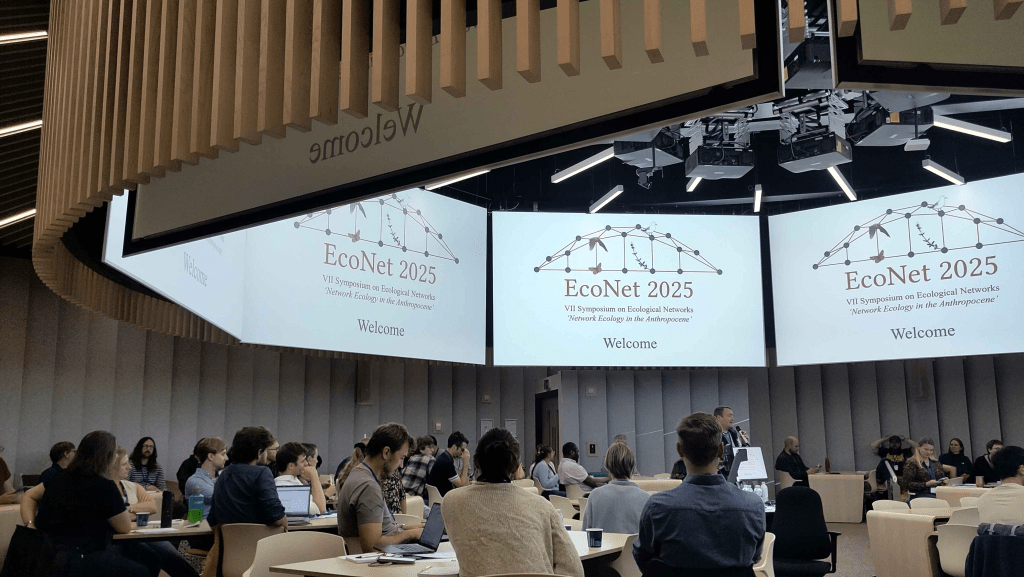
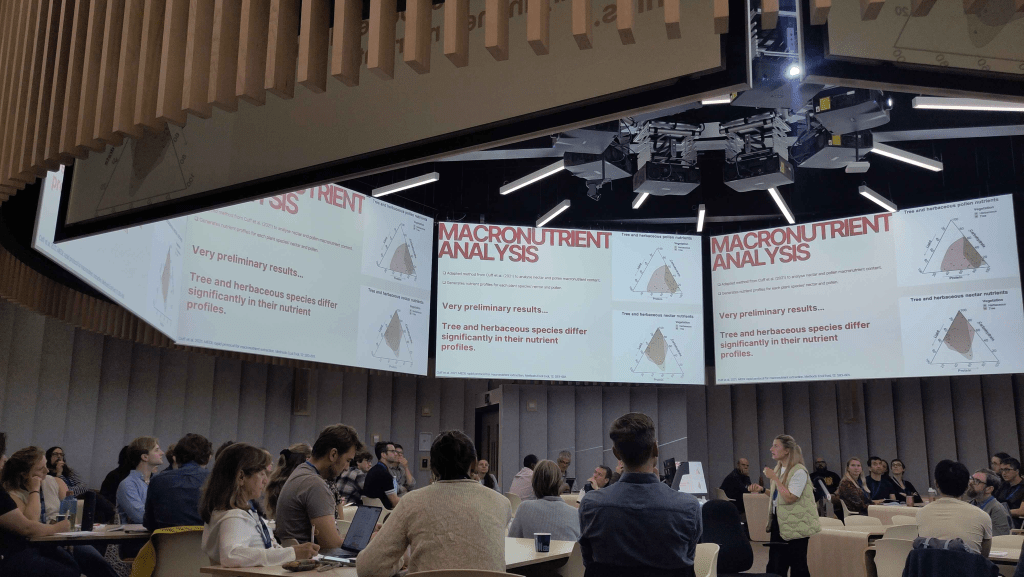
With the workshop concluded, we transitioned straight into the main conference, hosted in our brand new Stephenson Building! The lecture theatre used for the talks was uniquely circular, giving the impression of some kind of control room and bringing the many beautiful figures within the talks to life in a stunning panorama. As above, the focus of the conference this year was network ecology in the Anthropocene, so we had talks and posters on everything from climate change and artificial light through to urbanisation and land management.
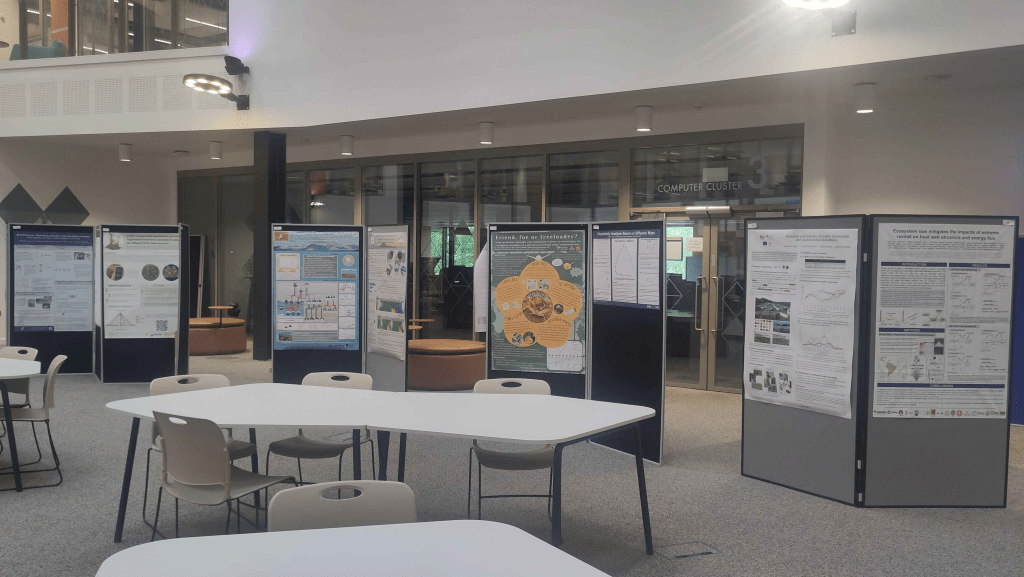
As always for EcoNet, talks ranged from the theoretical physics and maths underlying ecological networks, through to the ecology itself and how ecological networks differ across space, time and other contexts. We had an excellent talk from our very own Bea Dale about her tree flower-pollinator networks, including her work constructing nutritional networks across time using her massive dataset of pollen and nectar nutrients! The incredible quality of Bea’s talk was demonstrated by her winning the best talk award! Well done, Bea!
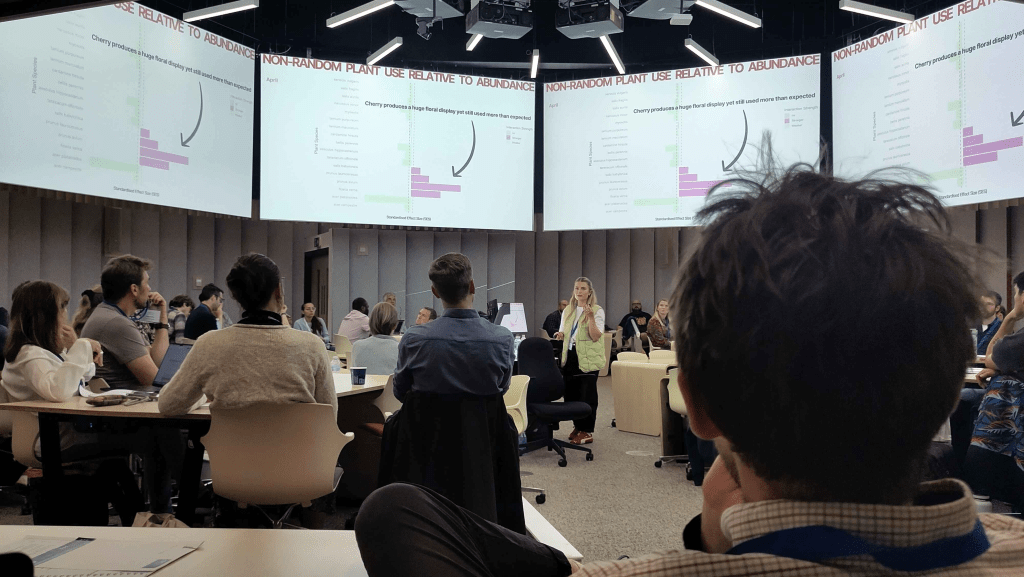
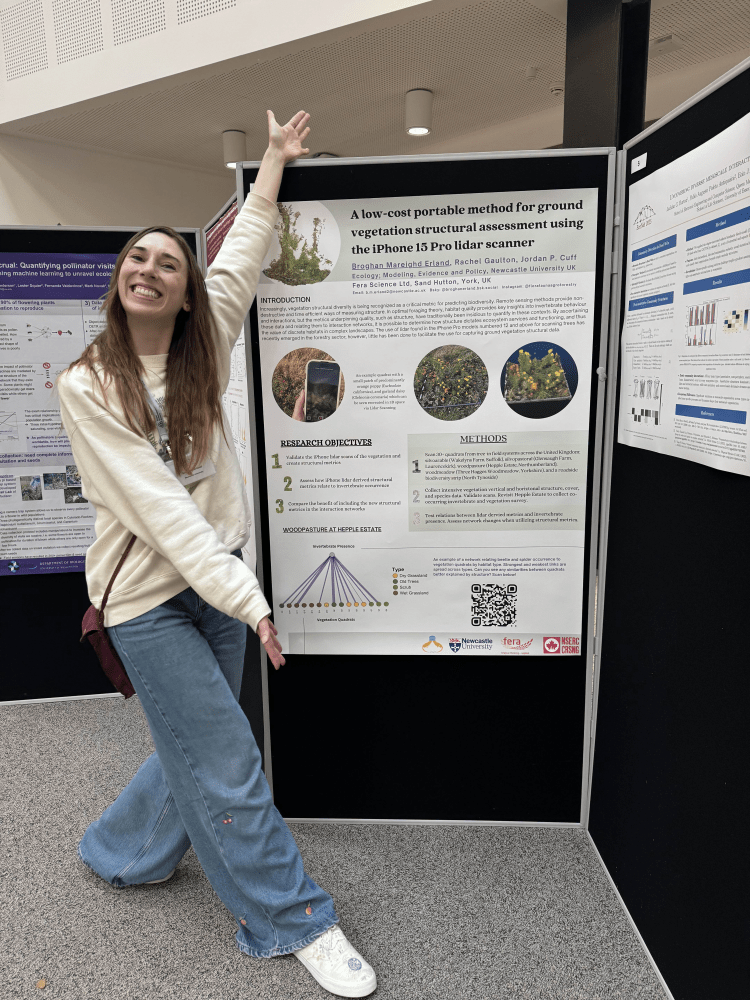
There were many excellent posters across both days of the conference, from theoretical advances in network analysis to the latest empirical networks constructed with a wide range of methods. Among these were a couple of excellent entries from FERG, presented by Rosy and Broghan! These catalysed some excellent discussions with excited poster perusers and was a great way of showing off some of the cool things we’re doing with network science!

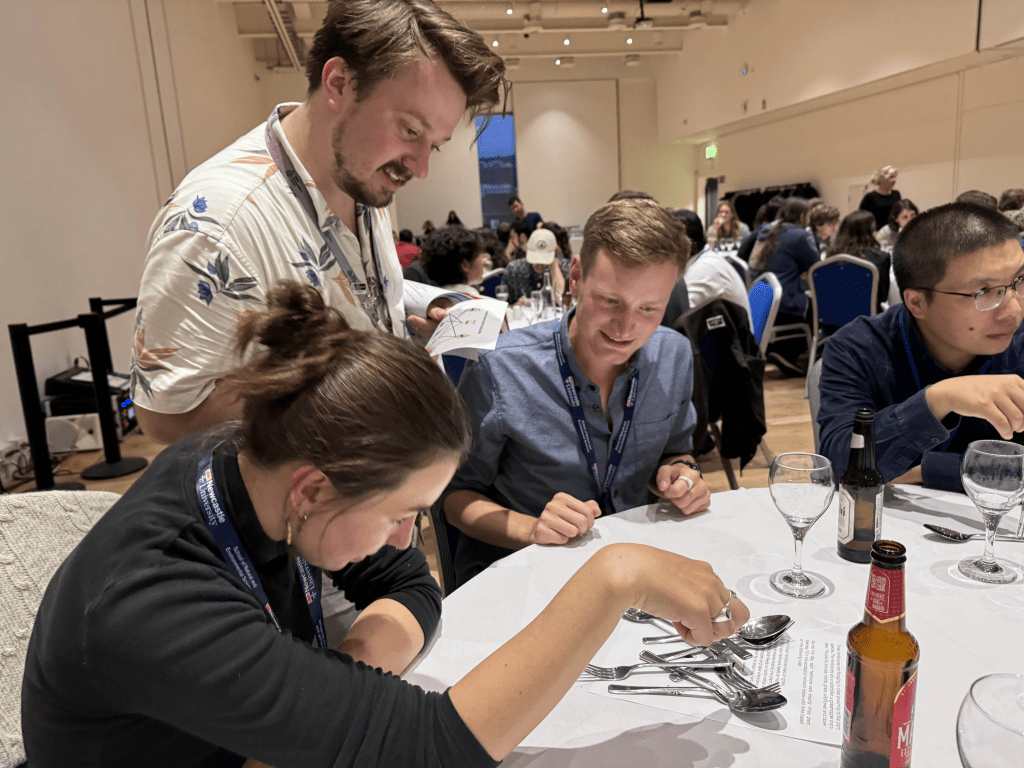
For the conference dinner, hosted in our wonderful Great North Museum: Hancock, Jordan put together a few new network logic puzzles (which you can see examples of in our September and June FERG news posts). These were met with everything from unmitigated enthusiasm to mild rage (mostly because a couple had a secret second solution), but kept conversation alive across the room! We had some really innovative approaches to solving them, including a glassware and cutlery recreation of one of the networks. Some of the better ones may make an appearance in future FERG news posts!

It was an intense week with great conversations, incredible science and all sorts of fun. Thanks to Darren for having us along for the ride, and to the members of both FERG and NEG who came along and kept the show on the road! Now we just have to wait for two years until EcoNet2027 in Brazil! See you there!
 Foraging Ecology Research Group
3 thoughts on “FERG joined NEG in hosting EcoNet 2025!”