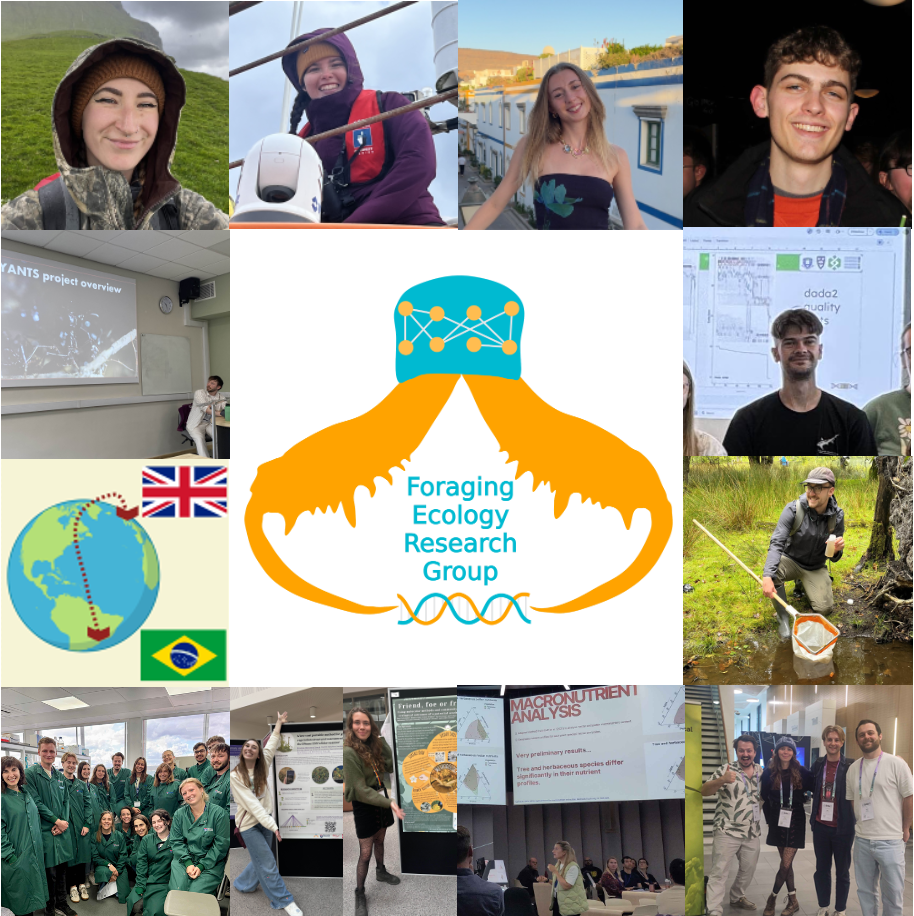
Happy Arachtober! Given the various spider-related projects we have underway in FERG, it’s always a special time of year (and great for bizarre spider merchandise like the infuriating trend of shops selling ‘spider skeleton’ Halloween statues). We’ve had a busy month at conferences and workshops, and the new academic year has meant we have a few new faces in the group!
New FERGers
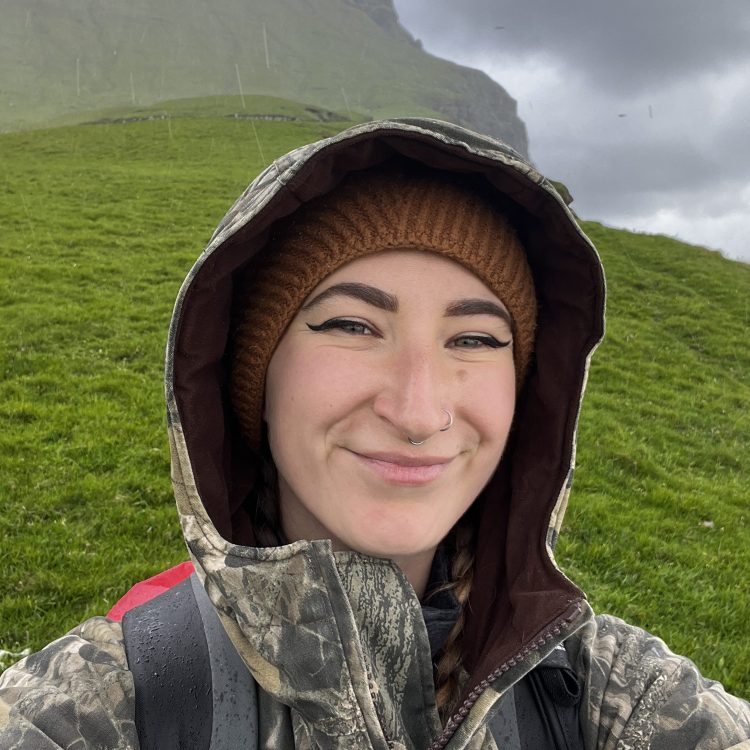
Welcome, Shannon Goldberg, who has just started the third year of her OnePlanet DTP PhD at Northumbria University! Shannon’s project is titled “Monitoring and detecting invasive species in anthrobiomes: Bees on the Faroe Islands” and she will be joining us in the Molecular Diagnostics Facility for some metabarcoding in the coming months! Read more about Shannon and her project over on her OnePlanet web page from the start of her PhD!
We’ve also had Rebecca Wright, who did her third year undergraduate project on ground beetle nutrients with us last year, return for her MBiol project on harvestman diet! She’s not the only master’s student joining us though – Bethan Griffiths, primarily working with Will Reid over in the Modelling, Evidence and Policy group here in Newcastle, will be joining us to look at the diet of the sub-Antarctic fish, Gobinotothen gibberifrons, and how it changes with body size, and Fin Ryder, based in Cardiff University with longtime FERG friend Fred Windsor, will be investigating how macronutrients structure freshwater food webs!
We also have third year undergraduate project students Ali Williams and Thomas Welsh with us for the next few months, looking at agricultural beetle parasitoids and earthworms in tree hollows, respectively! So many exciting things to come!


Outputs and outcomes
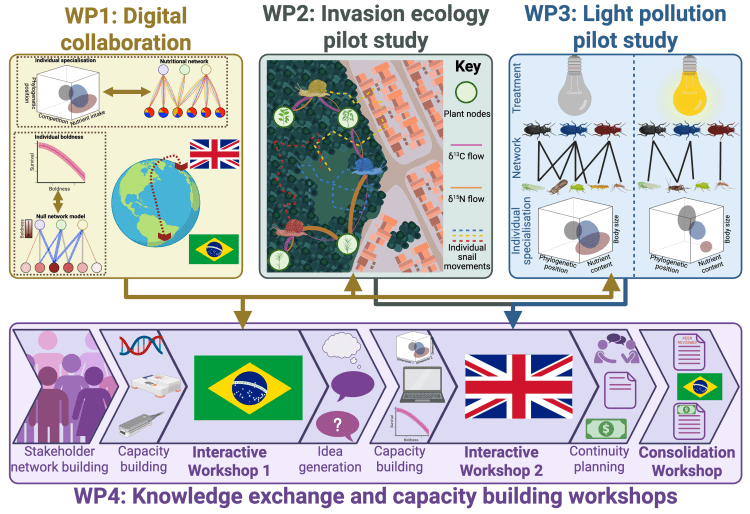
In the last few weeks, we’ve also had some exciting funding successes! Jordan secured NERC-FAPESP funding to develop collaborations between FERG and Raul Costa Pereira’s group in Unicamp, Brazil! The project, titled “New approaches to bridging individual-level foraging variation and ecological network structure in the Anthropocene” will involve bridging methods from individual- and network-scale analyses of foraging ecology to build a more integrative and mechanistic understanding of the drivers of trophic interactions. We’re all really excited to get started with this!
That wasn’t the only grant success though! Ben was awarded one of the Royal Entomological Society’s Equality, Diversity and Inclusion grants for an exciting project that will launch in the coming months! Stay tuned for more exciting updates to come!
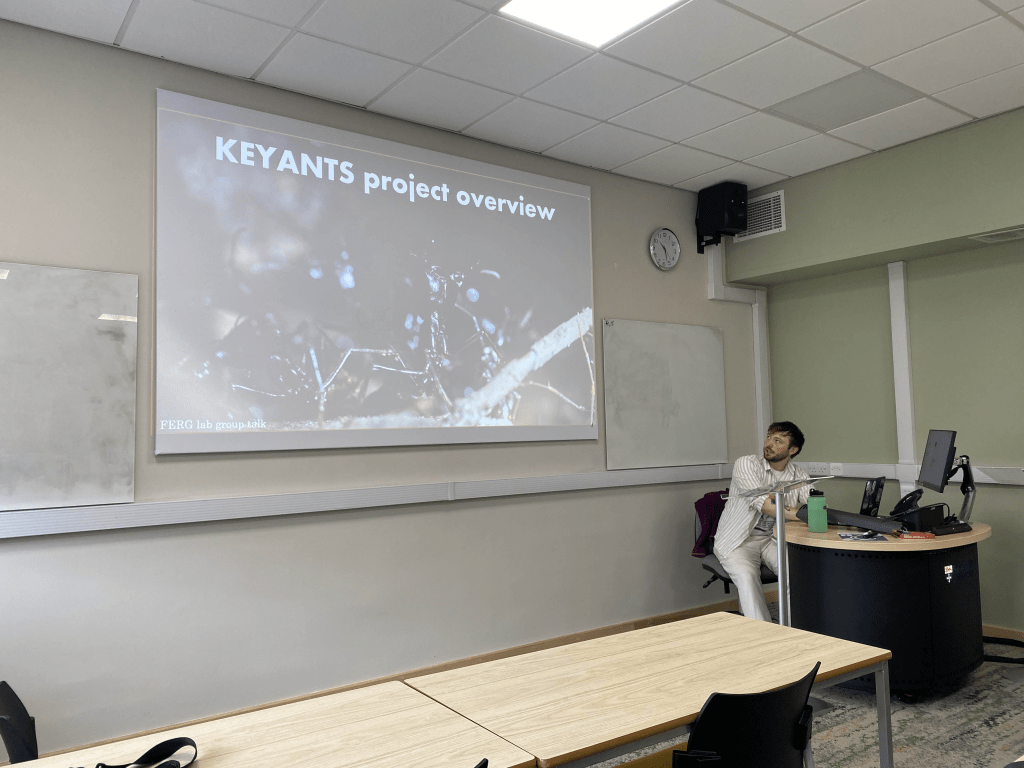
We had a wonderful visit from Max Tercel from Cibio, Portugal, who came across for the EcoNet and Ento conferences, but took the time to come and give us a talk about his ongoing work on Dorylus driver ants! Max was also indispensable for the EcoNet workshops, for which he gave a lunchtime seminar about the challenges of molecular dietary analysis of omnivores. Come back soon, Max!
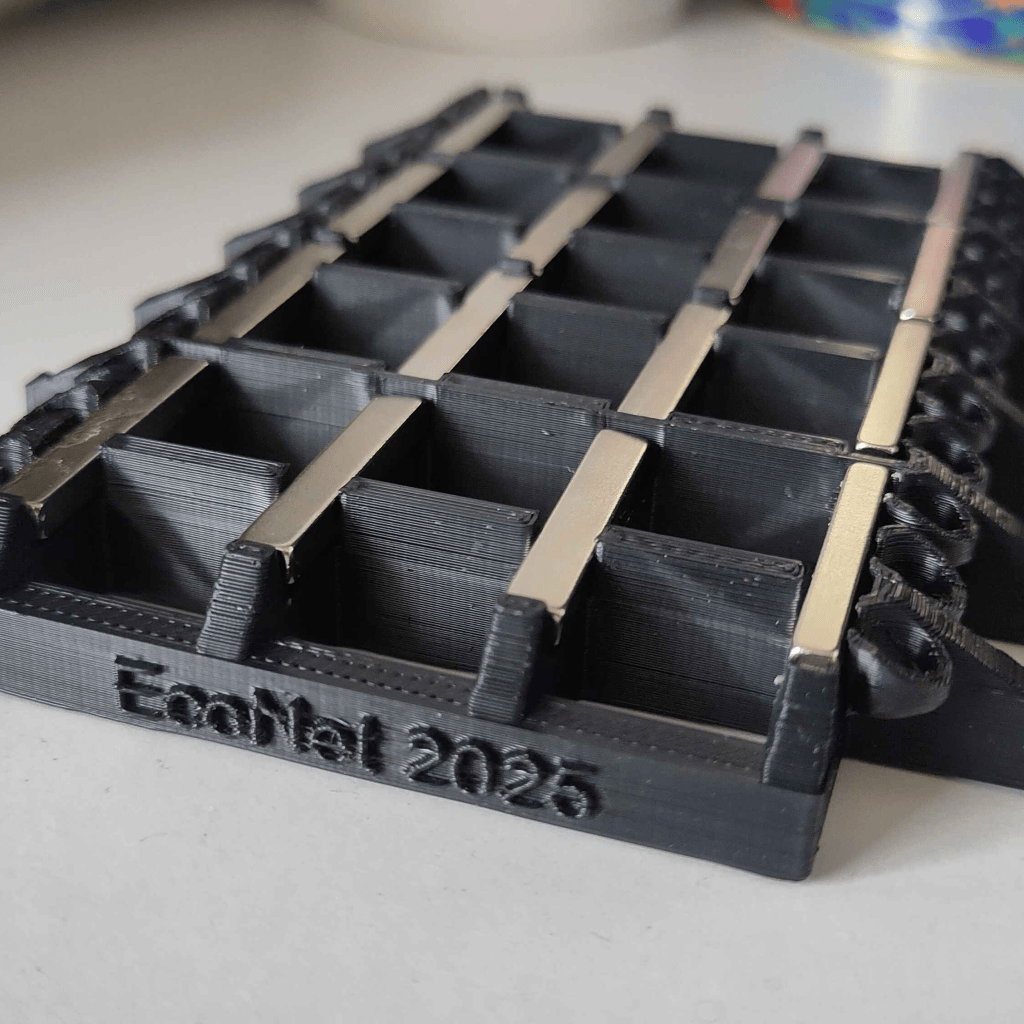
We’ve published a new protocol based on our most up-to-date workflow for molecular analysis of trophic interactions. This was prepared for the workshop run as part of EcoNet (a little more on this below) with some help from Ben and Rosy! It should be our most efficient and informative protocol yet!

FERG in the wild
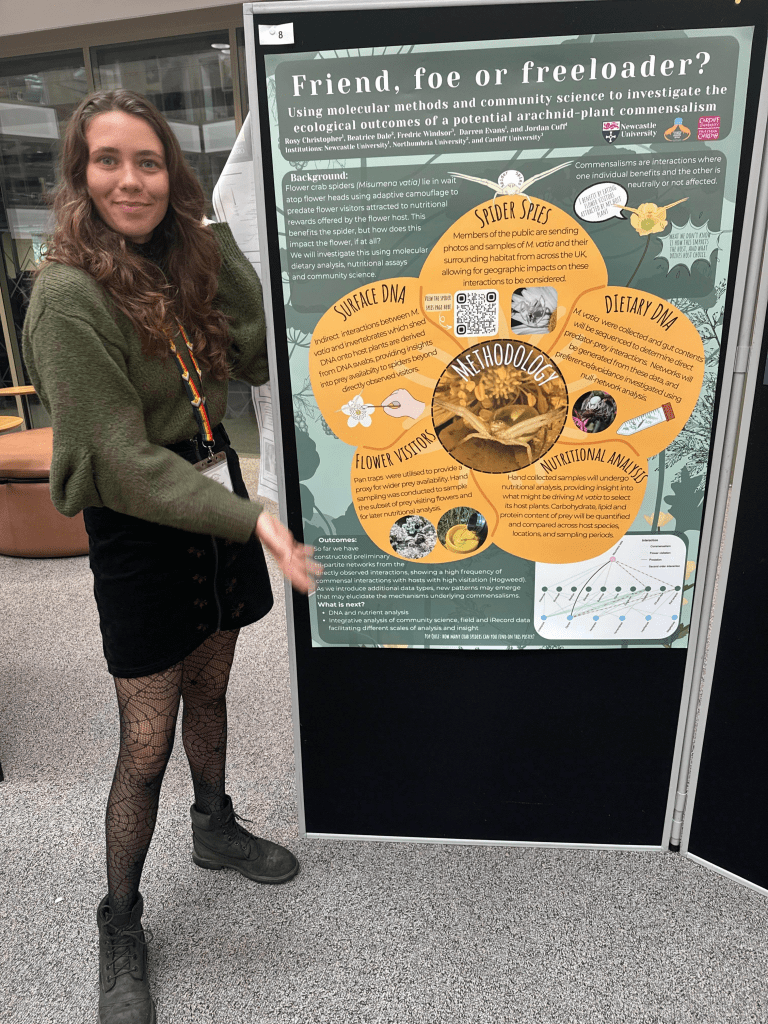
It’s a wrap on fieldwork for many for the year (although Will is trooping on with his year-round soil monitoring work)! To celebrate (or just because it coincided), many of us headed out to various conferences and workshops in the last month. As detailed in one of our recent posts, we had the immense pleasure of helping out with EcoNet here in Newcastle! Alongside soaking in the network ecology-rich atmosphere, a few of us presented our research! Rosy and Broghan both presented posters on some of their latest work, and Bea gave a prize-winning talk on her nutritional network research!


As above, we also ran a workshop for EcoNet, focused on the molecular analysis of trophic interactions! This took place over two days and took 80 Theridion spider samples from sample to sequencer, with a little help from the Molecular Diagnostics Facility’s robotics! We had an absolute blast, and Ben, Rosy and Max helped keep the show on the road throughout!


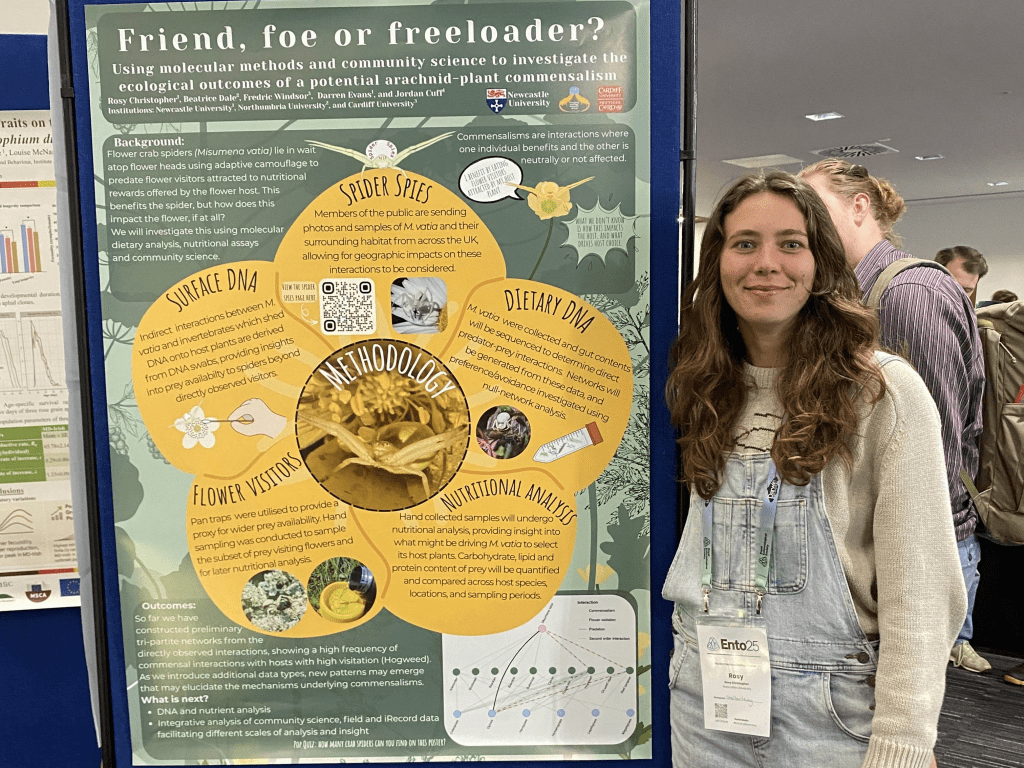
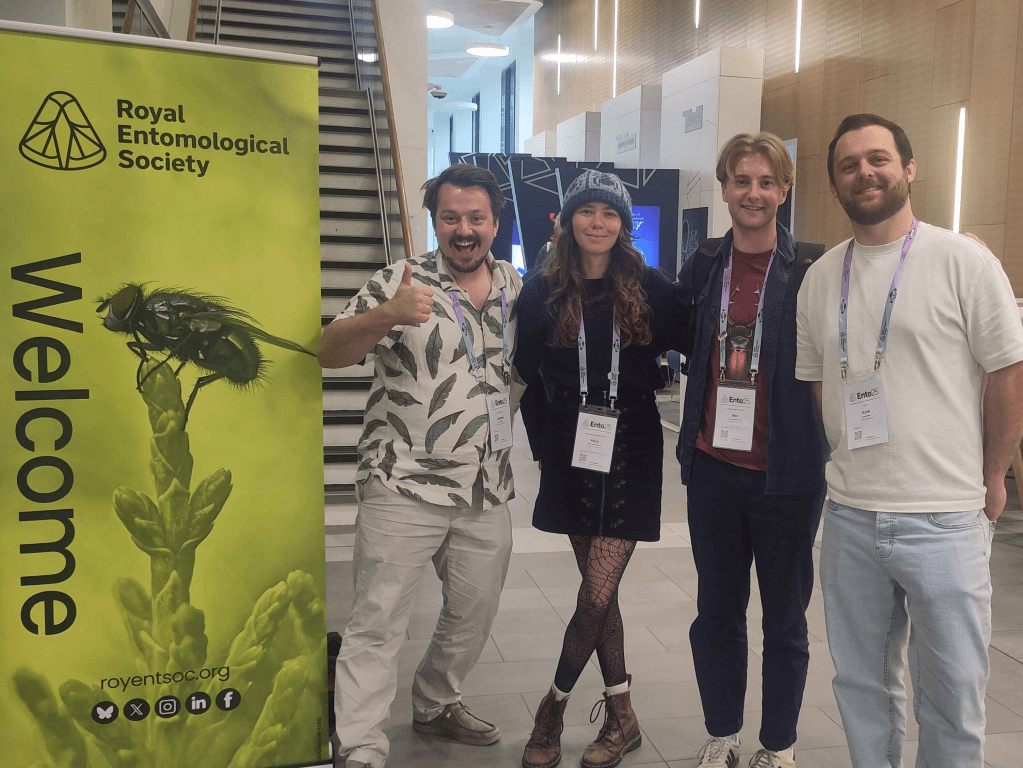
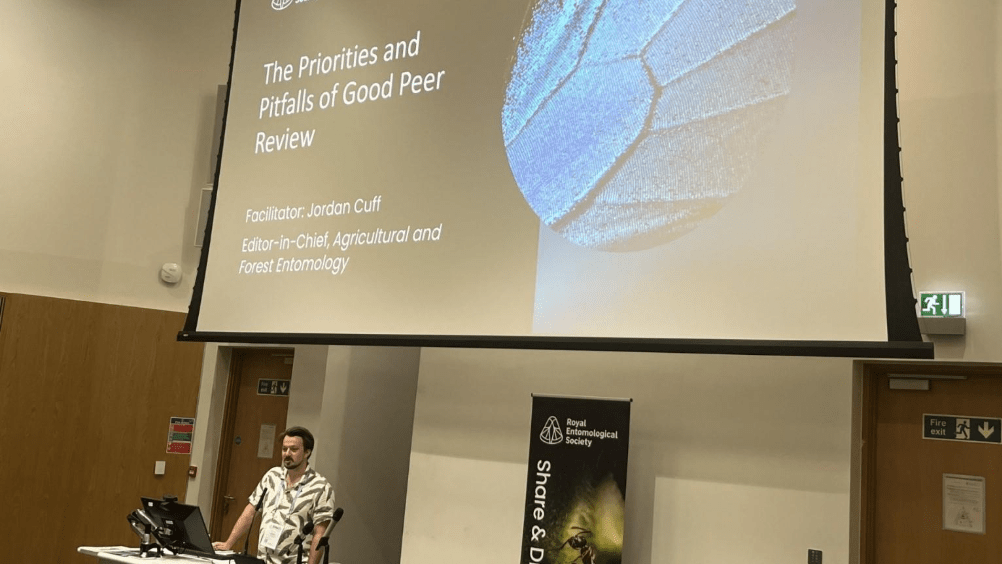
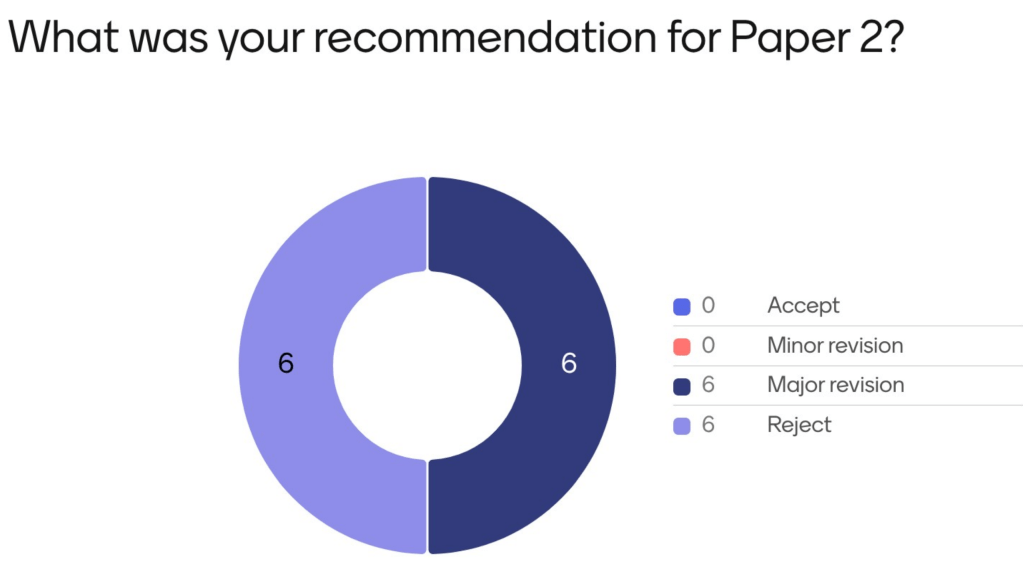
Why stop at one conference? A few of us also headed to the Royal Entomological Society’s Ento conference in Glasgow! Rosy completed the second leg of her poster’s world tour (whilst balancing duties as an RES Student Rep)! Wearing his Editor-in-Chief of Agricultural and Forest Entomology hat, Jordan also ran a Peer Review Workshop at Ento which took attendees through the pitfalls and priorities of peer review, with input from other Royal Entomological Society Editors-in-Chief, Associate Editors and Editorial Board Members. This involved running through some real (openly published) reviews from his papers and then tasking attendees with peer reviewing some mock papers!
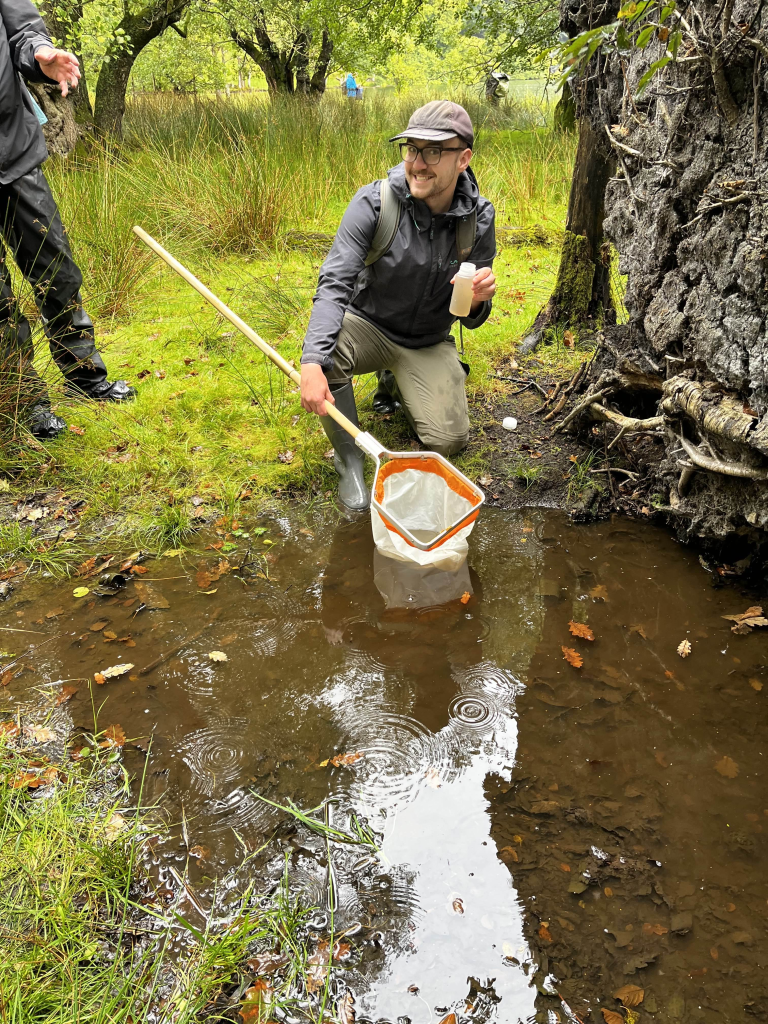
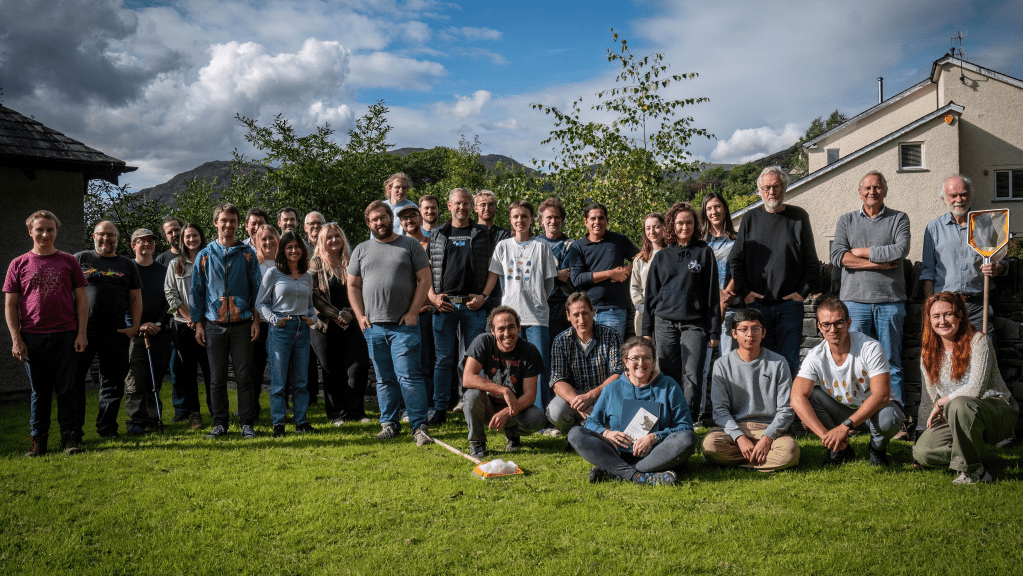
Whilst all of these conferences were going on, Will was attending a field workshop on the taxonomy and natural history of freshwater and limno-terrestrial meiofauna! The workshop was hosted in the Lake District at the University of Cumbria’s beautiful Ambleside Campus. Will took on sampling, identifying and even sequencing the DNA of some tricky freshwater species, taking a particular liking to Hydracarina (aquatic mites)!

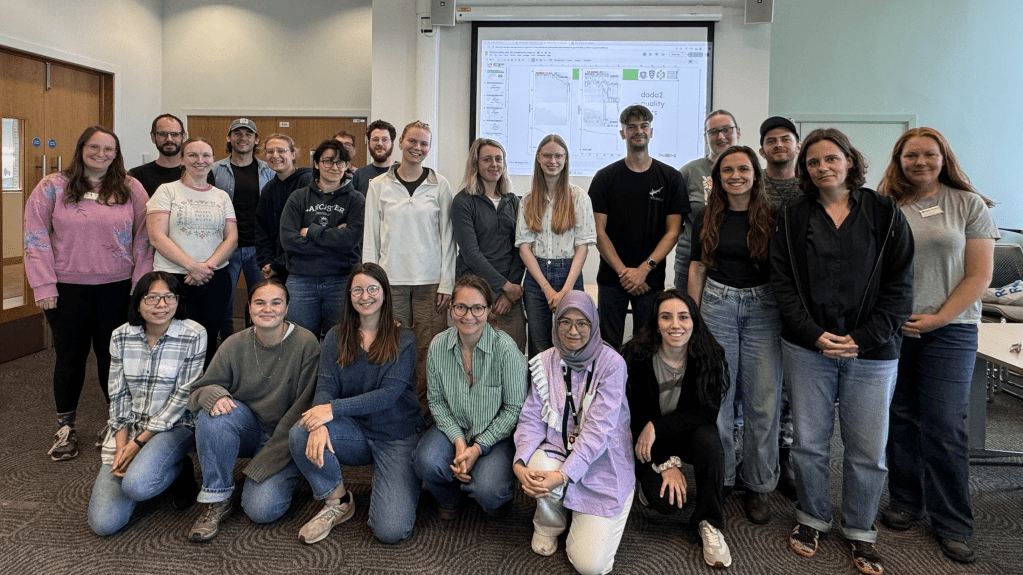
Jack was also off on a course, but this time the NEOF Training eDNA workshop “Unlock the Power of eDNA: In-Person Wet Lab & Bioinformatics Training”. This involved some wet lab immersion, from experimental design and sampling through to DNA purification and sequencing. Jack even got to develop his bioinformatics mastery! Jack has said that, following the course, eDNA has never been more unlocked!
Thought for the month
Would cross-species clones (see the research highlight below) exhibit increased altruism for one another, like siblings but across species?
Fun with FERG
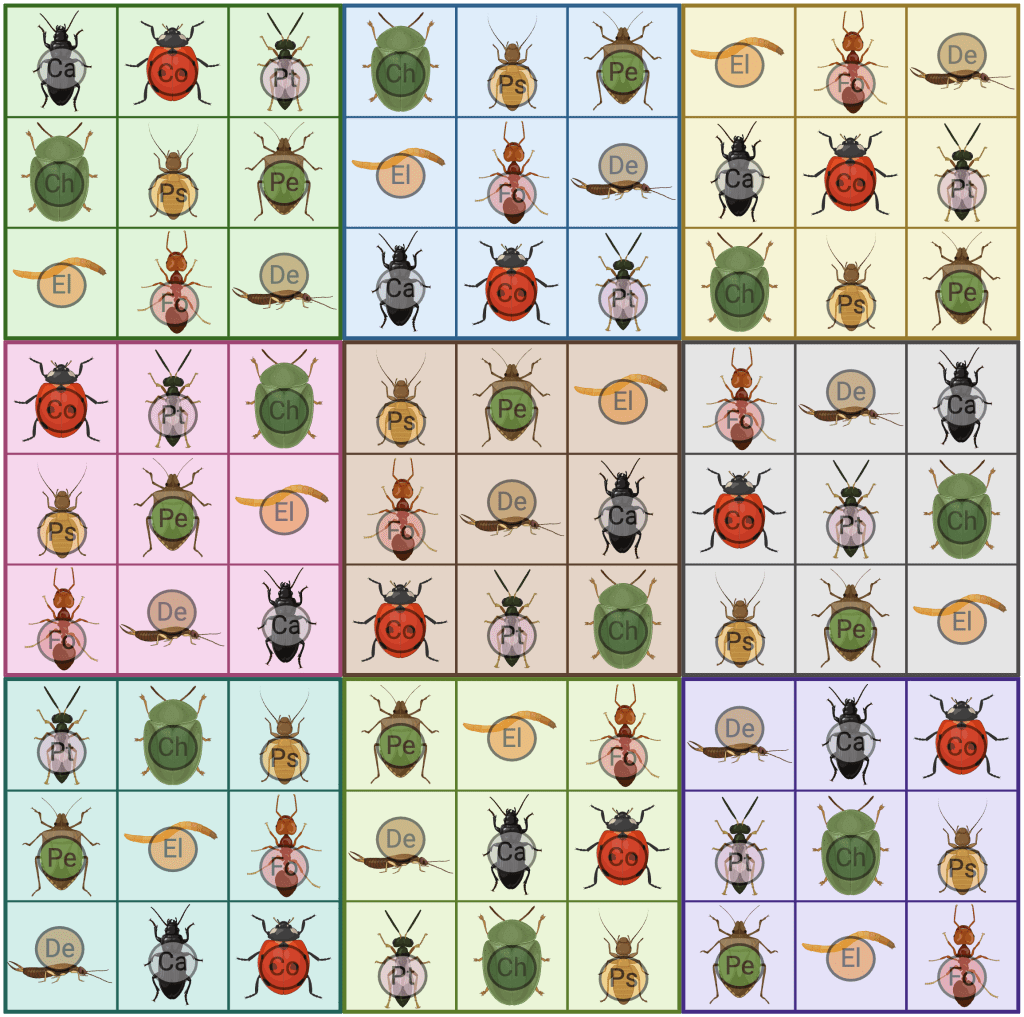
This month, we have a foraging sudoku for you! Nine species are busy searching for food, avoiding predators, or escaping parasitoids.
Each of the nine 3×3 grids below represents a different point in time. All species are present in every 3×3 grid, but they can’t stay in the same place for long. To keep foraging and to evade antagonists:
- Every species must appear once in each 3×3 grid.
- No species can appear more than once in any row or column of the overall 9×9 grid.
Can you work out where each species should be at each time point? Check your answers with the solution at the bottom of the page!
Here are the species:
- Ground beetle (Carabidae: Ca)
- Ladybird (Coccinellidae: Co)
- Parasitoid wasp (Pteromalidae: Pt)
- Tortoise beetle (Chrysomellidae: Ch)
- Booklouse (Psocoptera: Ps)
- Shield bug (Pentatomidae: Pe)
- Wireworm (Elateridae: El)
- Ant (Formicidae: Fo)
- Earwig (Dermaptera: De)

Taxon of the month
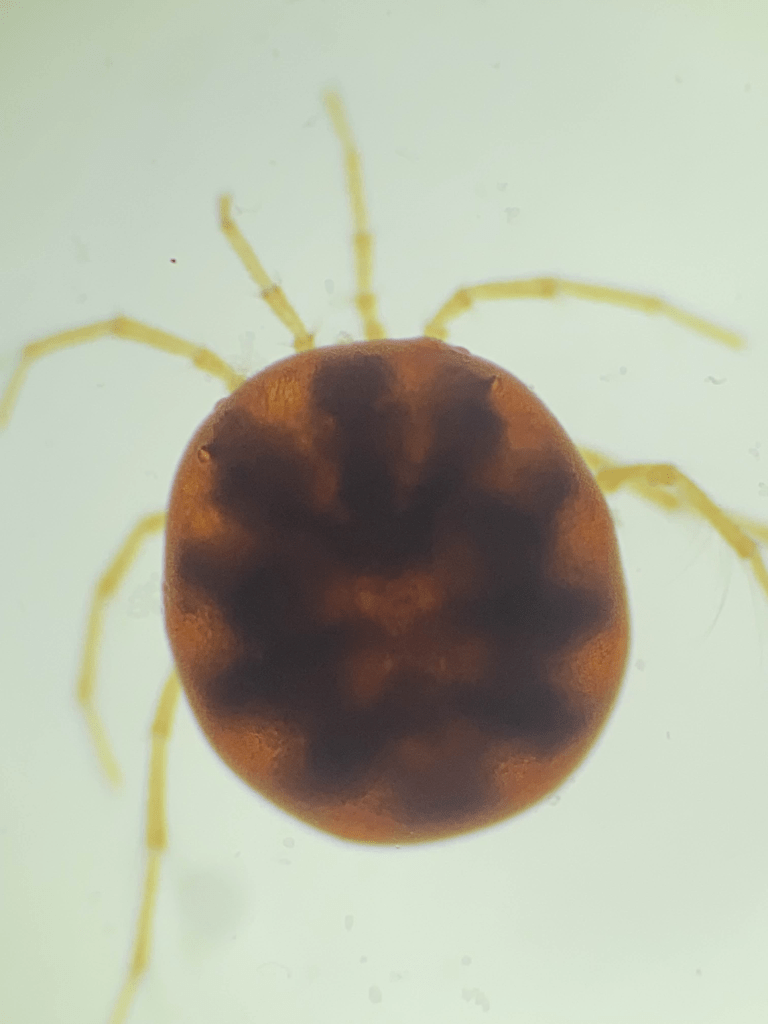
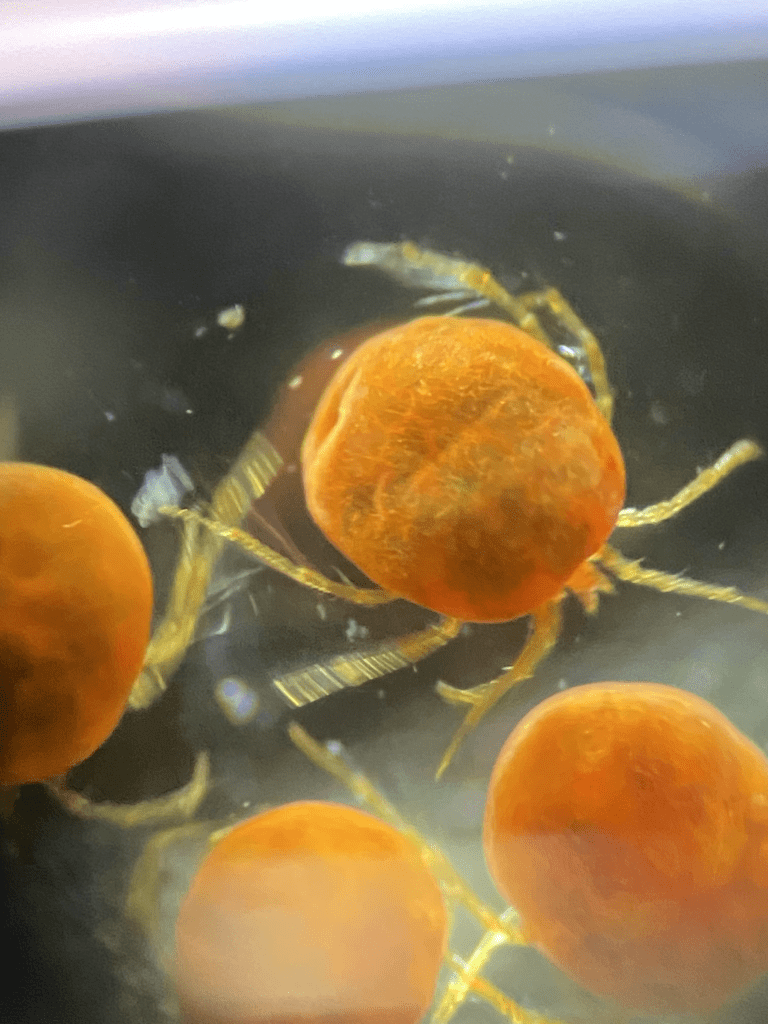
This month, our taxon of the month is Hydracarina, a group of mites Will worked on during his recent course! They are particularly interesting given that their larval stage parasitises insect pupae and adult insects in Chironomidae (non-biting midges) and Odonata (dragonflies and damselflies) which land on water, allowing the adults to feed on insect larvae.
Research spotlight
This month, we want to highlight this paper from Yannick Juvé and co-authors: One mother for two species via obligate cross-species cloning in ants
This paper reports that the ant Messor ibericus can lay eggs from different Messor species. Females of this species must clone males of another species because they require their sperm to produce the worker caste. Males from the same mother therefore have completely different genomes and morphologies from species that diverged over 5 million years ago! Wild, right?! It’s thought that this bizarre phenomenon started as sexual parasitism, but slowly evolved into cross-species cloning. The authors coined the term “xenoparous” to describe female animals that use this strategy.
Fun with FERG: solution!
Check your answer to the sudoku against the solution below!
 Foraging Ecology Research Group
One thought on “FERG News October 2025”