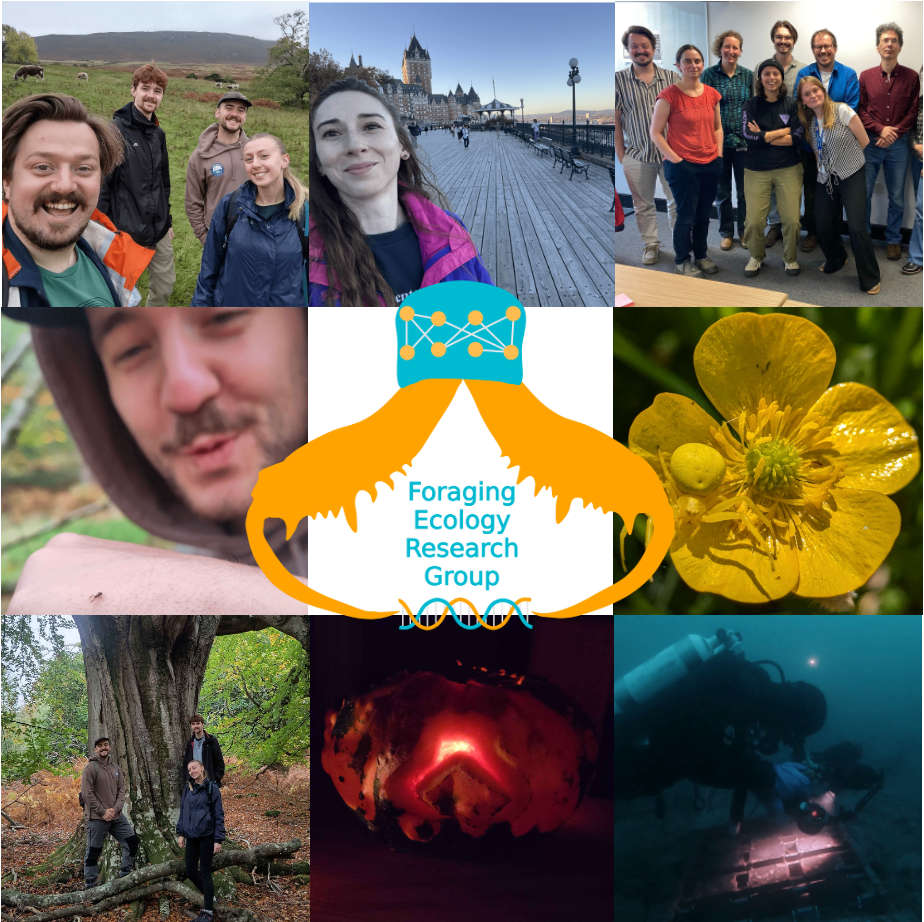
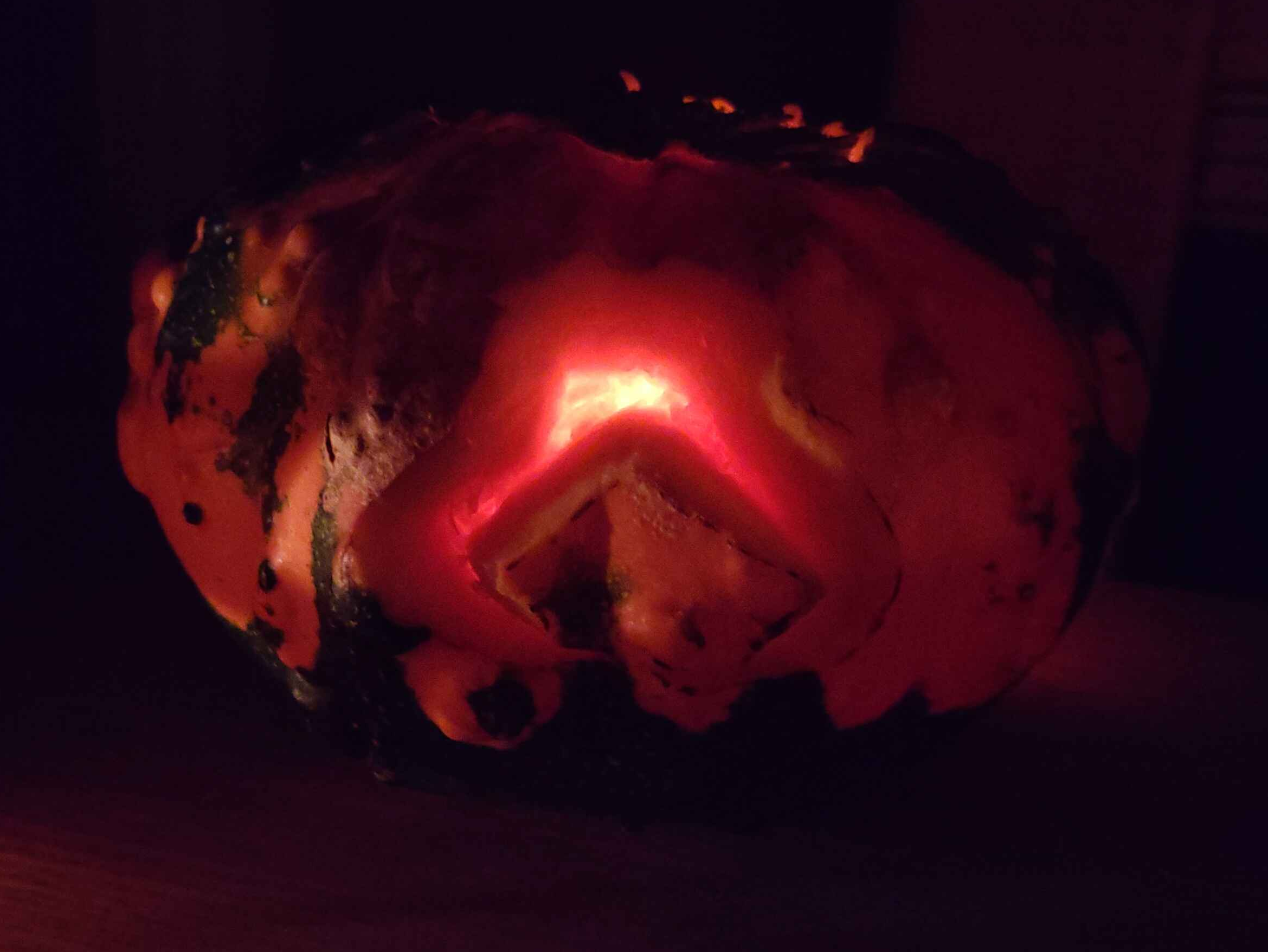
We hope you had a great Arachtober (on a seasonal note, see Jordan’s failed attempt at reproducing the FERG logo on the side of a pumpkin below)! Over the last month, many of us have been settling into lab work for the winter or getting stuck into the new academic year. There are still plenty of exciting updates below though!
Opportunities
We have a new PhD studentship opportunity open! Check it out via the link below and please share it widely! We may have another opportunity or two to share soon!
Outputs and outcomes
Ainsley and Jack have been making headlines again, this time in The Guardian through an article focused on the diminishing fishing fleet across the UK, which refers heavily to their paper from earlier in the year (which made the news then, too)!
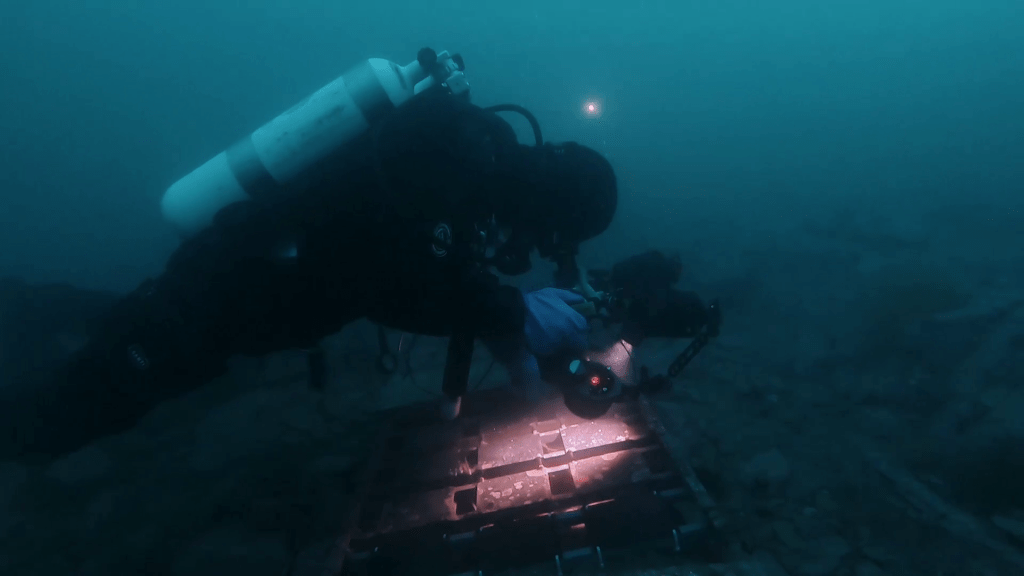
But was that enough for the dynamic duo? Of course not! Jack and Ainsley also had a workshop report published from a workshop that brought together researchers pioneering heated settlement plate approaches with a broader international community of benthic researchers. The report goes through experiences of applying this approach, questions they can address, future directions for this approach and the prospects for future collaborations. Great work, both!

Rosy’s giving an entoLIVE talk next June, titled “Friend, Foe, or Freeloader? The Flower Crab Spider“, for which registration is now open! Come along to learn more about her ongoing research, including the successful Spider Spies community science project, which will be starting its second year next Spring!
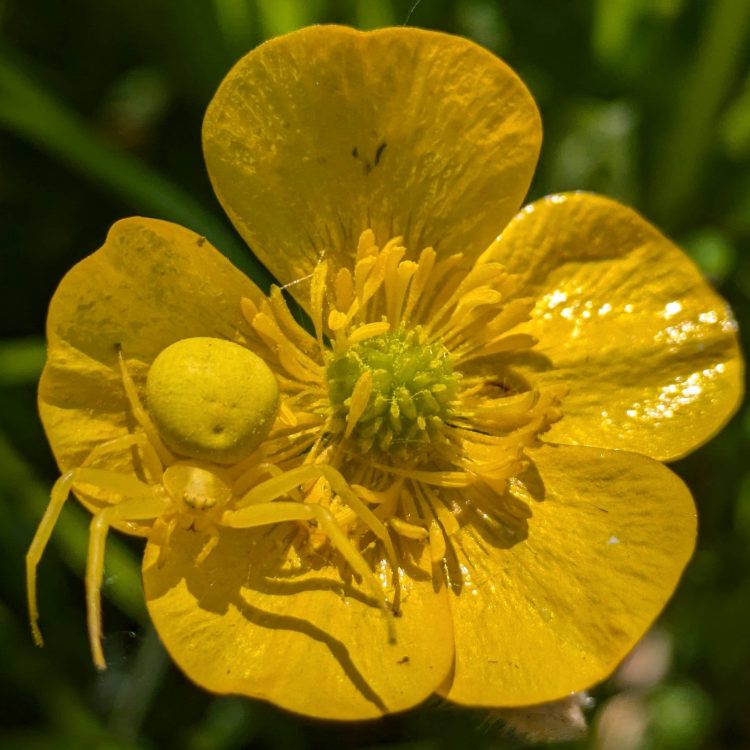
FERG in the wild
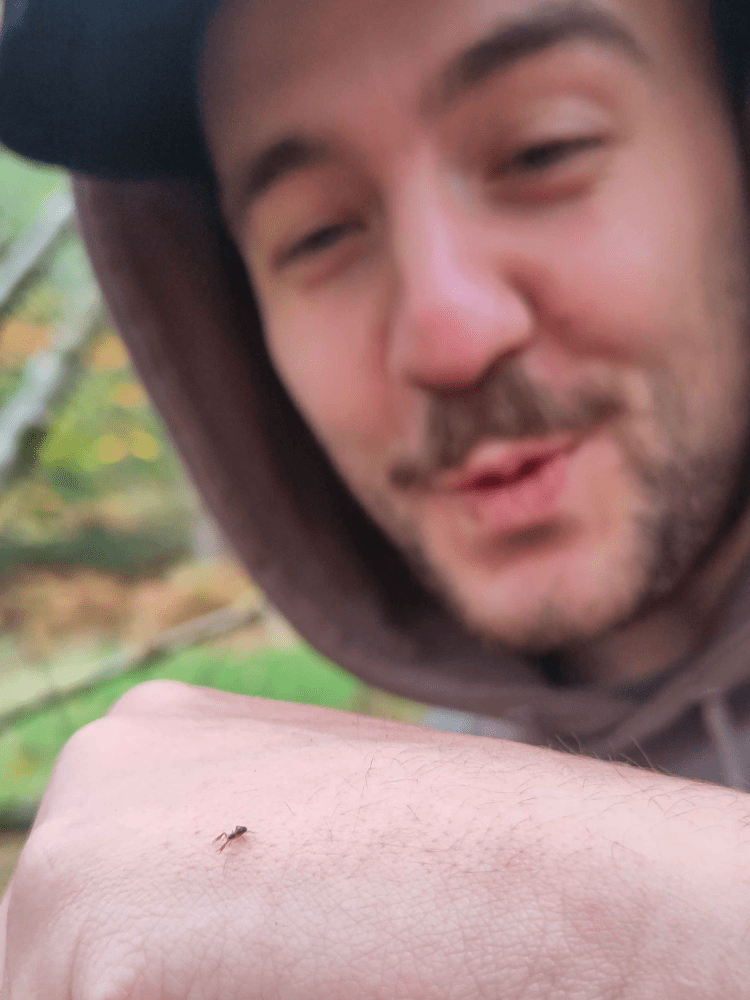
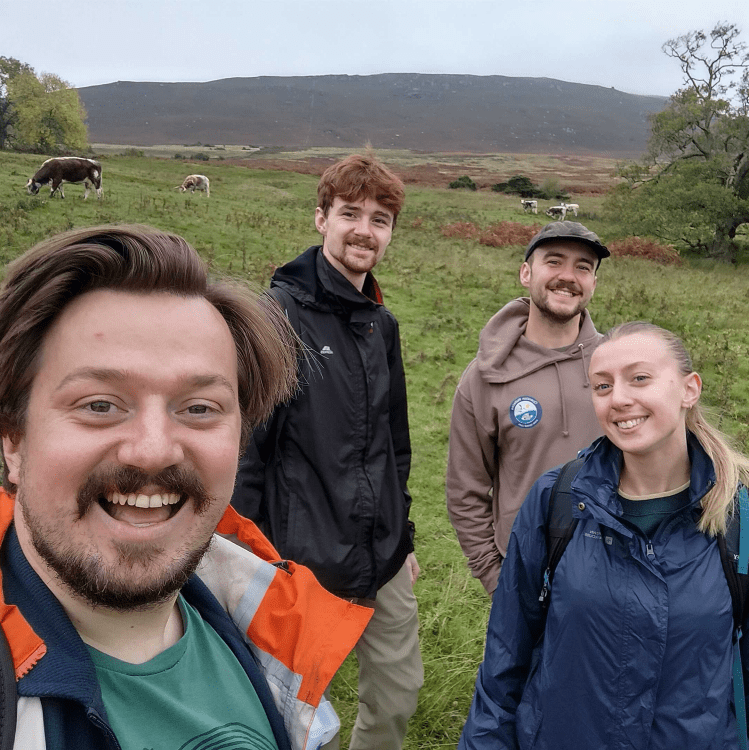
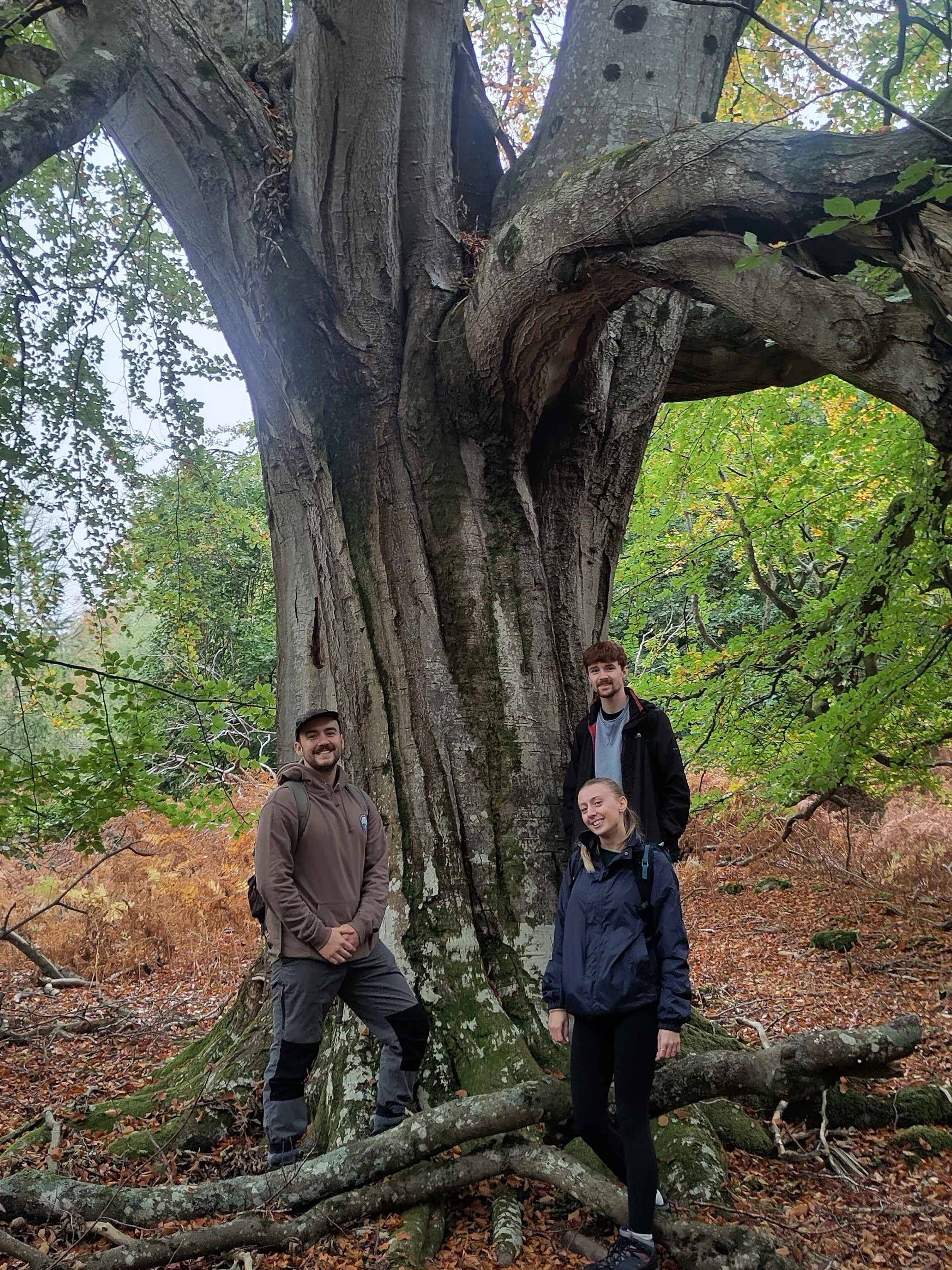
We’ve been back out in the field for a couple of projects focused on wood decay and veteran trees, which took us to the wonderful Hepple Estate (see our August FERG News for our last visit) and the university’s Cockle Park experimental farm. It’s always a pleasure to spend time in Northumberland, and even better surrounded by beautiful old trees! Will found a beautiful pseudoscorpion alongside the wider arachnofauna and worms the team collected. The samples found will form the basis of Rebecca’s and Thomas’ current projects.
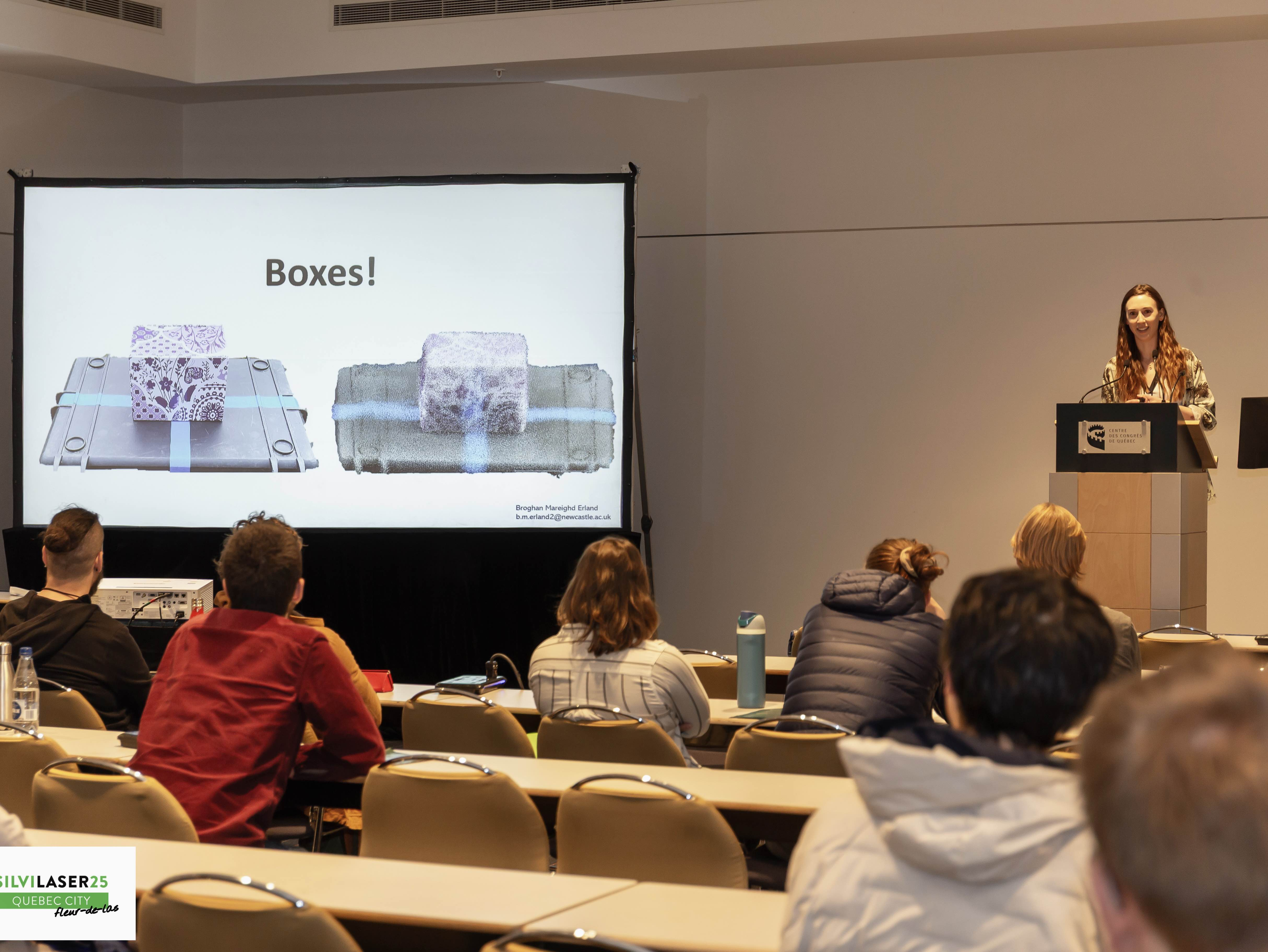
Back on home turf in Canada, Broghan presented at Silvilaser in Quebec! The conference, focused on the applications of laser scanning and related technologies for assessing and managing forest ecosystems, got to hear about Broghan’s methodological innovations, upcoming data and future applications!

Will also headed to a conference this month, presenting at Operation Wallacea’s second annual ‘Optoberfest’ event! Will talked about his PhD research and how the techniques he’s pioneering could be applied to OpWal’s research. Check out the full talk on YouTube!

Jordan headed out to University of Leeds for a workshop hosted by Josie South, focused on investigating species invasions across different scales of organisation. It was a fantastic day, with plenty of insightful discussions, novel ideas and potential avenues for further exploration by the workshop team. Perhaps more to come on this in the near future!

In local news, our home city of Newcastle hosted the first ever music industry Mercury Prize Album of the Year event to take place outside of London. Whilst FERG itself didn’t feature (a contentious snub, I tell you!), eagle-eyed viewers of the live coverage may have seen some familiar faces!

Fun with FERG
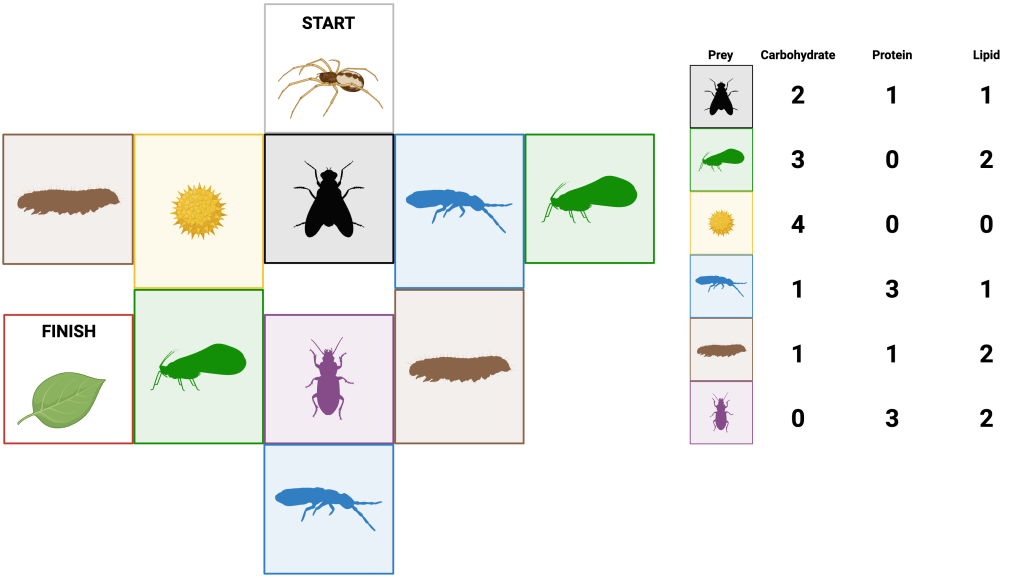
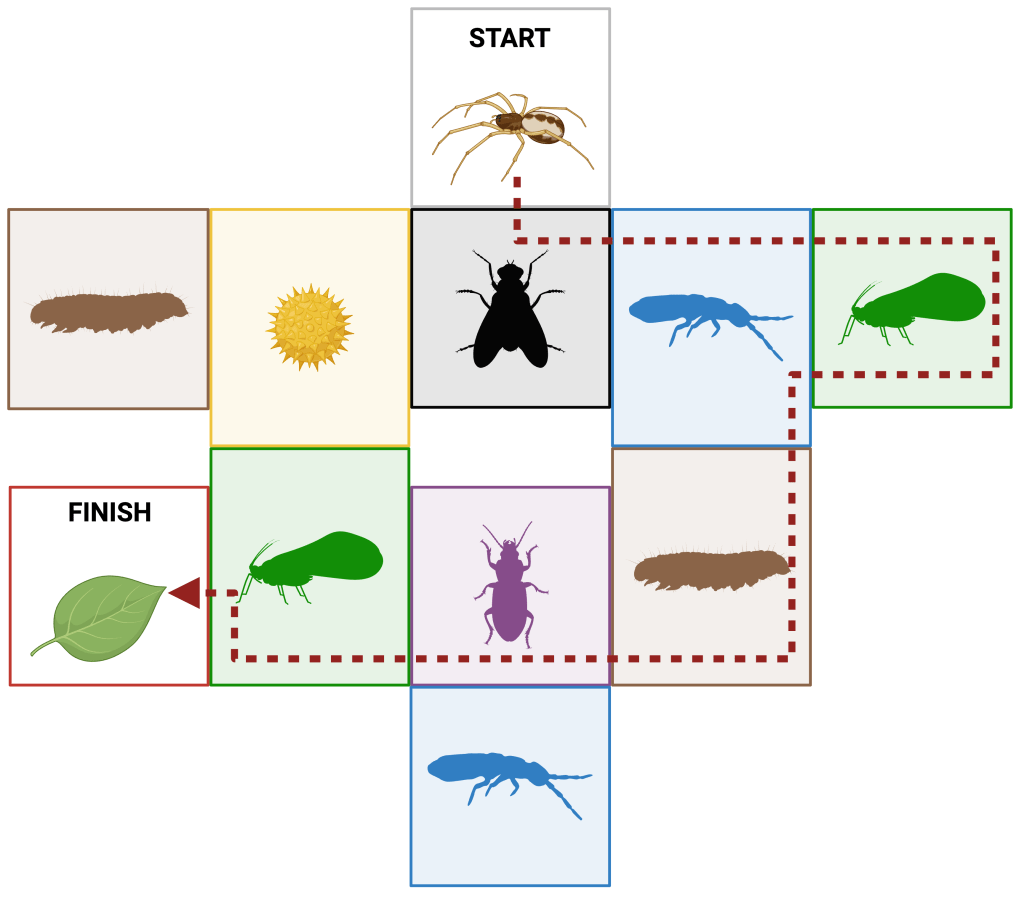
This month, we have a nutrient-specific foraging maze for you! This spider needs to balance its nutrient intake before finding a leaf to deposit its egg sac onto. Which route can most efficiently achieve a perfectly balanced nutrient intake based on the below? The spider can visit the same square (eat from the same prey population) multiple times, but has to consume the prey in every square it passes through. It can only move to squares that touch the square it currently occupies. A solution is given at the bottom of the page!
Taxon of the month
This month, our taxon of the month is Ostracoda, a class of crustaceans. Their name comes from the Greek óstrakon, meaning shell or tile. Their small (~1 mm) bodies are flattened from side to side with a bivalve-like chitinous and calcium carbonate-based shell protecting them. They vary greatly in what they eat, with some being herbivores, others scavenging, some filter feeding and others deposit feeding (i.e., detritivorous). Others, however, are predatory! Some freshwater species will pack hunt during their smaller life stages, predating larger aquatic insect larvae and overwhelming them through their sheer numbers!
Research spotlight
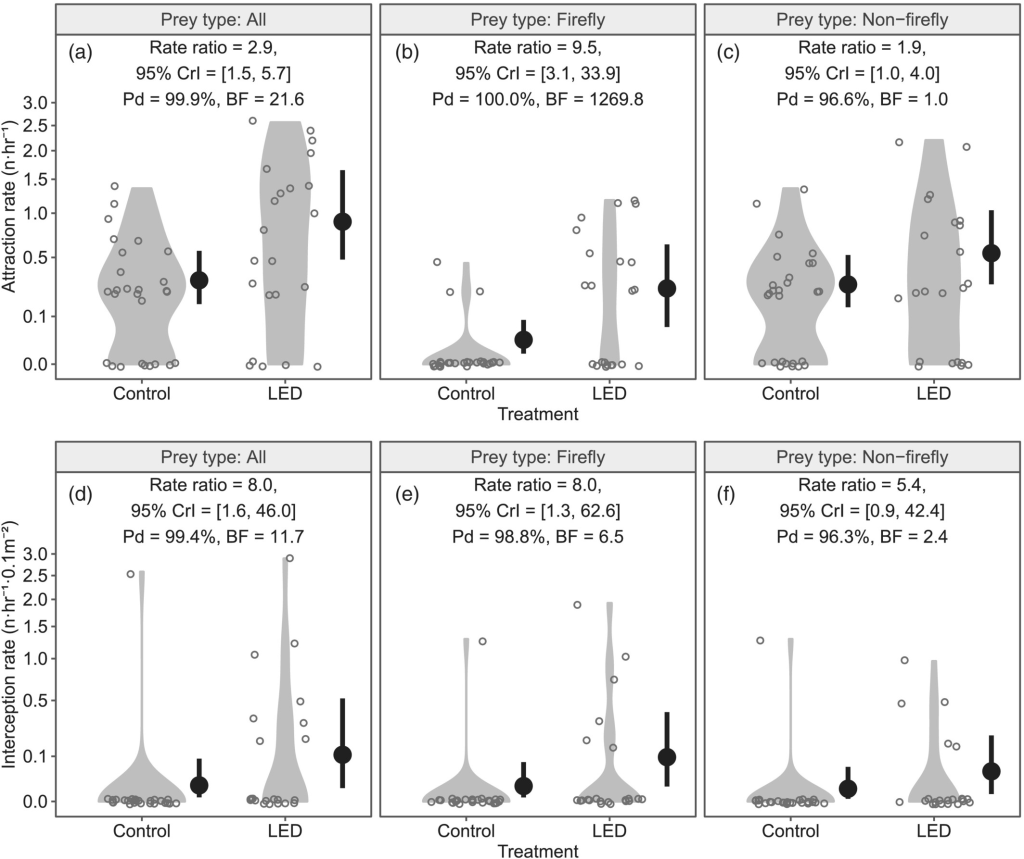
This month, we want to highlight this paper from Ho Yin Yip and co-authors: Prey bioluminescence-mediated visual luring in a sit and wait predator
This paper is an incredible deep dive into a phenomenon at the interface of ecology and natural history. Spiders were shown to retain fireflies in their webs to attract other prey, capitalising on the attractive effect of firefly bioluminescence. The study used some really nice, elegant methods involving LEDs and infrared cameras to study these interactions. It’s a page-turner of a paper!

Thought of the month
Which arthropod would be loudest if it wore flip flops on all of its feet?
Fun with FERG: solution!
A solution is provided below via the dashed red line/arrow, but there may be other (more complex) solutions! What if the spider needed to avoid as much protein as possible whilst maximising carbohydrate content?
 Foraging Ecology Research Group