
Festive tidings from all at FERG! As the darker days sweep in, we’ve been getting cosy at conferences, writing retreats and our desks to present, prepare and publish some really exciting things over the coming months! Check out some of the highlights of our November below!
New FERGers
Welcome, Dheeraj, who has just started his MRes here in Newcastle and will be doing his research project with us over the course of this academic year! Dheeraj’s project will investigate how the trophic interactions, biocontrol and nutritional dynamics of generalist arthropod predators shift from winter to spring in one of our university experimental farms.

Opportunities
As a reminder, we currently have a PhD studentship opportunity open! Check it out via the link below and please share it widely! We may have another opportunity or two to share soon!
Outputs and outcomes
To kick off a productive FERG News, Shannon published a paper from her PhD titled “Current distribution of non-native bumblebees (Hymenoptera, Apidae) on the Faroe Islands including the first records of three recent arrivals” in BioInvasions Records! Following records of three new non-native bumblebees on the Faroe Islands, Shannon’s paper updates the distributions of each bumblebee species on the Faroe Islands from previous records. Knowing the distribution of these non-native species is crucial for understanding the ongoing colonisation by bumblebees across the islands, the potential for range expansion and the potential ecological implications on native flora and fauna.


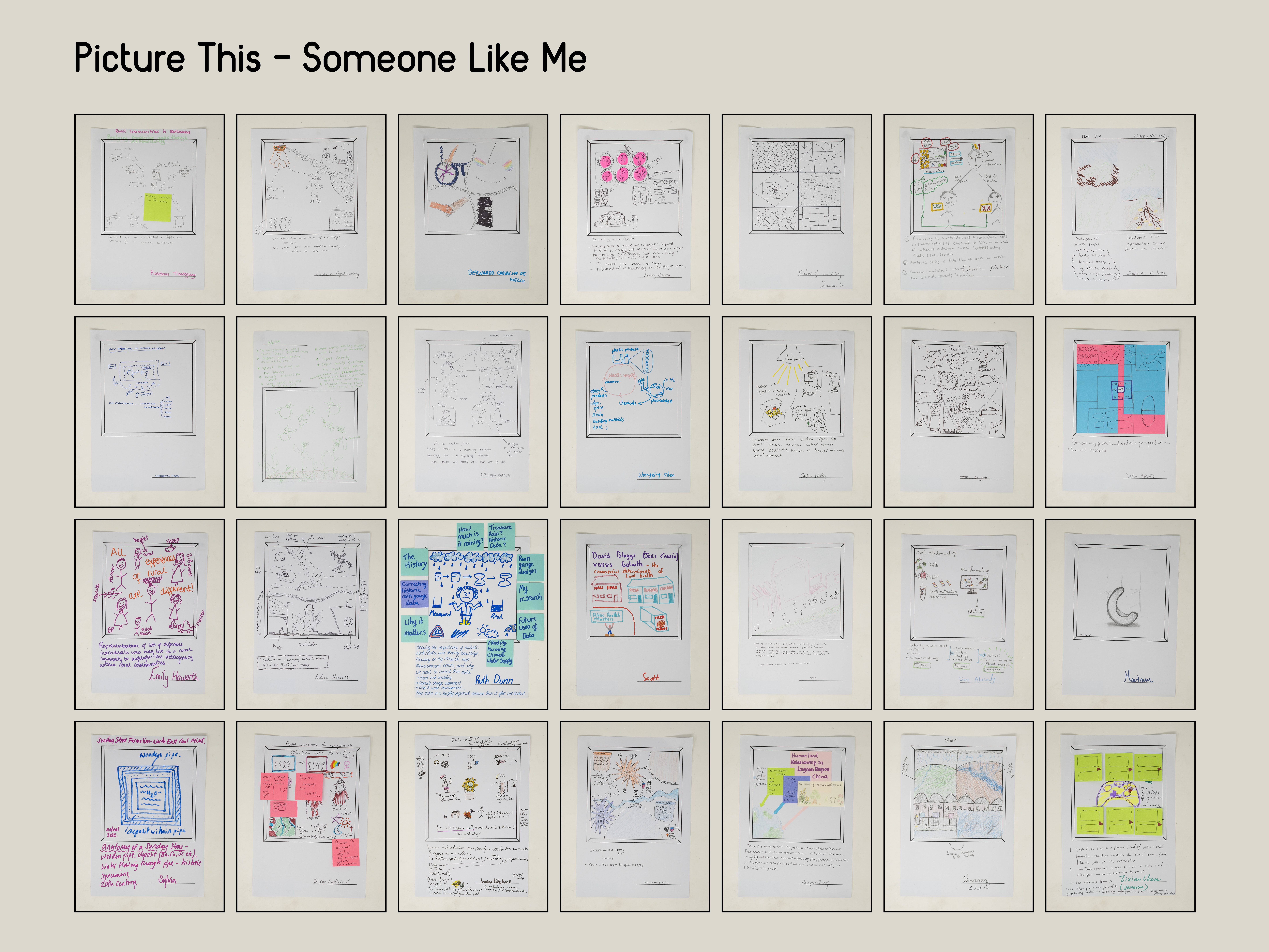
Following his recent chain of successes, Ainsley has kept up his streak and secured an Outreach Grant from the BES to extend the activities of his and Phoebe Lewis’ Picture This project! This is the third pot of funding for the project in the last couple of months, alongside funding from the Newcastle University Doctoral College, and the Science, Agriculture and Engineering Faculty Participatory Fund! The Doctoral College funding covers Phase 1 of the project, which includes workshops and enrolment of students into 12 months of infohackit training to empower them to create their own artwork for display in the nearby Hancock Museum throughout 2026. The BES and SAgE Faculty funding covers Phase 2 of the project, which includes outreach to accompany the exhibition (for which there will be many more updates to come)!
Picture This has been charging full steam ahead this month too, with a workshop organised by Ainsley and Phoebe, which Jack managed to make it along to as well! If you want to see an example of a previous exhibition from the project, check out the university’s page about the project!

On the topic of bringing in some funding, Will secured some internal funds to secure his trip to Canada for the Global Soil Biodiversity Conference, 2026! Will will be in Victoria, Canada, next April to talk about his PhD research – if you can’t wait to know more, give his recent preprint a read!
FERG in the wild
We all need a bit of time away from the everyday from time to time to try and tackle writing, thinking or organising our work, so a few of us had a FERG writing retreat! We stayed on campus, so perhaps a ‘staytreat’, but we hunkered down in the grandiose Armstrong Building boardroom, from which we had panoramic views of the campus and, for a good portion of the first day, front row seats to the dismantling of some scaffolding!
It was a productive couple of days, with progress toward chapters, papers, proposals and beyond. This was all broken up by regular breaks, a couple of walks around Newcastle’s beautiful urban parks and some hands-on activities, including Jordan’s ‘Pest vs. Pesticide’ game from previous outreach activities, and Lucy’s Lego chicken game.
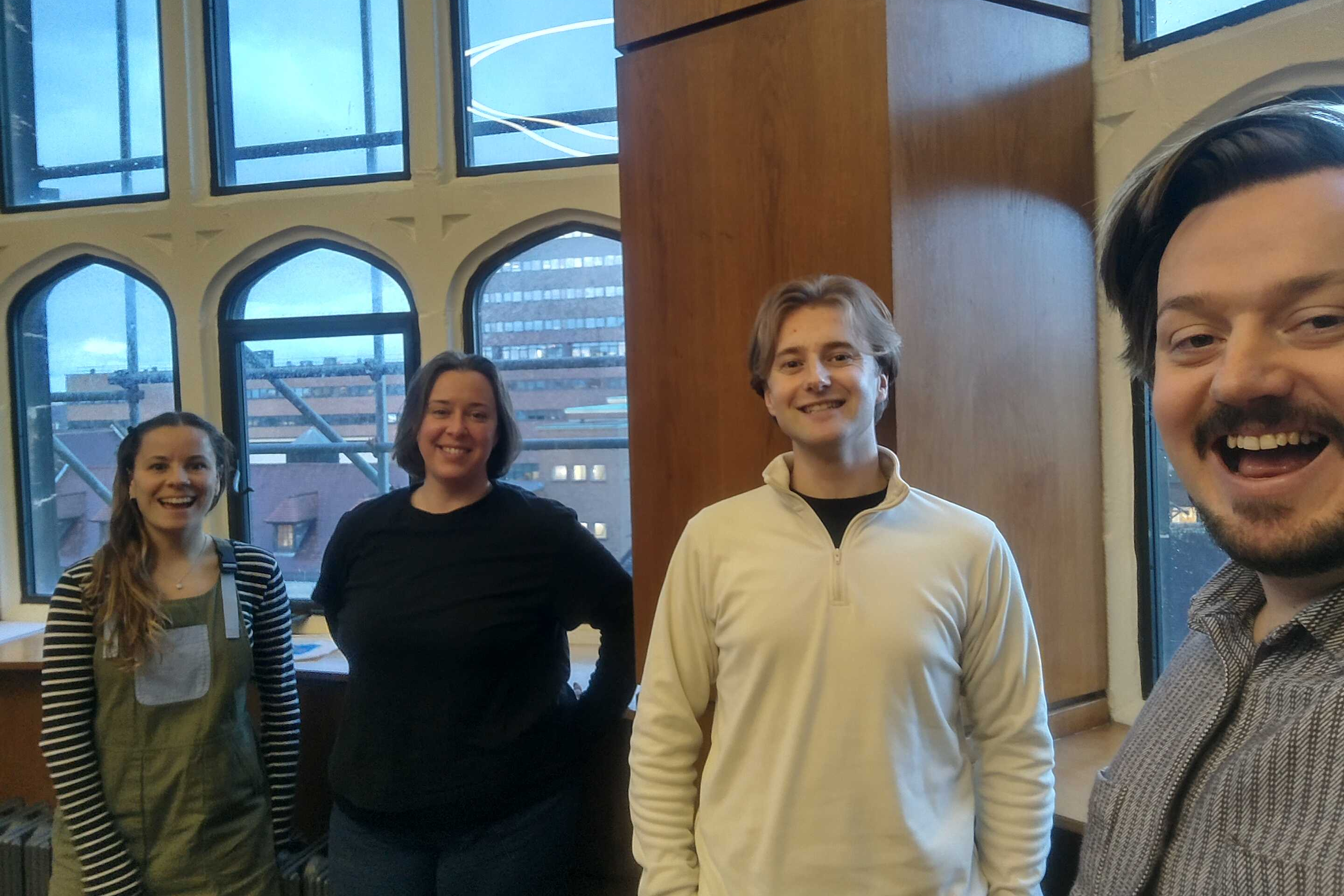


Some of us even managed to join in the writing retreat from afar, with Broghan having a retreat of her own to the stunning Vancouver Island!


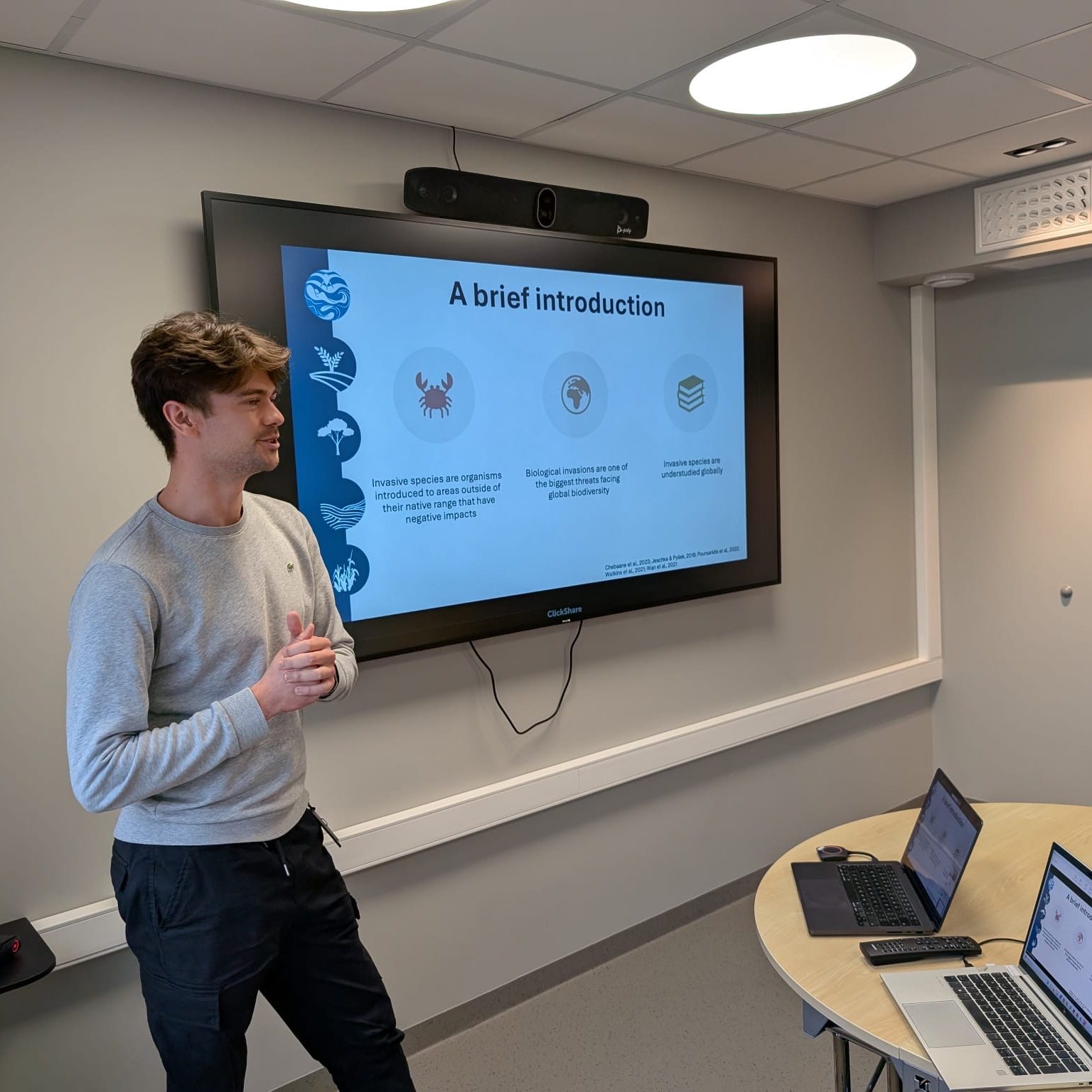
Jack’s also been globetrotting this month, with a research visit for the Institute of Marine Research in Norway! Jack discussed his previous and ongoing research on the LIFE WADER project, including his development of new PCR primers for the monitoring of invasive non-native species off the northeast coast of England! This has also catalysed the development of new international collaborative work investigating invasive species spread using Jack’s winning combo of marine settlement panels and molecular analyses!


Rosy travelled to Edinburgh to present her work on the ‘Spider Spies‘ project at the Royal Entomological Society’s Outreach, Culture and Education SIG! Being at the National Museum of Scotland, Edinburgh, this naturally included a behind-the-scenes tour of the museum’s collections and materials – what a day! Spider Spies will be running again this year, so keep your eyes peeled for flower crab spiders in the spring!

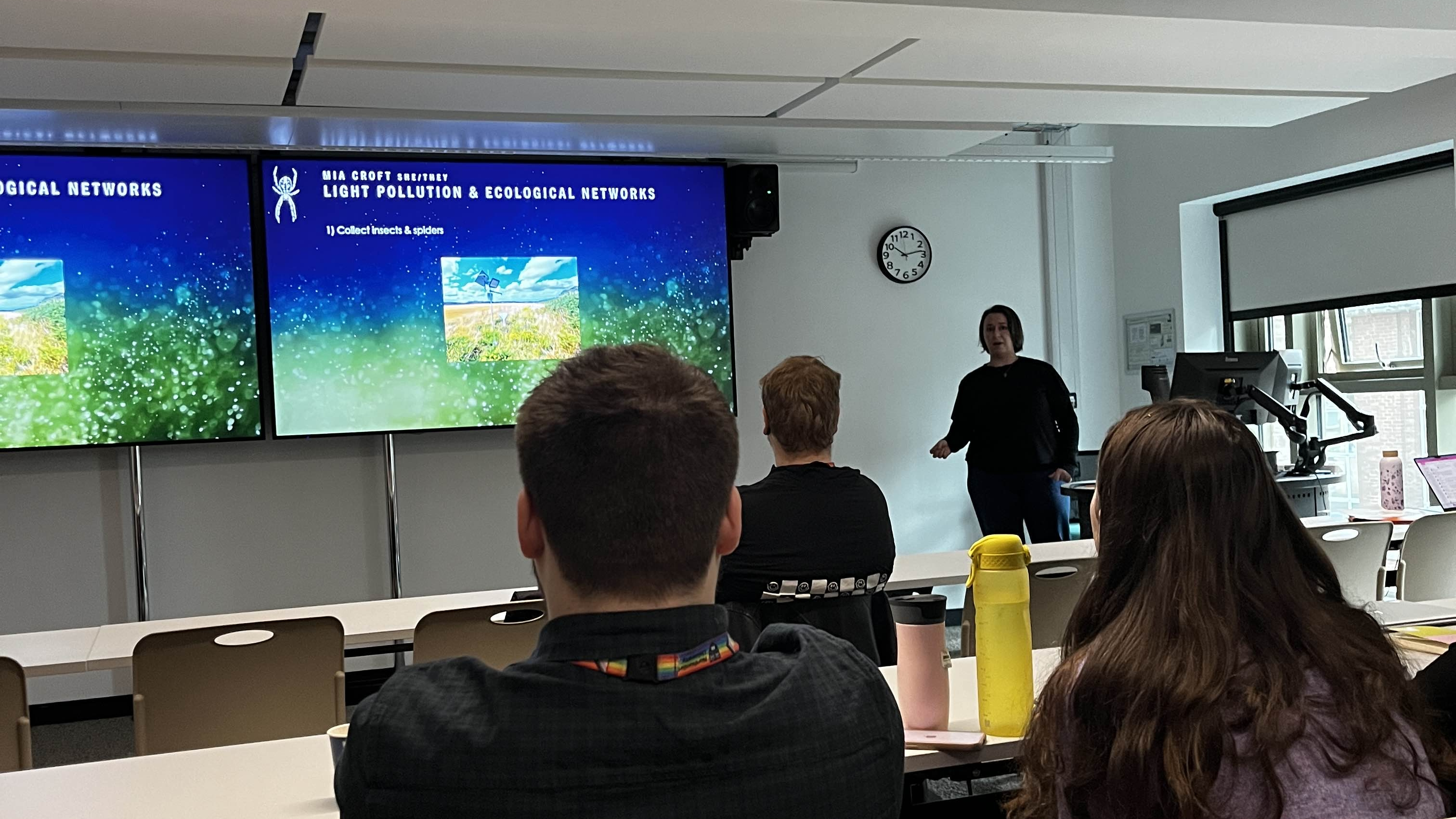
Elsewhere, Mia and Shannon attended a OnePlanet DTP skill share conference, involving workshops on translating science to wider audiences, making figures and presentations accessible and delivering engaging talks. Mia and Shannon got to link up with other students across their DTP to share skills including everything from insect ID to grant writing. Mia delivered a flash talk on her PhD project too!
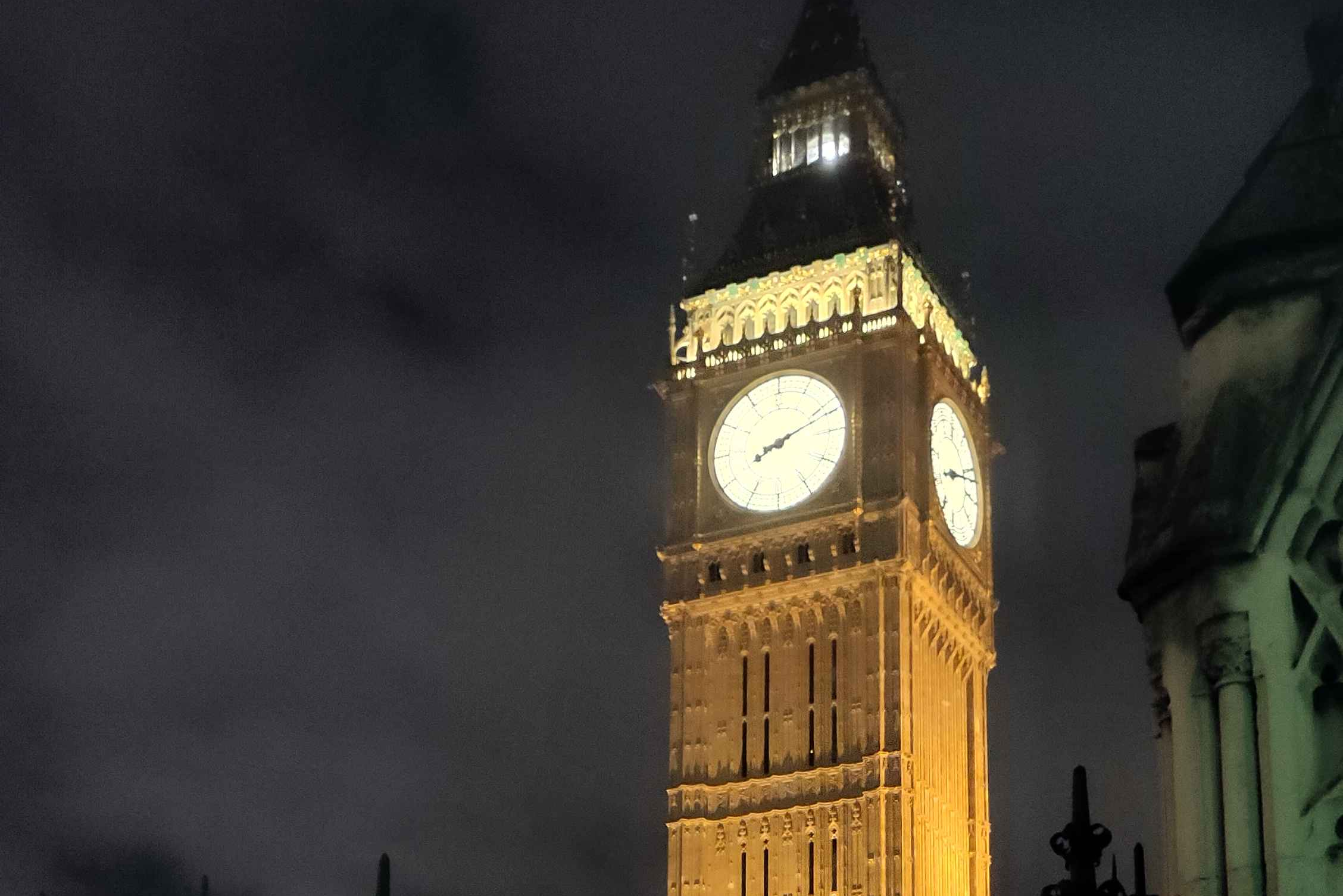
Jordan took to the House of Lords earlier this month to attend a meeting of the Bees, Pollinators and Invertebrates All-Party Parliamentary Group. There were some illuminating discussions on the impact of the Sustainable Farming Incentives on pollinator health, with voices from government, industry and academia, including some up-to-date modelling outcomes from UKCEH. It was a rare opportunity to see how things work within parliament – and there was an exceptional gift shop (although the FERG verdict on House of Lords-branded cornichons is split). It was a privilege to be invited, and another great example of the incredible work and broad impact the Royal Entomological Society are able to achieve!

Fun with FERG
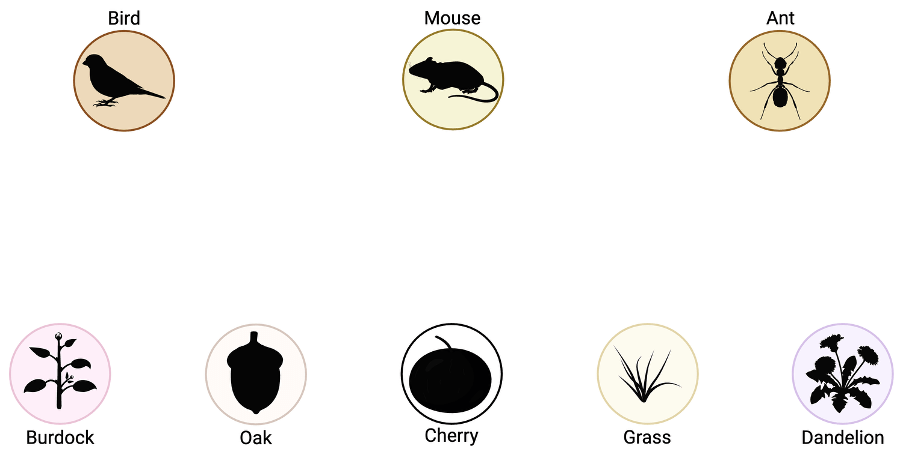
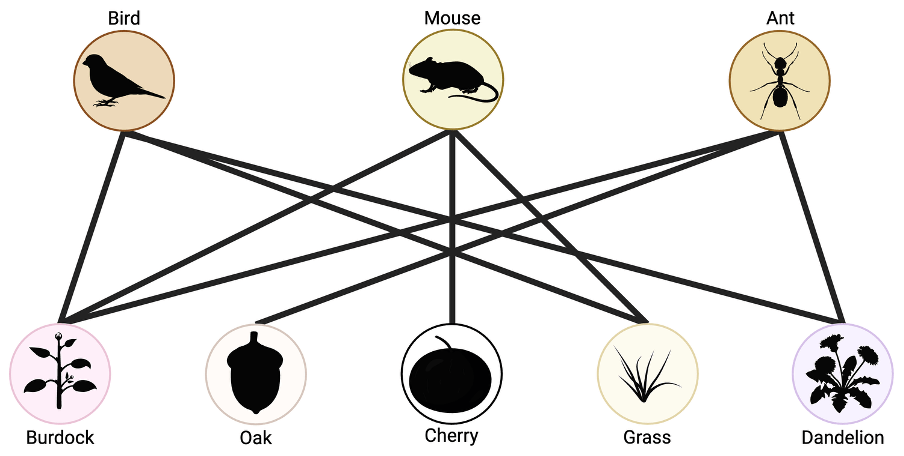
Three seed dispersers are foraging in close proximity to five plant species. The seed dispersers are a bird, a mouse and an ant. The plants are oak, cherry, grass, dandelion and burdock.
Across the day, each seed disperser moves seeds from exactly three plant species. Fill in the ecological network below with links based on the following rules:
- Every disperser interacts with burdock.
- Only one disperser moves cherry seeds.
- The mouse never disperses dandelion.
- The bird and the ant share exactly two plants.
- The mouse and the bird share exactly two plants.
- Grass seeds are dispersed by at least two dispersers.
- The ant disperses both dandelion and oak acorns.
Taxon of the month
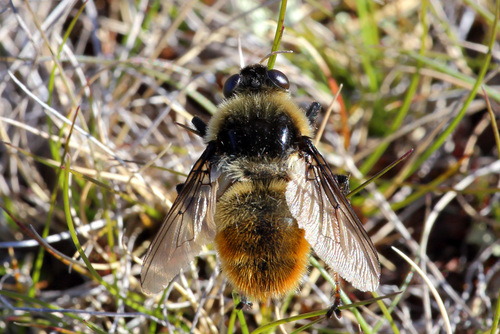
This month, our taxon of the month is Hypoderma tarandi, the reindeer warble fly! Much like many people at this time of year, H. tarandi loves a good reindeer but, unlike people (I hope), it likes to ectoparasitise them! Also known as the reindeer botfly, H. tarandi pierces the skin of reindeer, laying its eggs and developing from the flesh of the reindeer (and caribou). It’s considered a significant pest of domestic reindeer given its impact to the hide, meat and milk, but were part of the traditional diet of the Nunamiut people native to what is now known as Alaska.
Research spotlight
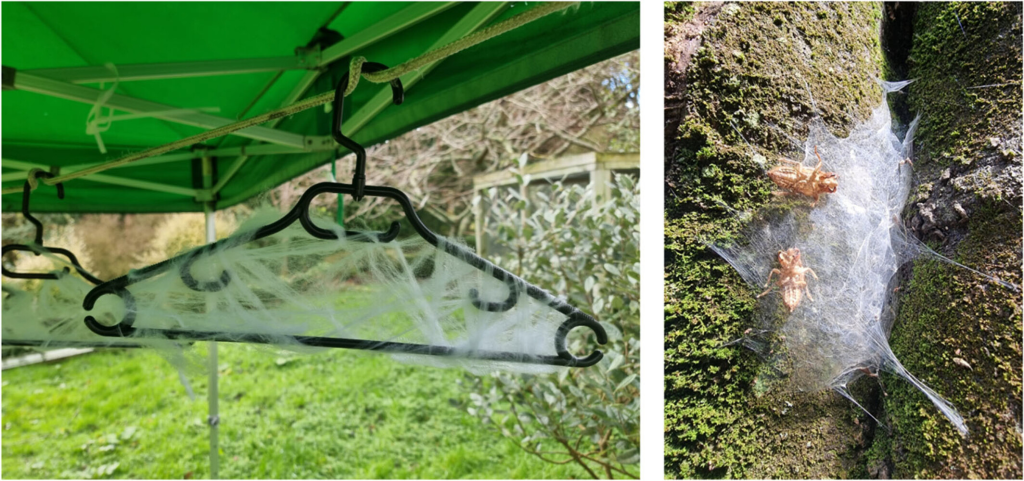
This month, we want to highlight this paper from Angela McGaughran and co-authors: Fake Webs, Real Results: Artificial Spiderwebs for eDNA Collection
This paper takes the widely discussed idea of using spider webs for eDNA collection and biomonitoring and advances it in a new direction! Fake webs are a widespread staple of Halloween decor, so why not add them to our biomonitoring toolboxes? McGaughran et al. show that artificial webs outcompete real webs in terms of detectable diversity, so they could be a promising new tool for terrestrial biomonitoring!
Fun with FERG: solution!
 Foraging Ecology Research Group
One thought on “FERG News December 2025”