
As 2025 wraps up, we’re looking back on the last month of the year (and ahead to 2026)! We’ve had a great few weeks of festivities, successes and outings, all wrapped up below (although not with a nice festive bow, unfortunately). If you want to see a summary of our full year, check out our 2025 round-up post!
If you want to keep up with our updates every month, you can sign up to email alerts below!
Outputs and outcomes
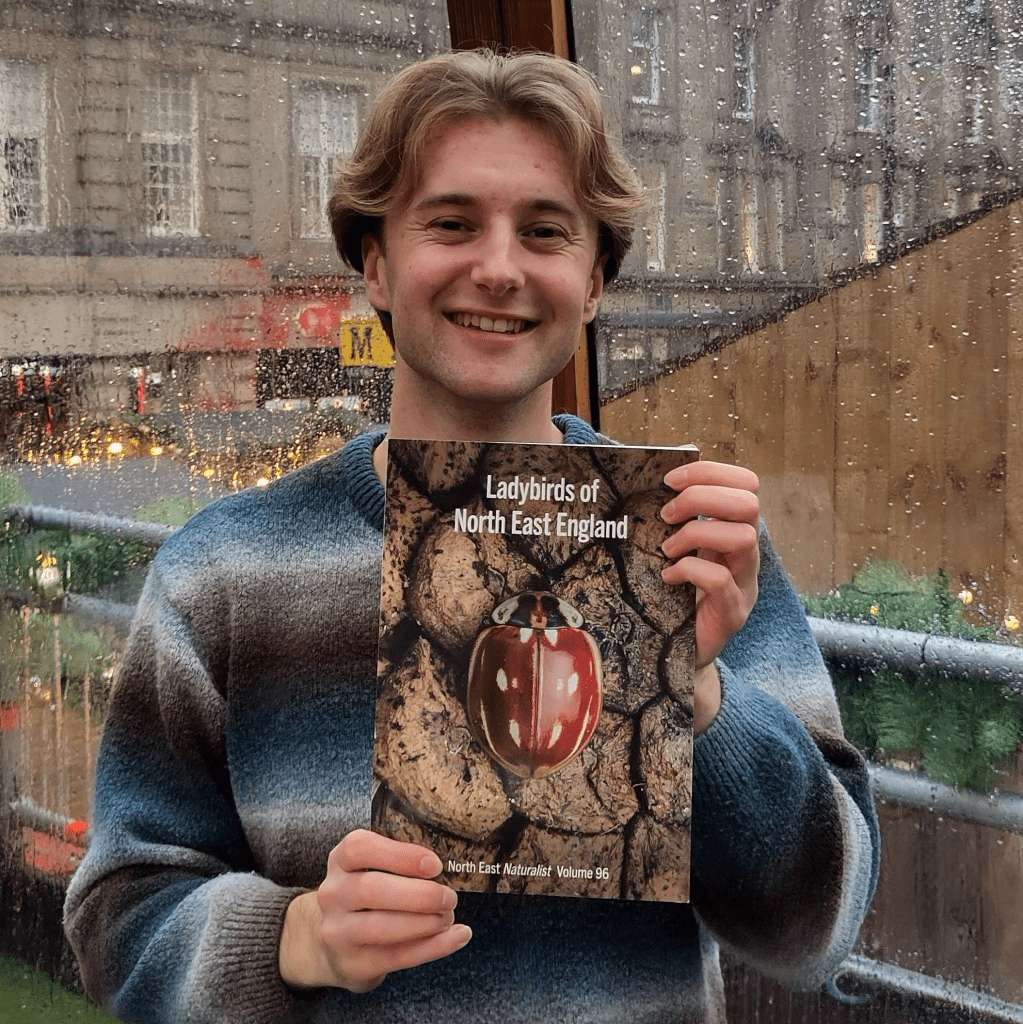
If you’ve ever found yourself needing to know more about the ladybirds of northeast England, Ben’s got you covered! As part of the Natural History Society of Northumbria’s North East Naturalist series, Ben both co-authored and co-edited this stunning entry about the various coccinellid beetles we find up here. Members (if you’re not but you live up this way, what are you waiting for?!) will have received copies already, and others can purchase copies from the NHSN in either digital or paperback format!
Massive congratulations to Rosy on successfully securing a Genetics Society Heredity Fieldwork Grant! This will extend Rosy’s research on candy-striped spiders (Enoplognatha spp.; Araneae: Theridiidae) beyond northeast England and across the Atlantic to Newfoundland, Canada! Developing a collaboration with Catherine Scott and Sean McCann, this will allow Rosy to compare the trophic ecology and commensalisms of our native population with the invasive population in Canada. Catherine and Sean have been studying the Canadian populations for a few years, including identifying their nighttime ‘marauding’ behaviour for the first time! Some really exciting science to come here!
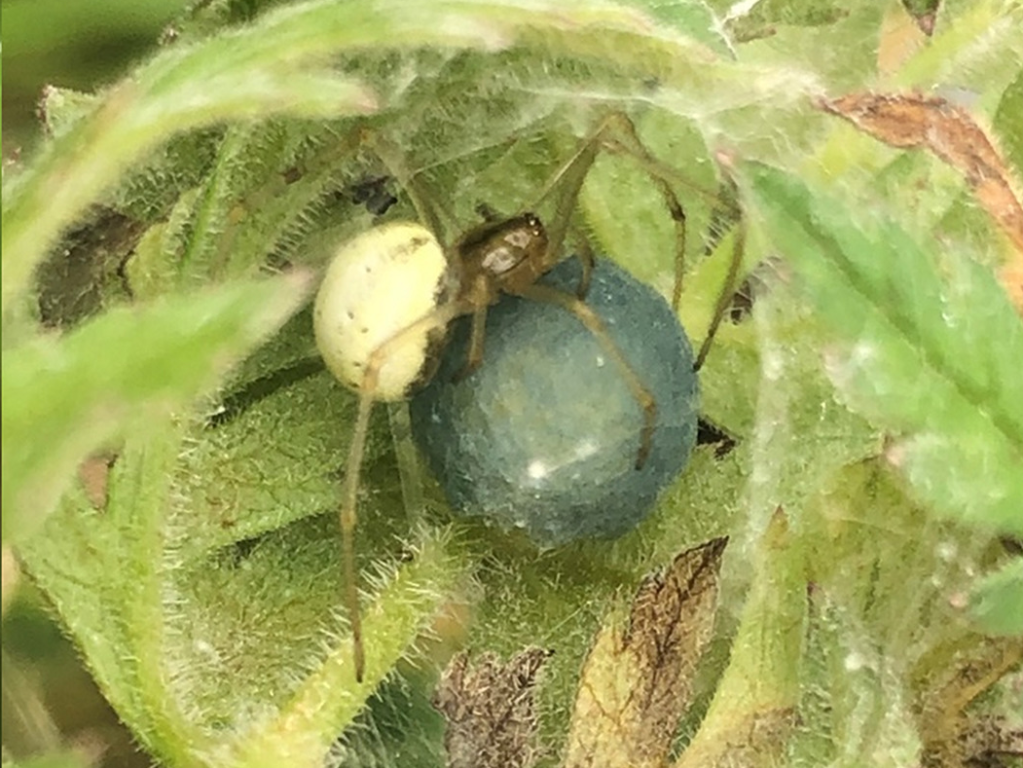
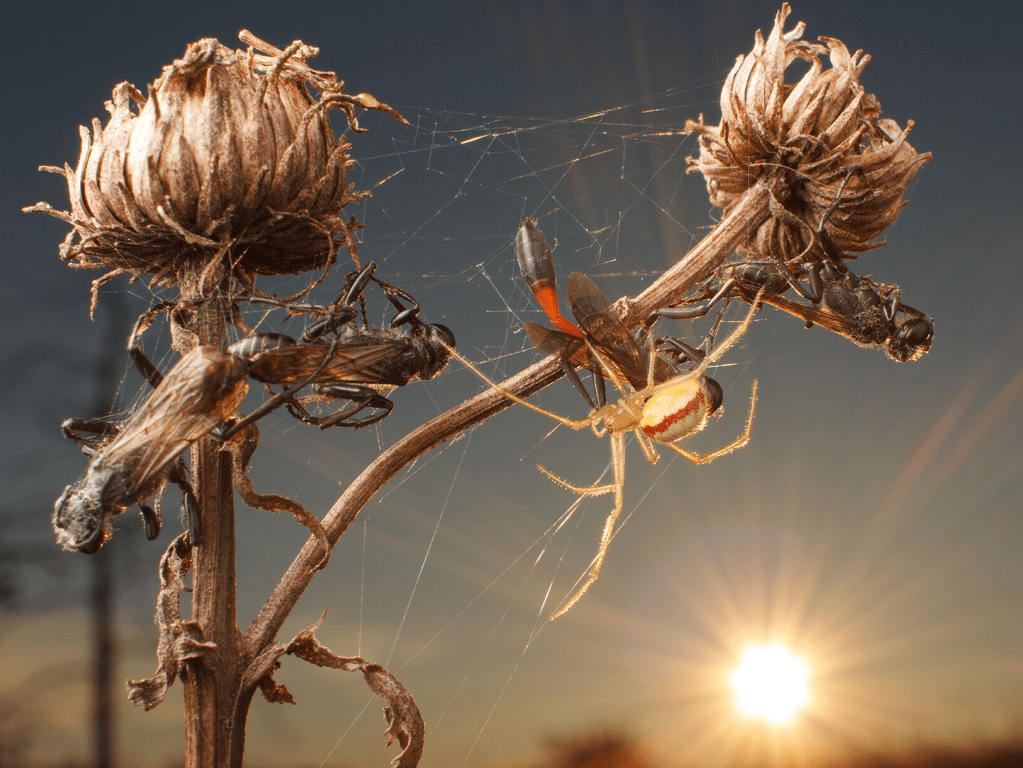
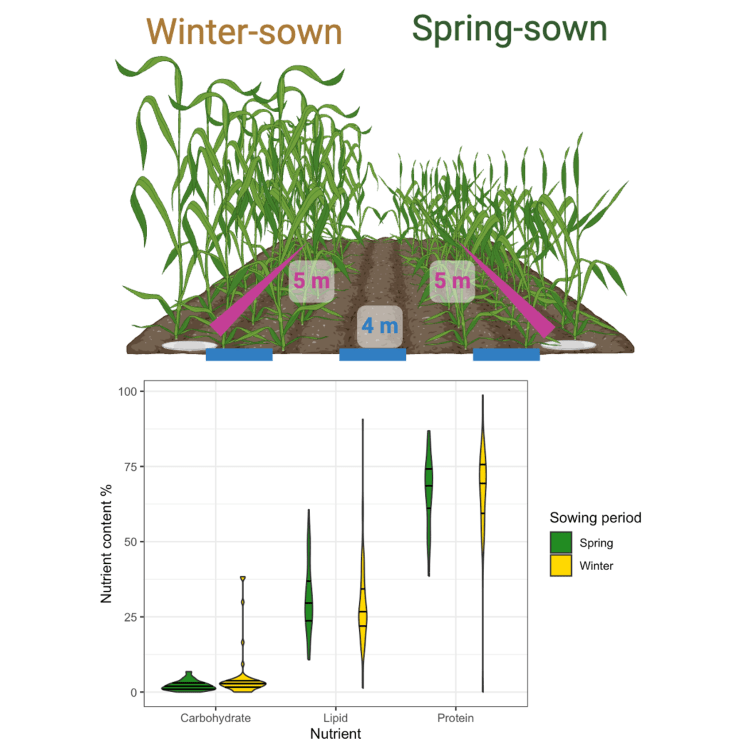
Rosy’s clearly on a winning streak this month – co-leading with Rebecca, she’s also published a preprint! The preprint presents some recent work as part of Rosy’s MSc and Rebecca’s third year project which demonstrates that the sowing timing of crops can significantly alter the nutrient content of arthropod predators over really small spatial scales. The preprint assesses whether this is driven by concomitant changes in prey availability, which it doesn’t appear to be, indicating a far more complex story potentially involving changes in prey quality and density independent foraging. Stay tuned for the peer reviewed version!
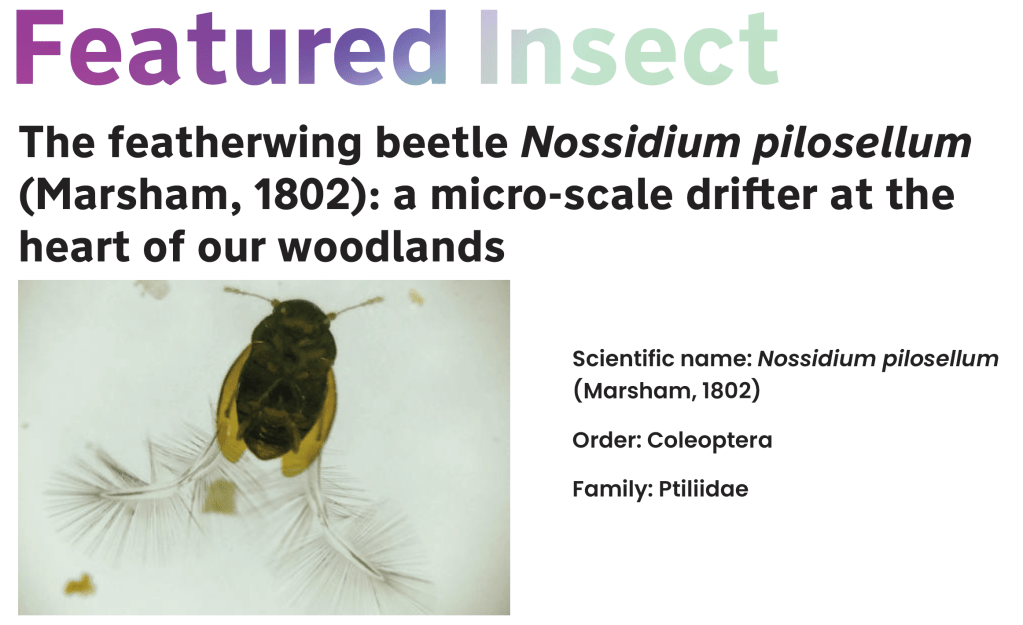
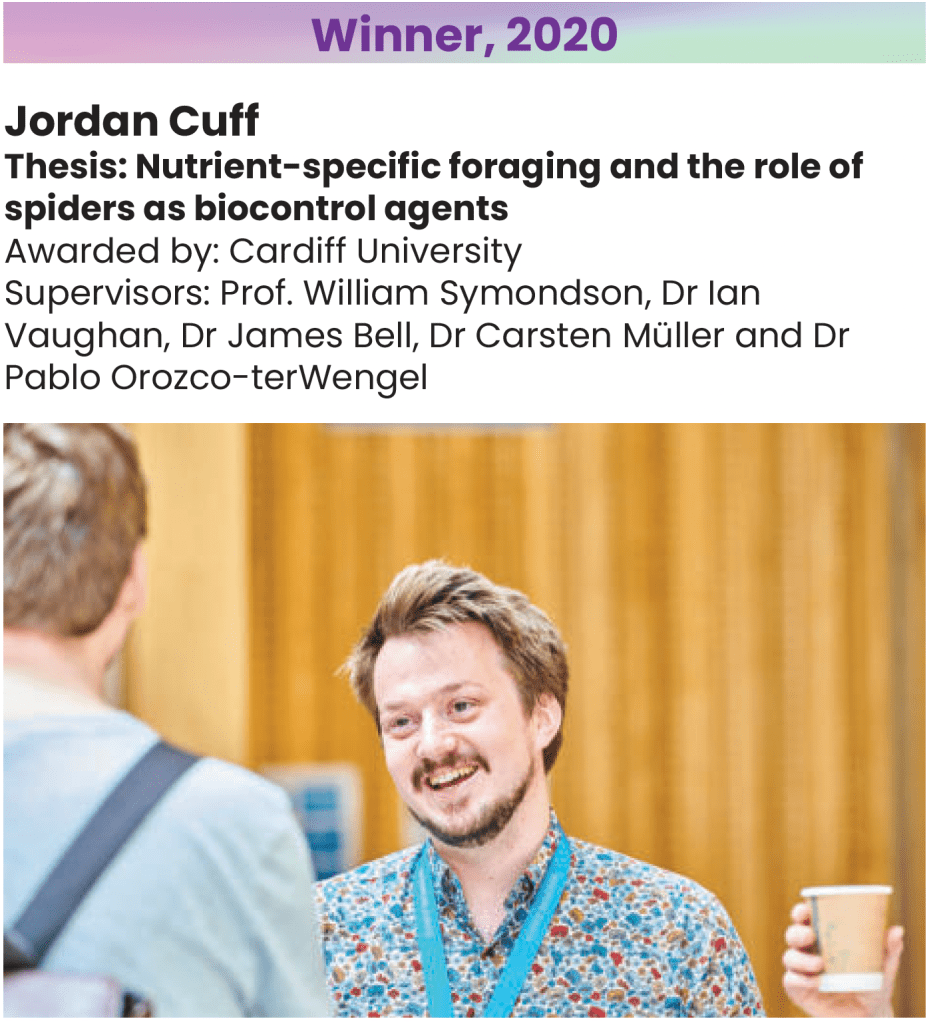
Members of the Royal Entomological Society will have eagerly opened the Society’s latest bulletin, Antenna, to find not one but four separate FERG-related items! Throughout this quarter’s issue is a segment about the RES Student Representatives (which have included both Ben and Rosy for the last year), an article about the featherwing beetle Nossidium pilosellum which Jordan wrote, a segment about Jordan’s peer review workshop at this year’s Ento conference and a little bit about Jordan winning the RES Wallace Award. It’s an honour to take up so much page space in one of our favourite regular reads!
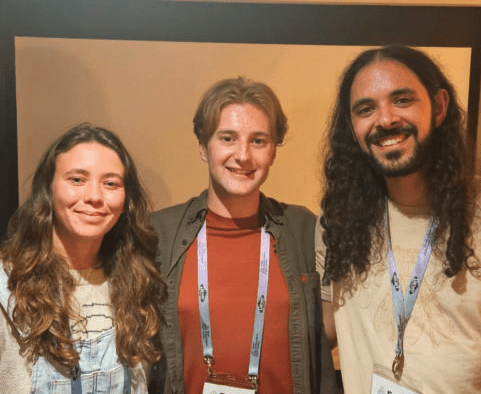
and Idris Adams. Photo credit: Fran Sconce.
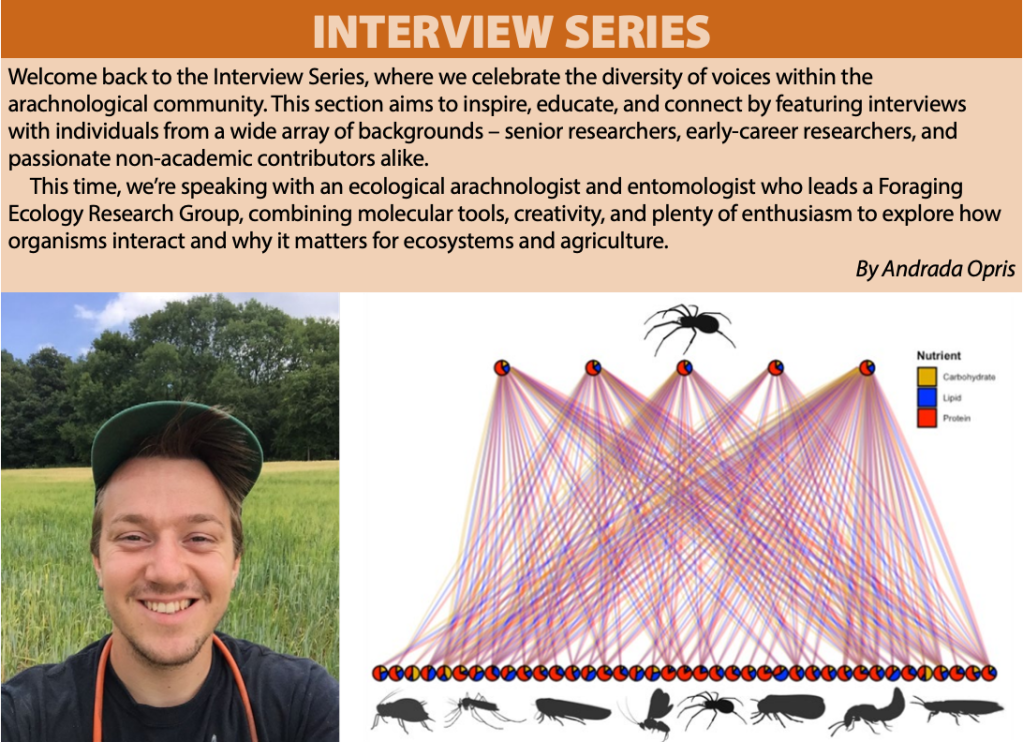
Members of the British Arachnological Society were also treated to an interview article with Jordan in their latest BAS Newsletter! The article dives into past, present and future research across FERG, overcoming arachnophobia, close encounters of the spider kind and the importance of community. It was an honour to be approached to do this, especially since Jordan’s been reading every issue of the BAS Newsletter for a decade!
FERG in the wild
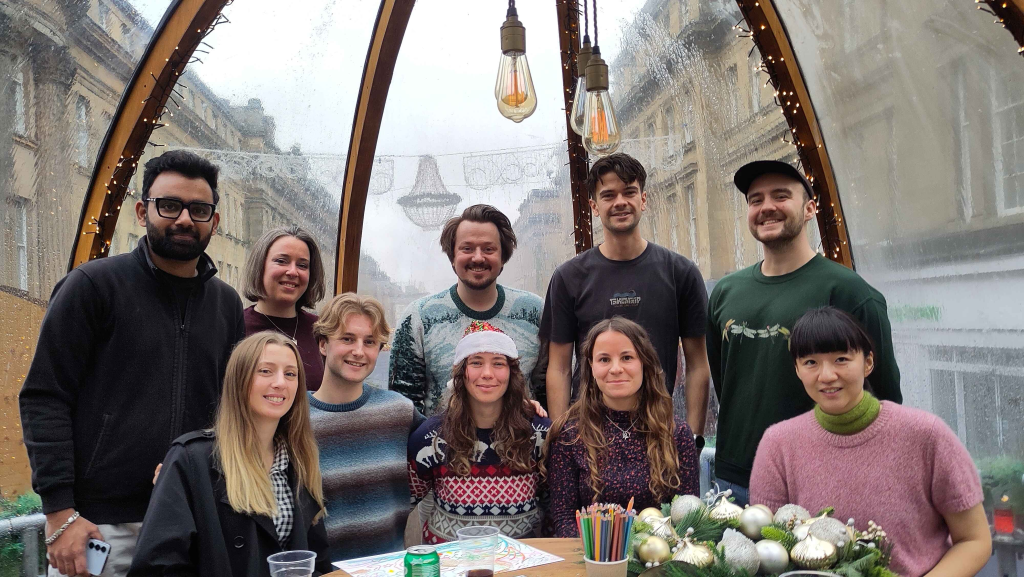
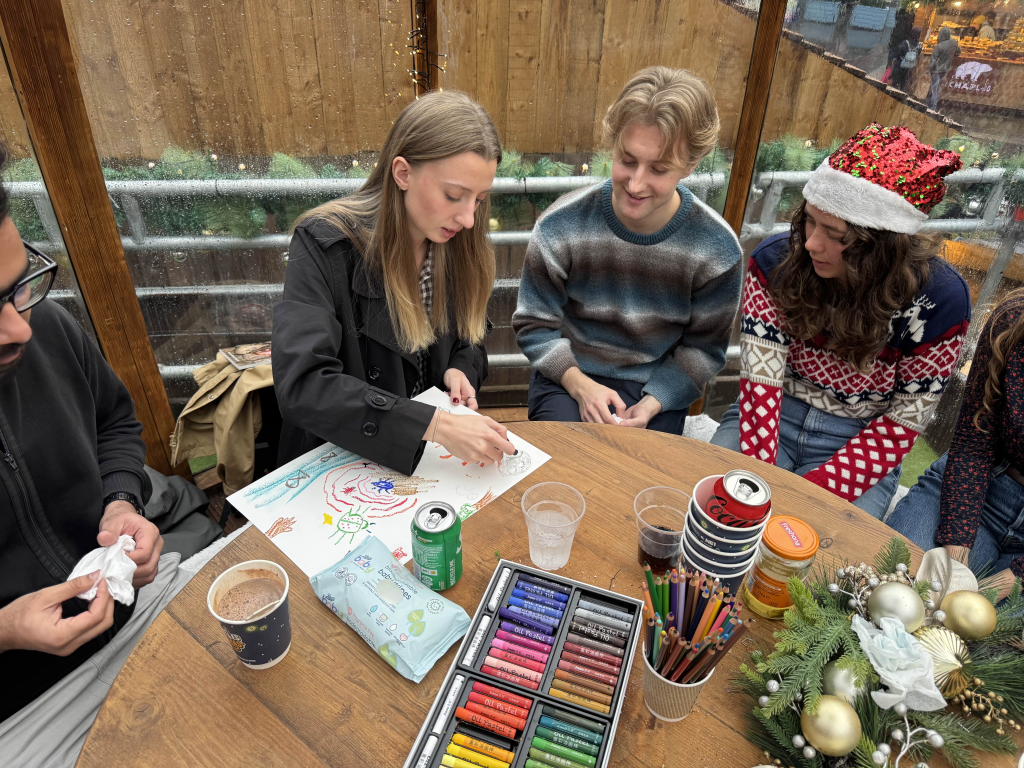
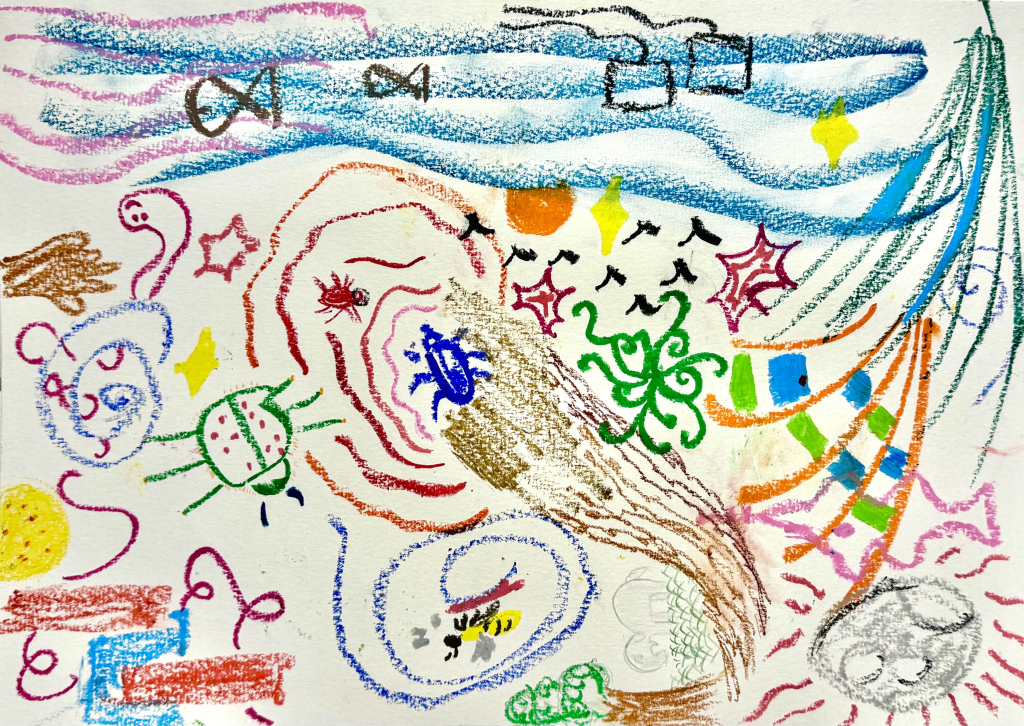
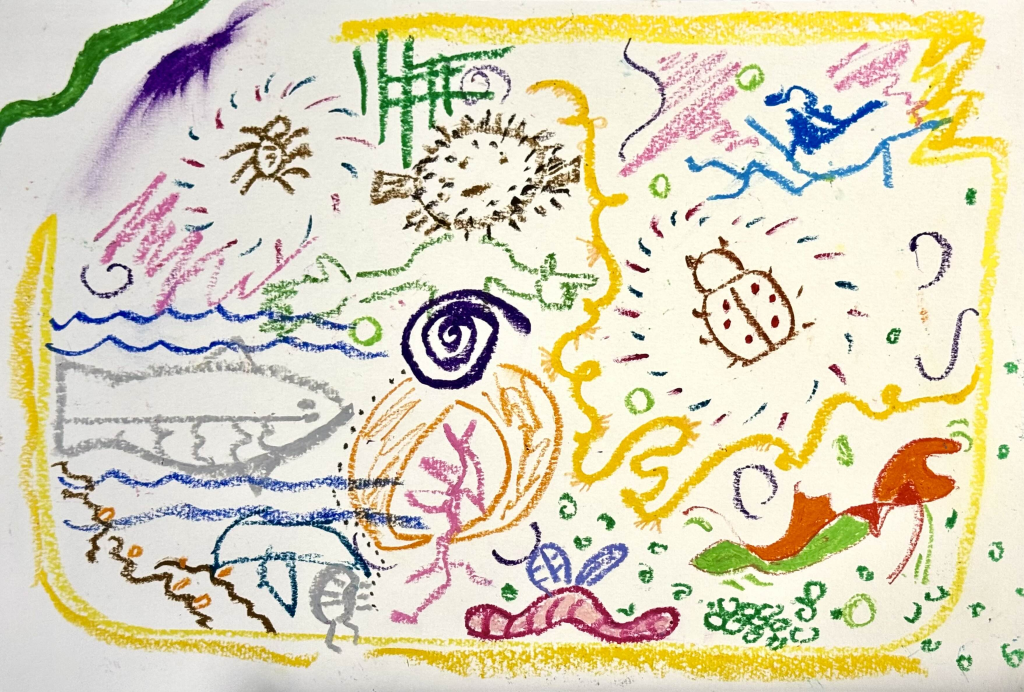
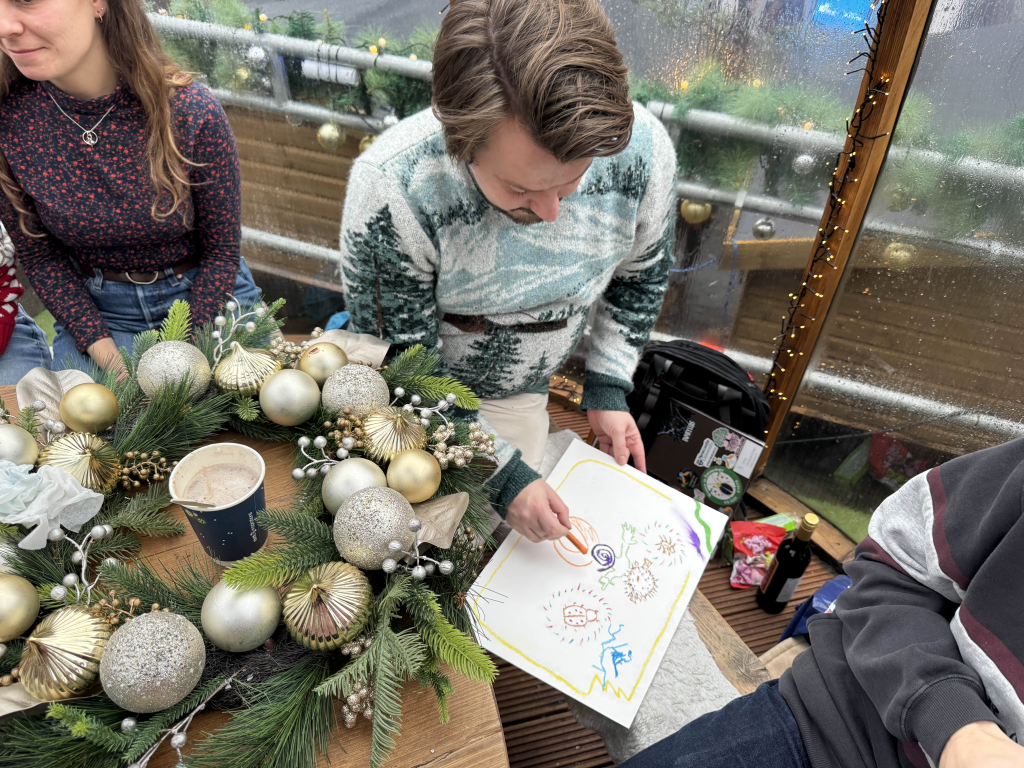
To celebrate the incredible rollercoaster ride that was 2025, we had a lovely festive foraging trip to Newcastle’s Christmas Markets, where we hid out in an igloo overlooking the city, and My Delhi, where we feasted on some of the city’s best Indian cuisine! Within our cosy igloo, we shared ‘postcard’ summaries of the year behind and the year ahead, which was a fun way of celebrating, updating and laughing with one another. Yiran then guided us through some collaborative artwork within the theme ‘Nature and Us’ in which we each added gradually to the same paper using intuition and feeling more than thinking and planning. The beautiful outcomes are shared below! Following a festive FERG quiz (jointly won by Lucy, Mia and Jack), we headed over to My Delhi for a festive-themed Indian feast! All in all, a fantastic day celebrating a wonderful year with a fabulous group!

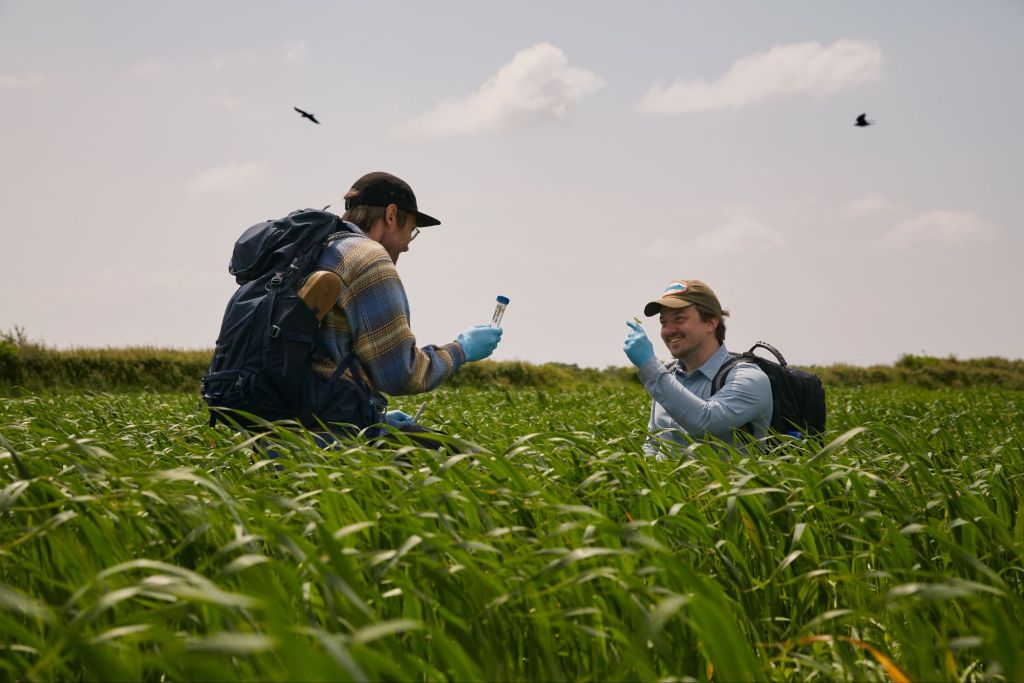
Following some exciting results coming together for our National Lottery Heritage Fund project on arable plants, Slade Farm Organics, who’ve been leading the project, put together a fabulous podcast about our research as part of their ‘Living Field’ series. This research has had Jordan swabbing and grinding leaves and flowers for metabarcoding alongside long-time FERG friend Fred Windsor, who leads the Freshwater Networks Laboratory at Cardiff University. Check out the podcast to learn more!
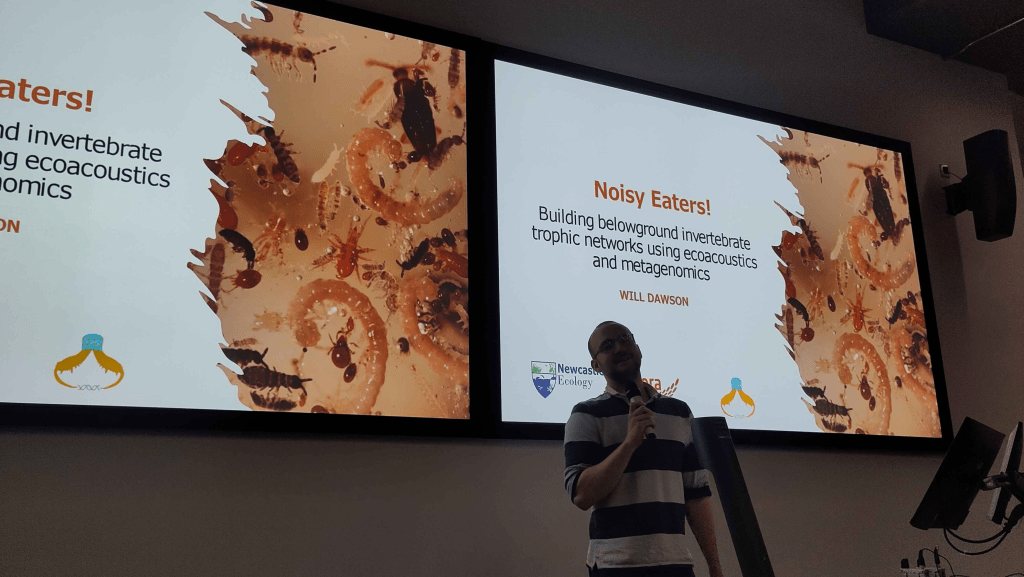
Will and Jordan spoke about ongoing work toward advancing biomonitoring at Newcastle University’s School of Natural and Environmental Sciences winter event, “SNES Festive”. Will especially wowed the crowds with his accessible description of merging molecular and acoustic methods to construct ecological networks!
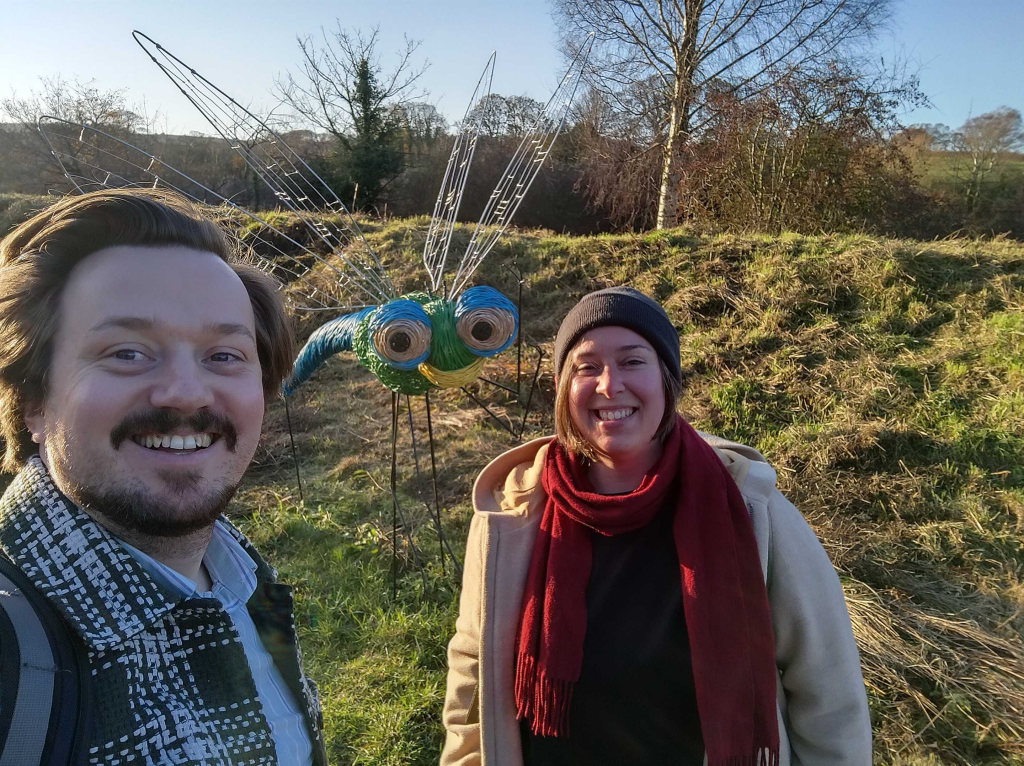
The cold weather couldn’t keep us in! We’ve had a few trips and forays over the last few weeks. Mia and Jordan took a trip to Washington’s WWT reserve to scope it out for an exciting upcoming event (more on that very soon)! Among otters, flamingoes and plenty of ducks, there were various exciting invertebrates, including the below larger-than-life dragonfly!
Thought for the month
What is the impact on wildlife of our various global holiday celebrations? Do the changes in human activities (e.g., staying home for a few days) cause any longer term lag effects?
Fun with FERG
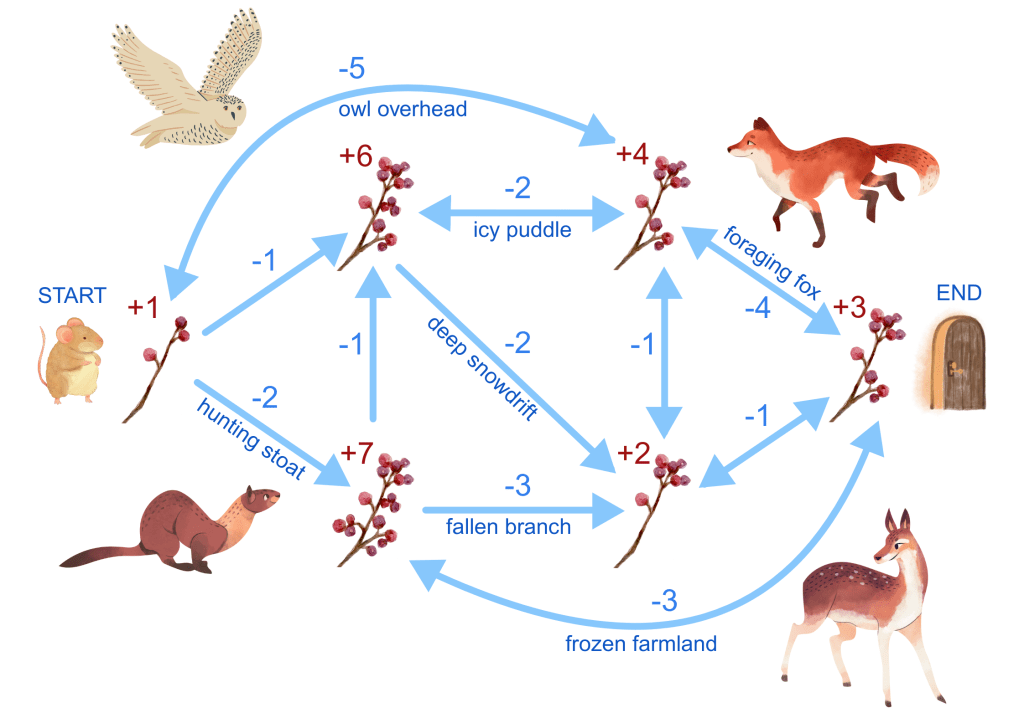
Because it’s so good, we thought we would re-share Mia’s excellent festive foraging puzzle from our yearly round-up!
The mouse is moving through a winter landscape, trying to eat enough berries to meet her energetic demands. She can gain energy from berry patches (positive numbers); however, each path she takes has energetic costs (negative numbers). She can take paths as many times as she likes on her route from the start to the end, always paying the energetic costs, but she can only collect berries (gain energy) from each patch once. Some routes are unidirectional and some are multidirectional, denoted by arrows. She must not go into negative energy or she will starve. The mouse needs to finish with a balance of +12 energy at her door to survive the day.
The solution is at the bottom of the page!
Taxon of the month
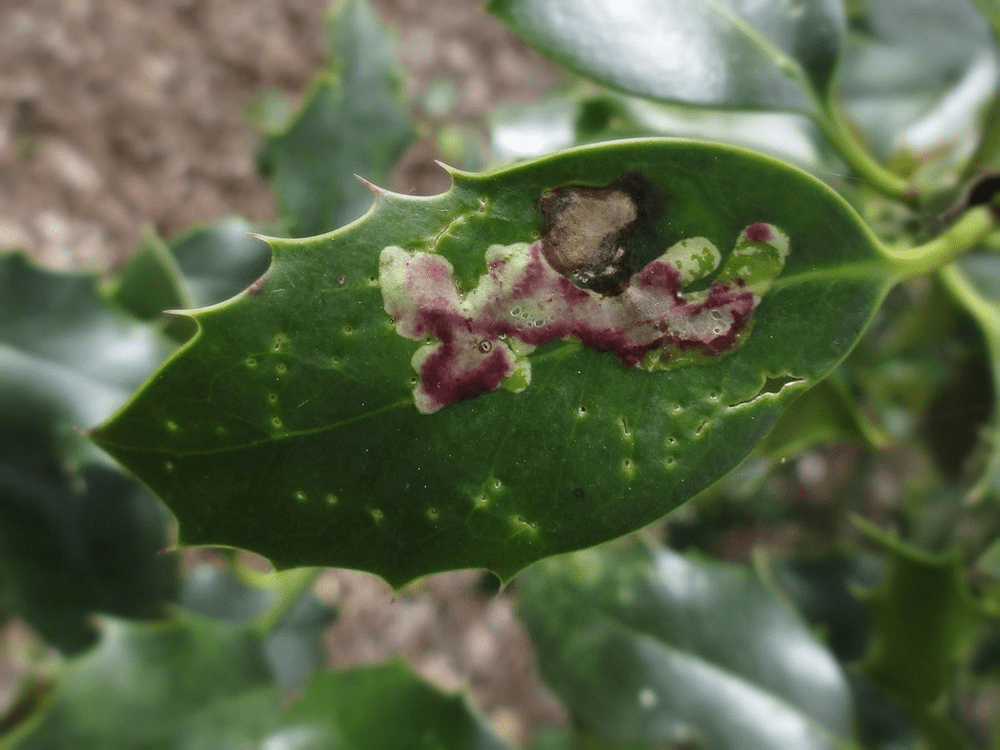
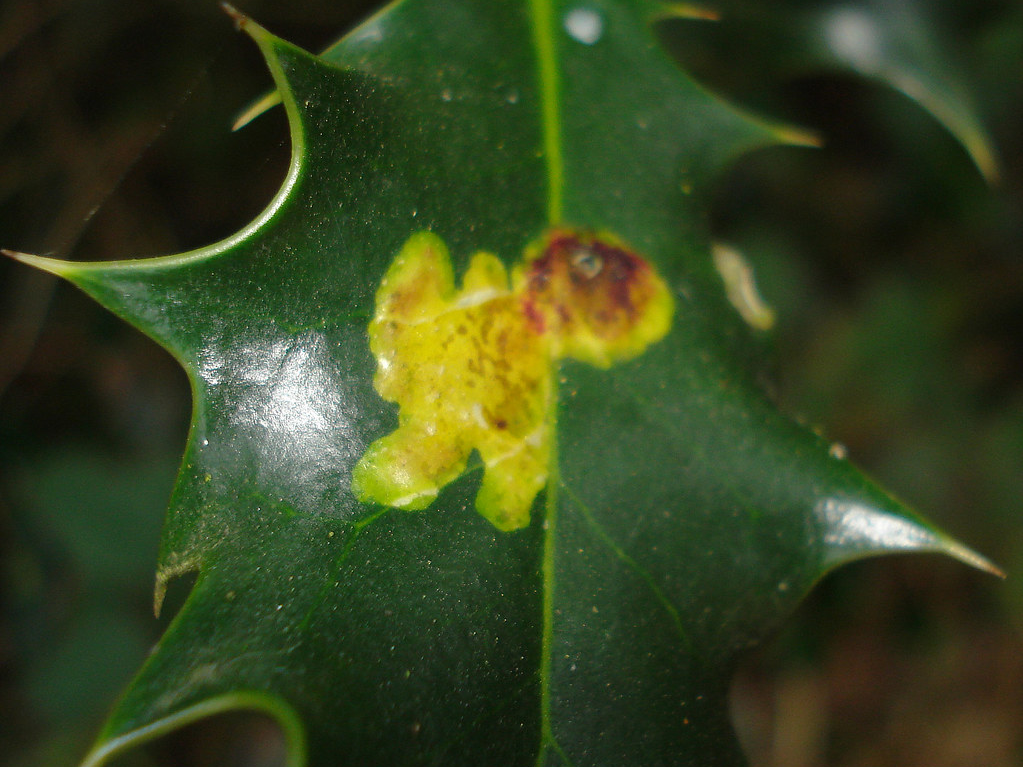
Our taxon of the month is a festive-themed fly, the holly leaf miner, Phytomyza ilicis! One of very few species able to do so, the holly leaf miner lays its eggs in holly leaves, where the larvae eclose (i.e., emerge) from their eggs within the leaf and munch away at its internal tissues. As with other leaf miners, this creates beautiful etching-like patterns visible through the external tissues of the leaf. Most holly leaf mines are likely to be P. ilicis, making it a nice easy species to find and study! Eggs are normally inserted, via ovipositor, into the midrib or main veins of the leaf in early spring (when young, soft leaves are readily available).
The holly leaf miner, once it pupates and ecloses from its pupa as an adult, emerges from the leaf by creating a small opening. Some flies will not, however, make it that far and will be parasitised by parasitoid wasps, or may be eaten by birds like blue tits which can peck open the leaf mines. The leaf mines are easy to spot and are a delight to see – definitely keep your eyes peeled when walking by holly plants!
Research spotlight
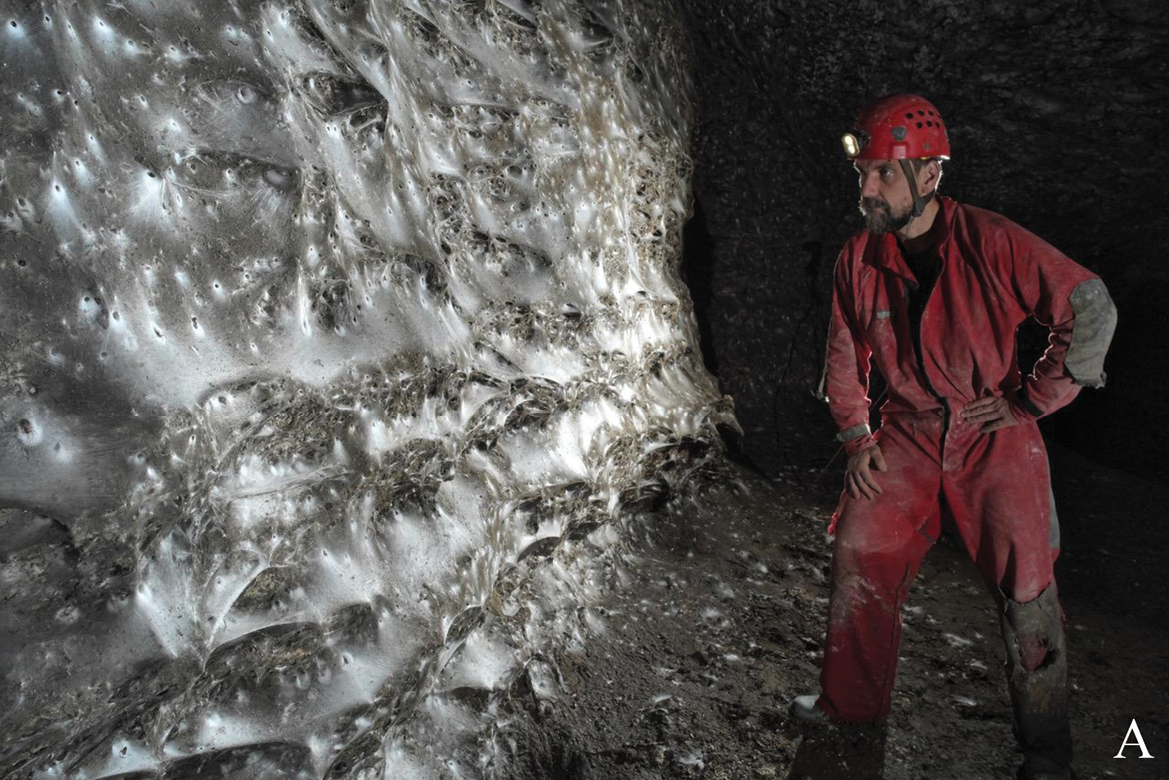
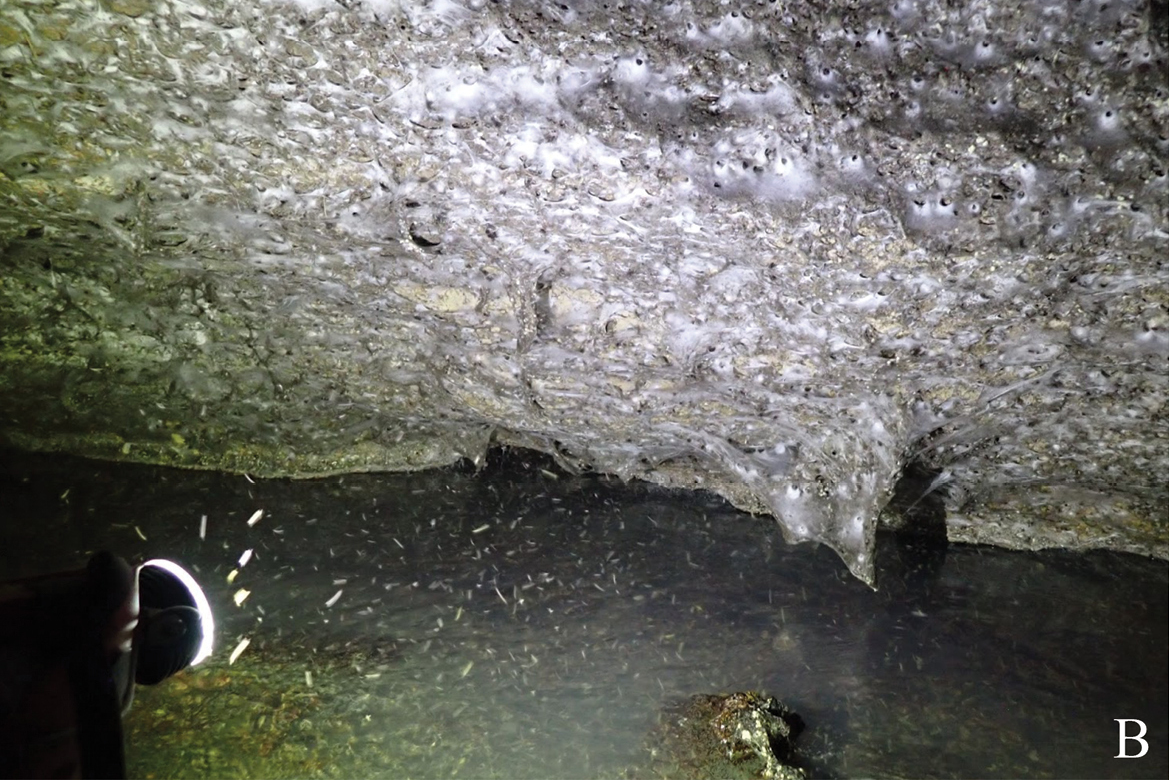
This month, we want to highlight this paper from István Urák and co-authors: An extraordinary colonial spider community in Sulfur Cave (Albania/Greece) sustained by chemoautotrophy
At a time of year when, at least in the temperature northern hemisphere, we tend to come together in the warmth of our homes, it seems apt to highlight one of the year’s biggest spider stories: that of the discovery of the largest recorded spiderweb! By no means are we suggesting that you too should weave a silken retreat for the winter, for this is not the web of one spider alone! Much like a high-rise block of flats, an estimated 110,000 spiders have built their homes together, forming one massive web! Better still, this cooperation involves two species from different families: Tegenaria domestica (Araneae: Agelenidae) and Prinerigone vagans (Araneae: Linyphiidae).
Beyond this staggering discovery, the paper identifies (using stable isotope analysis) that the trophic network supporting these spiders is based on sulfur-oxidizing microbial biofilms and chironomids that feed on them. The authors investigate the fecundity, microbiome and population genetics of the spiders, too, making for a truly complex and exciting narrative. They ultimately conclude that these otherwise cosmopolitan spiders uniquely display facultative coloniality, perhaps driven by resource abundance in this chemoautotrophic cave. Wild.
Fun with FERG: solution!


