The start of the year brought a large amount of snowfall to northeast England, but even this couldn’t keep us quiet! Alongside hosting visitors and chipping away at various projects, we’ve been out in the (very cold) field, publishing protocols and winning various grants to do some really exciting things over the year ahead!
If you want to keep up with our updates every month (and occasional updates in between), you can sign up to email alerts below!
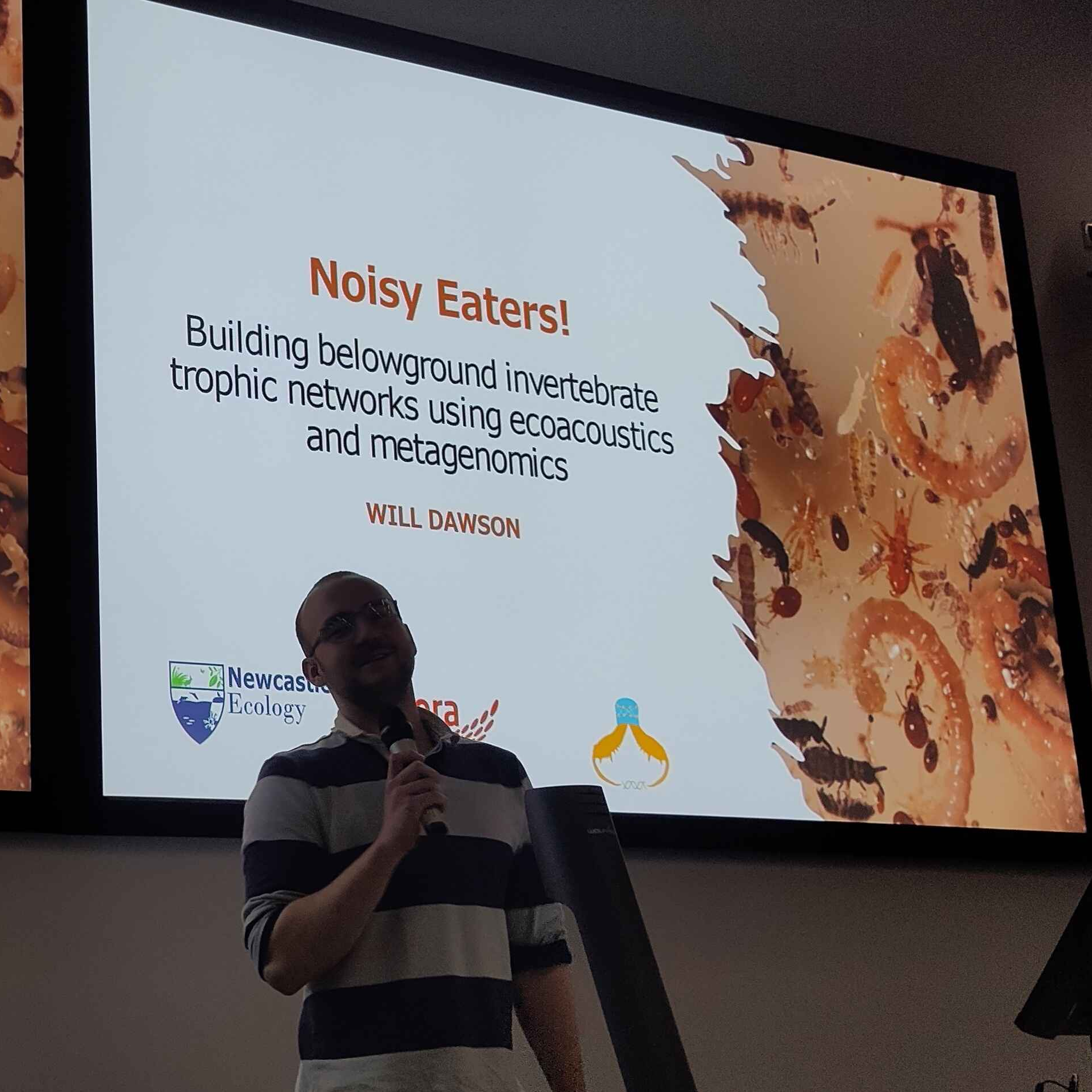
For those reading from northeast England: come along to see Will talk about his project for the Natural History Society of Northumbria! Will will be talking about his PhD research on Monday 9th February in the Curtis Auditorium of Newcastle University’s Herschel Building. The event starts at 6pm, so come along and meet the wonderful membership of the NHSN – an incredibly active society which has been going for nearly two centuries!
As a similar reminder, Rosy will also be talking about her PhD work online for EntoLIVE on 2nd June, so make sure you register to attend/get the link afterwards!
Outputs and outcomes
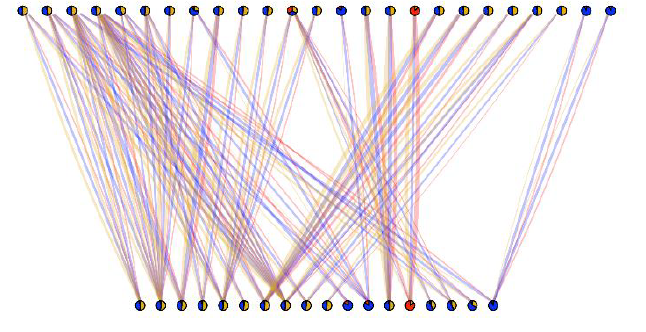
To finish off 2025 with a bang, Bea submitted her PhD thesis! After four years of incredibly hard work and a few thousand more nutrient assays than anyone should endure, Bea compiled a truly impressive thesis that saw the construction of a massive park-wide plant-pollinator network. By incorporating nutritional data she painstakingly generated through the largest number of colorimetric assays we’ve ever heard someone do, these networks really compellingly demonstrate the power of nutritional networks for elucidating drivers of ecological interactions and ecosystem-wide processes. Keep your eyes peeled for more updates from Bea next month and beyond! Amazing work, Bea!
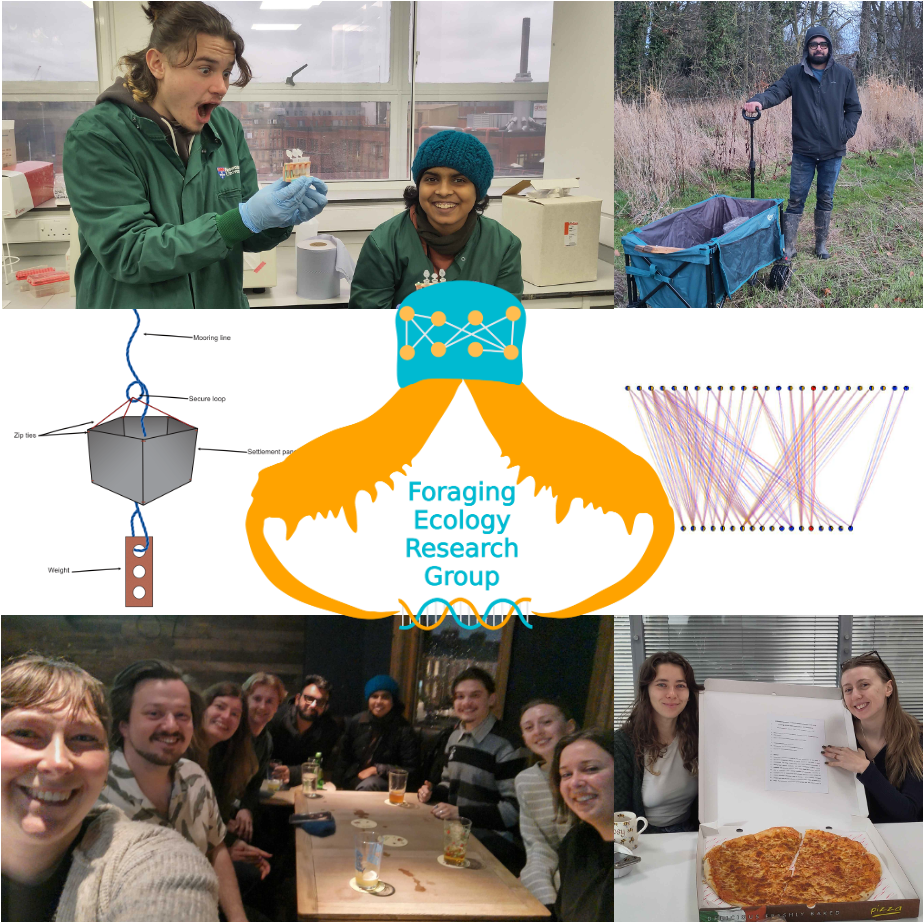
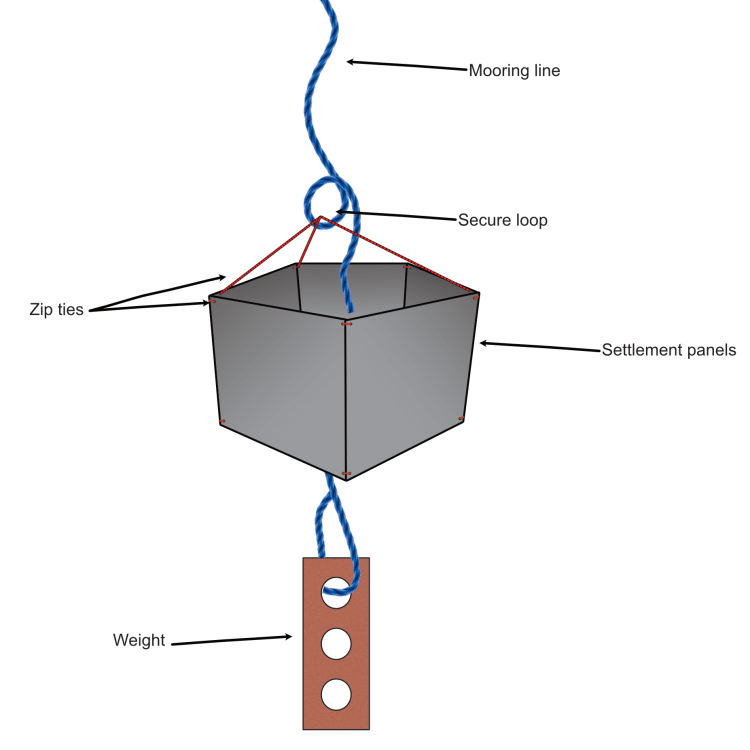
Kicking off the year strong, Jack published an open protocol linked to his ongoing work using marine settlement panels! The protocol covers everything from panel preparation and construction through DNA extraction to molecular analysis and interpretation! Following his recent trip to Norway, this is a helpful step toward international deployment of similar panels for comparative analysis. Stay tuned for some exciting updates!
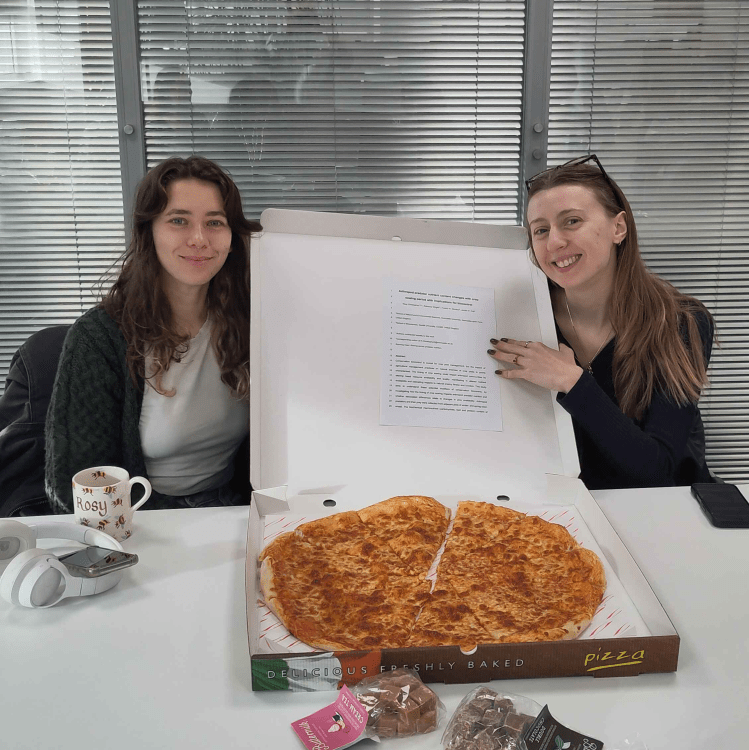
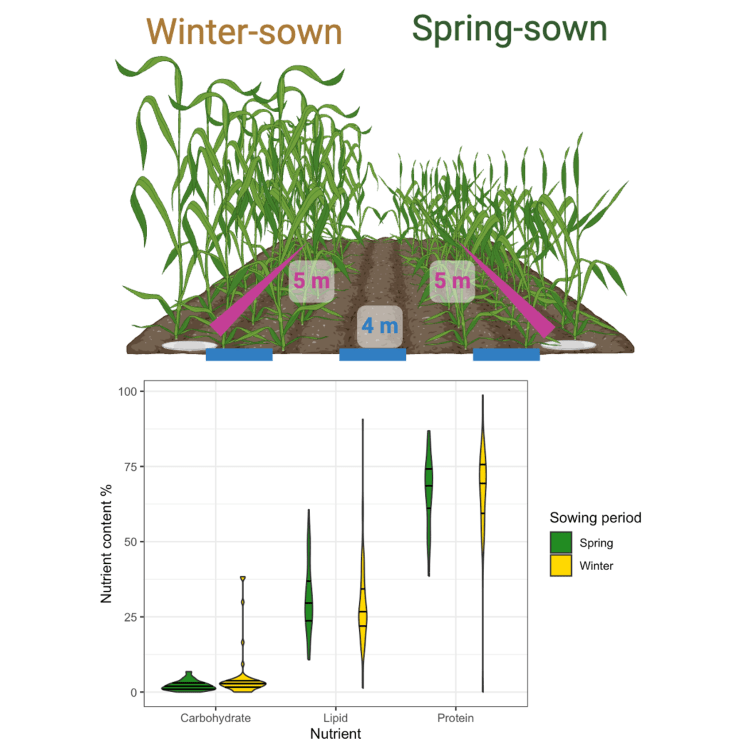
On the topic of outputs, we kicked off our year of group meetings with a preprint pizza to celebrate Rosy and Rebecca’s preprint which was published at the end of last year. The study investigates how crop sowing timing can impact the nutrition of arthropod predators, and how this may work mechanistically. Check out the preprint on bioRxiv while we wait for peer reviewers to give their initial verdict!
It’s been a busy and exciting month for research funding! Shannon won not one but two grants over the last couple of weeks! Shannon has received research funding from both the Royal Entomological Society and the Eva Crane Trust to support her molecular ecological investigations of Faroese bees this summer, which will enable her to use some of the really exciting methods we’ve been developing to answer some really important questions about this unique ecological system.
Eva was also awarded competitive funding from the Biology Centre of the Czech Academy of Sciences to come and join us in November for some dietary metabarcoding! Eva’s been busy collecting samples as part of a drought experiment in Taiwanese forests which she will be analysing to construct ecological networks within and between areas of artificial drought to assess the impacts on littoral arthropod predators. We’re really excited to have her here for a while!
Will also managed to secure a Wildlife Acoustics Kaleidoscope Pro license award! Not only that – he was also awarded a British Society for Soil Science Early Career Travel Grant to attend the Global Soil Biodiversity Conference this April in Canada! If you happen to be going, Will will be giving a talk about his PhD research, so definitely head along to that and say hello!
Massive congratulations as well to Ben, who has secured a role here in Newcastle University working at the interface of DNA metabarcoding and computer vision for insect identification! While Ben finishes his thesis, he’ll be doing some really exciting analyses as part of this collaborative and interdisciplinary project!
FERG in the wild
We had some special guests with us here in Newcastle this month! Billy Easeman and Needhi Thangasamy came up from Seirian Sumner’s group in University College London to metabarcode the guts of both social and parasitoid wasps. Billy’s just starting his MRes, whereas Needhi has been visiting UCL from Universita di Pisa as part of her PhD studies. It was a true joy and immense pleasure having them both with us, even if only for a couple of days! Some really exciting results to come!

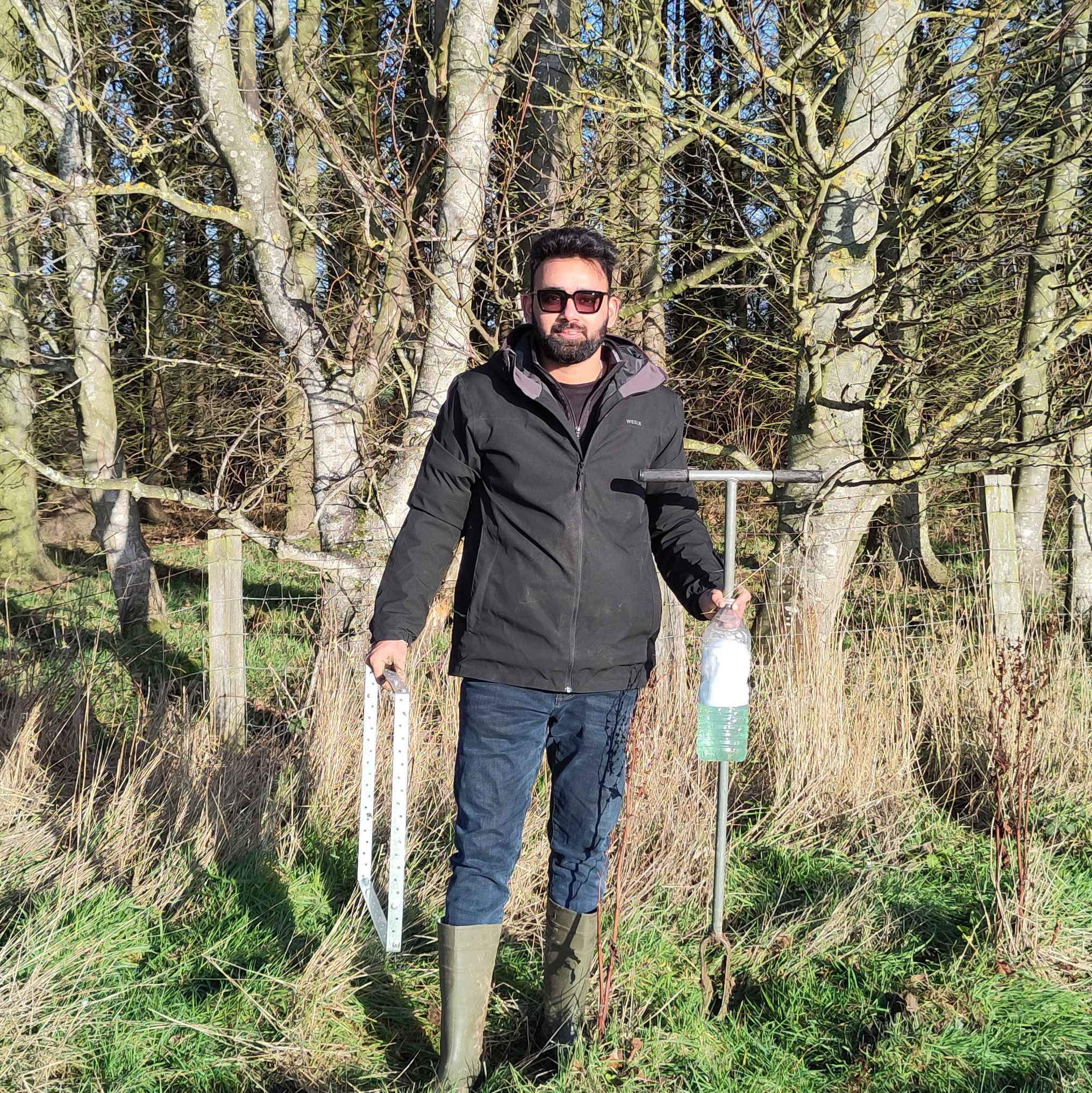
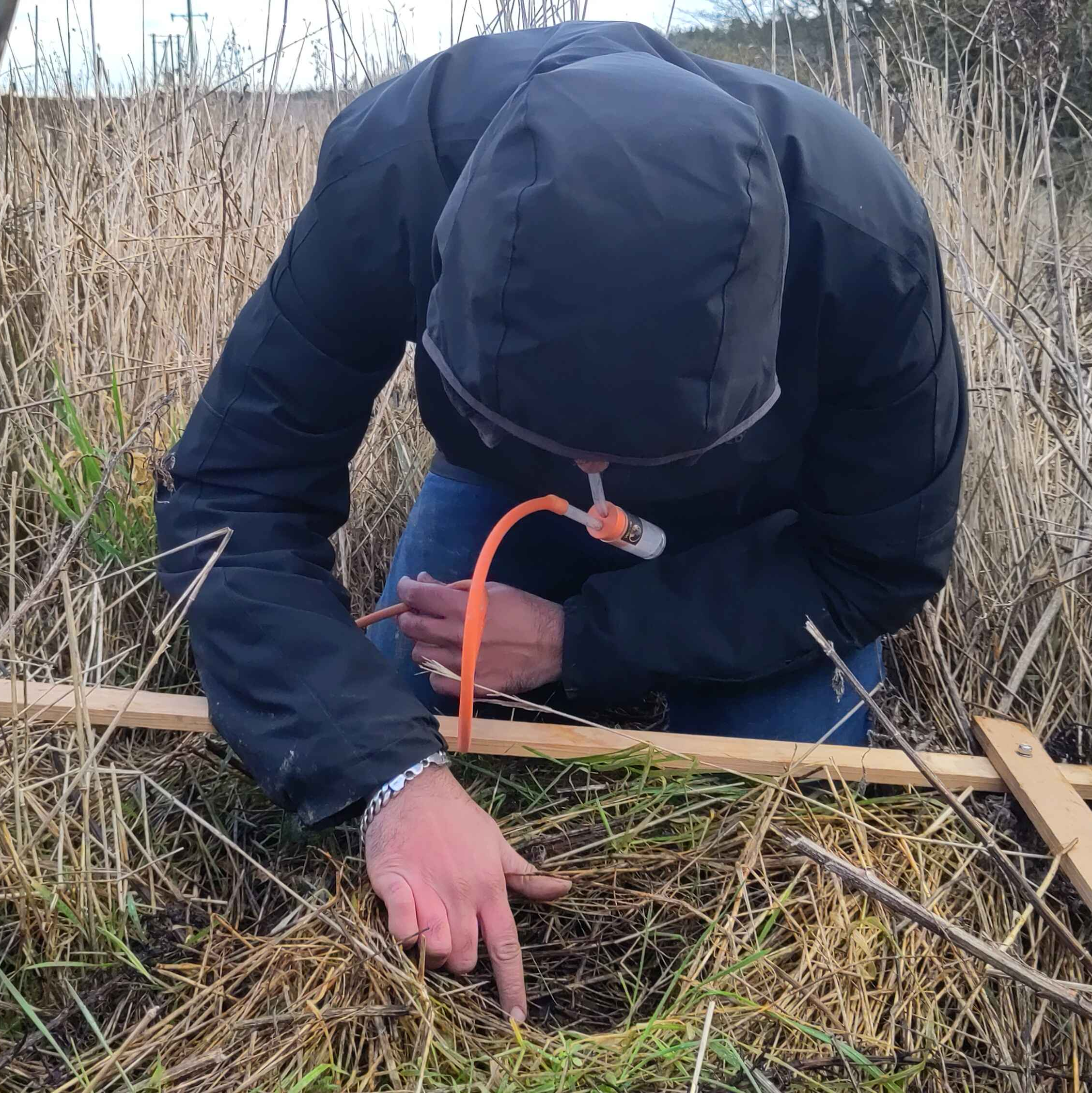
Dheeraj got out into the field to start data collection for his MRes project this month! If January wasn’t cold enough, he headed out to our Cockle Park experimental farm the day after our thick dusting of snow cleared! Luckily Dheeraj is used to the cold from mountaineering in subzero temperatures. Despite the weather, a surprisingly large number of predatory beetles and spiders were waiting to be collected. A great start to Dheeraj’s project, which focuses on how biocontrol and wider interactions shift in the transition from winter to spring.
Looking ahead, Mia secured a highly competitive place on the Natural History Museum London’s NERC-funded Integrative Biodiversity Discovery course this March! This will be a really exciting opportunity to dive deeper into emerging ways of looking at biodiversity both within and beyond the context of Mia’s PhD research!
On the topic of London, if you’re attending the Verrall Lecture/Supper, come and say hello! A few of us from FERG will be going along and we’d love to talk about our research, entomology and just about anything else!
Closer to home, Rosy is leading organisation for the Royal Entomological Society’s Student Forum here in Newcastle, 30th-31st March! This is an exceptional event for any entomological students and a perfect way of connecting with fellow students that share a passion for insects and other invertebrates! Last time it was hosted in Newcastle (in 2024, led by Ben) it was the largest in the society’s history, and we’re sure this year will be just as exciting! If you are coming along and want to see any of our labs or resources, please do get in touch!
Fun with FERG
Given the various conceptual advances that we advocate for across our research, but especially DNA metabarcoding, we’ve been discussing new ways to distill and communicate some of these concepts. From this has emerged a first go at generating an R shiny app to demonstrate one of these topics: the use of thresholds to filter metabarcoding data!
Because of the prevalence of false positives in metabarcoding data (false detections from, for example, cross-contamination), we tend to use numerical filters called minimum sequence copy thresholds to remove those false positives. A paper Jordan helped put together a few years ago summarises the problem nicely!
To demonstrate this idea, how the balance of false positives and false negatives can be fine (if not impossible) and how this impacts trophic networks in the case of dietary metabarcoding, we’ve put together a game in which you have to adjust filters to remove false positives whilst retaining as much of the true positive data as possible. Give it a go using the button below! This is likely just a first draft, so any thoughts or ideas would be very welcome!
Taxon of the month
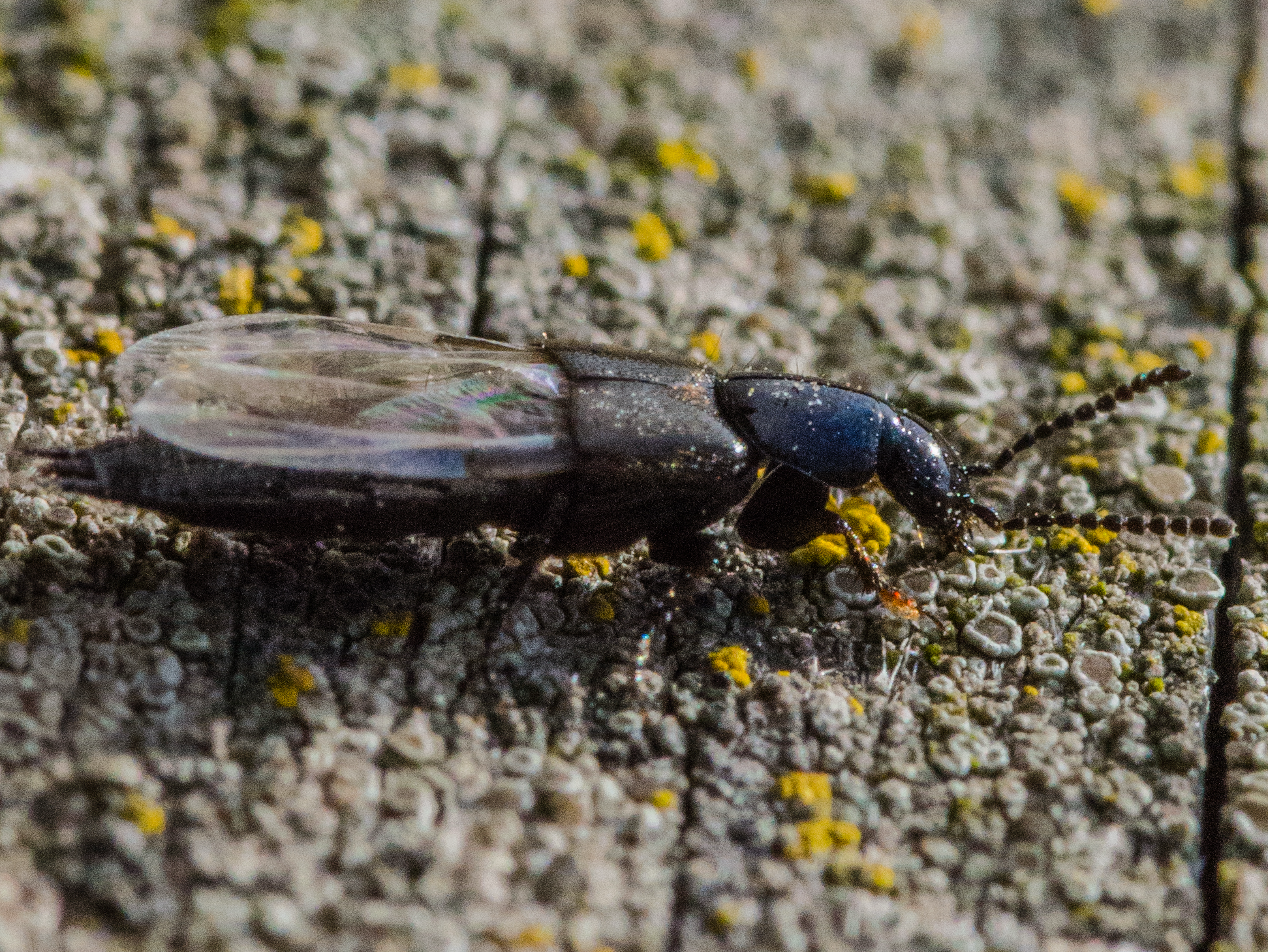
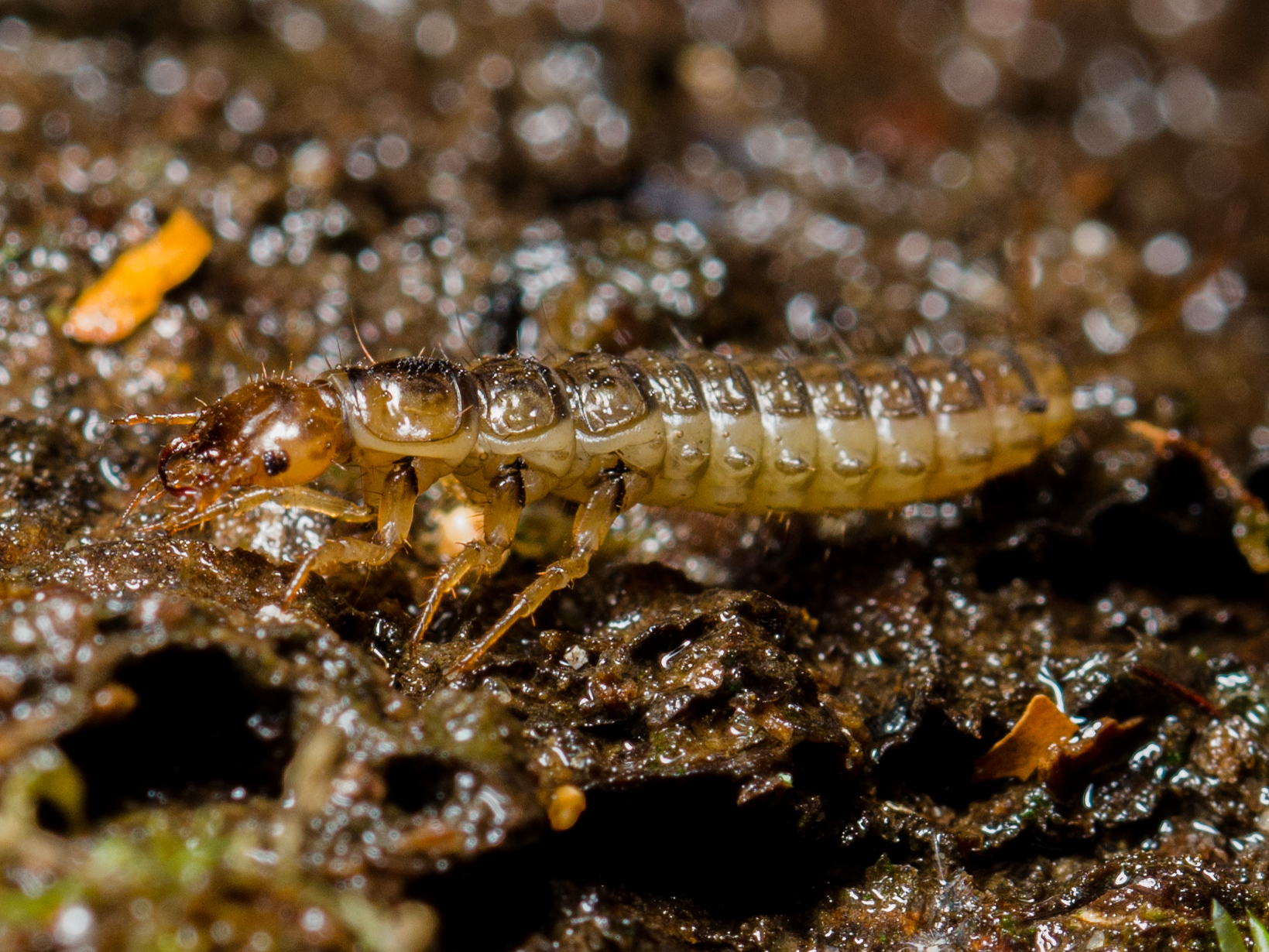
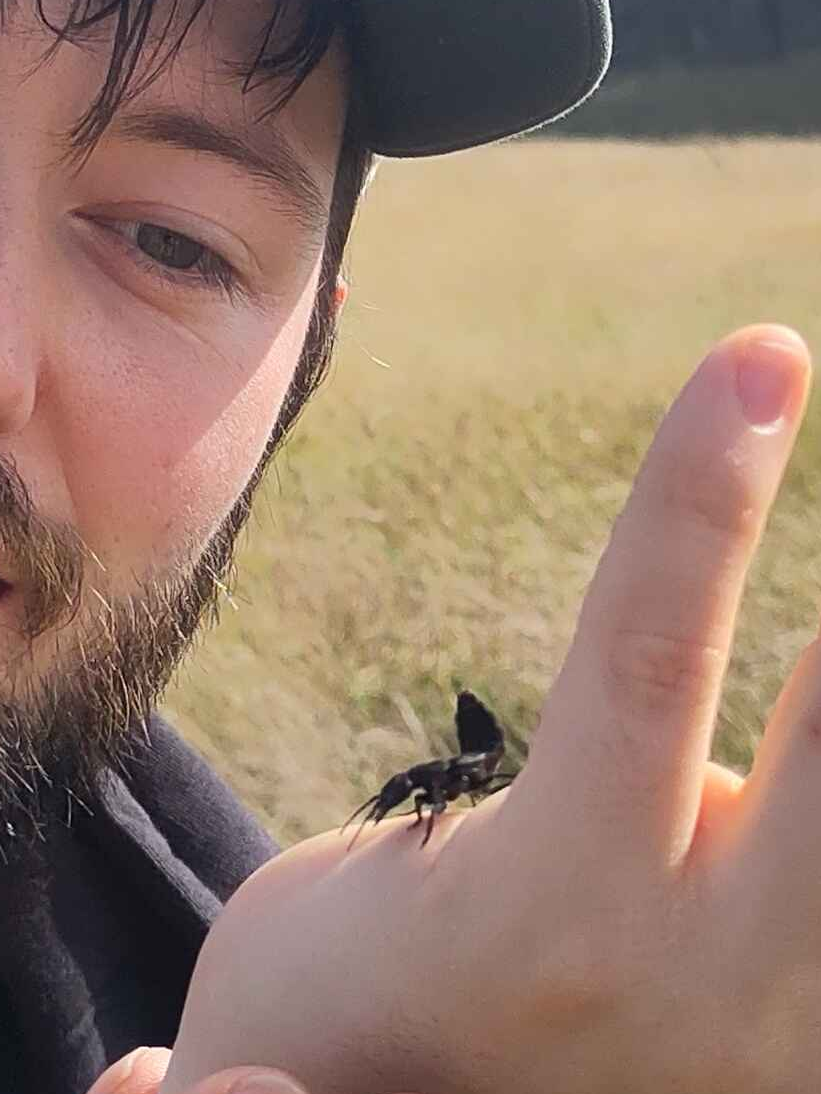
Our taxon of the month is the beetle family Staphylinidae – the rove beetles! Mia has been getting stuck into identifying them from her last field season, so we’ve been talking frequently about how cool and beautiful they are! These beetles are most easily identified by their truncated elytra or wing cases, which fail to cover the abdomen the way they do in most beetles. With over 66,000 species though (making them one of the most diverse beetle groups), rove beetles vary markedly in their morphology and ecology. Their diversity is perhaps exemplified by the fact that they are found in every habitat type known to contain beetles and different species differ so markedly in their diets that, as a group, they are thought to eat every broad type of resource. The best known species, at least in the UK, is certainly the devil’s coach horse (Ocypus olens), which was considered the frontrunner among animals that might draw Satan’s coach in folklore. It’s best known these days for being sizeable, widespread and super cool though.

Research spotlight
This month, we want to highlight this paper from FERG friend Stano Pekár of Masaryk University’s Terrestrial Invertebrates Research Group and co-authors: The temperature preference, phenology and enzymatic activity of two winter-active spiders (Araneae)
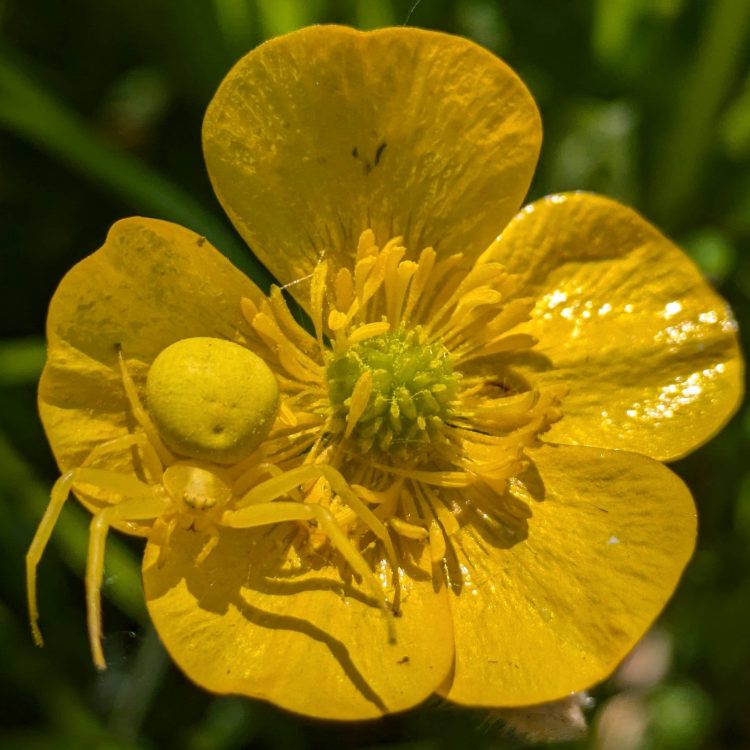
As we’ve been out in the field for Dheeraj’s MRes project, we’ve been discussing the physiological implications of winter for arthropod predators, so this paper has been an excellent and insightful read! The spiders Anyphaena accentuata and Philodromus spp. remain active in orchards over winter, predating psyllids that are otherwise problematic pests come spring. This investigation into the thermal preferences and enzymatic activity of these spiders demonstrated that Anyphaena is perhaps better adapted to cold, but both spiders preferred warmer temperatures of 20-30 °C despite actively foraging at close to or even below 0 °C. Another great example of the incredibly adaptable biology and ecology of spiders!
 Foraging Ecology Research Group