

Check out our new paper, published in Ecological Entomology! “Sources of prey availability data alter interpretation of outputs from prey choice null networks“
The data we use to assess prey choice in the field can drastically change what we find. This may be intuitive, but it’s also a little more complicated than you might think…
We’ve used null networks (e.g., econullnetr) to explore various mechanisms driving trophic interactions but what are the consequences of using different measures of prey availability? We set out to test this for spider-prey networks!

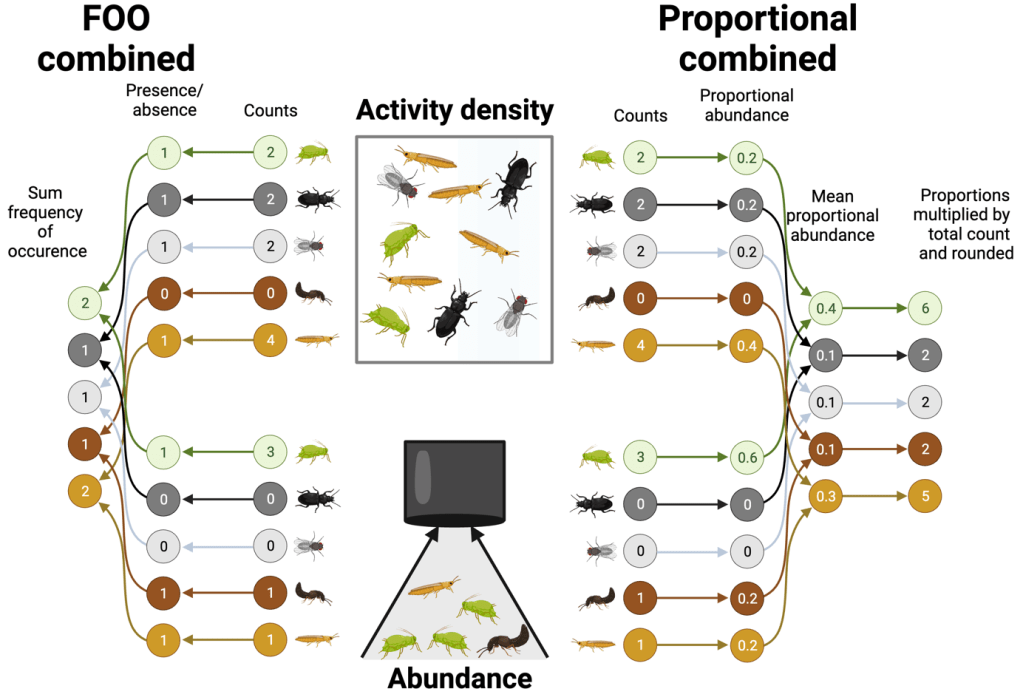
Using sticky traps (activity density), suction sampling (abundance) and merged datasets, we found that the prey communities represented were compositionally distinct, and generally less variable than the trophic interactions spiders were engaged in (determined by dietary DNA metabarcoding).
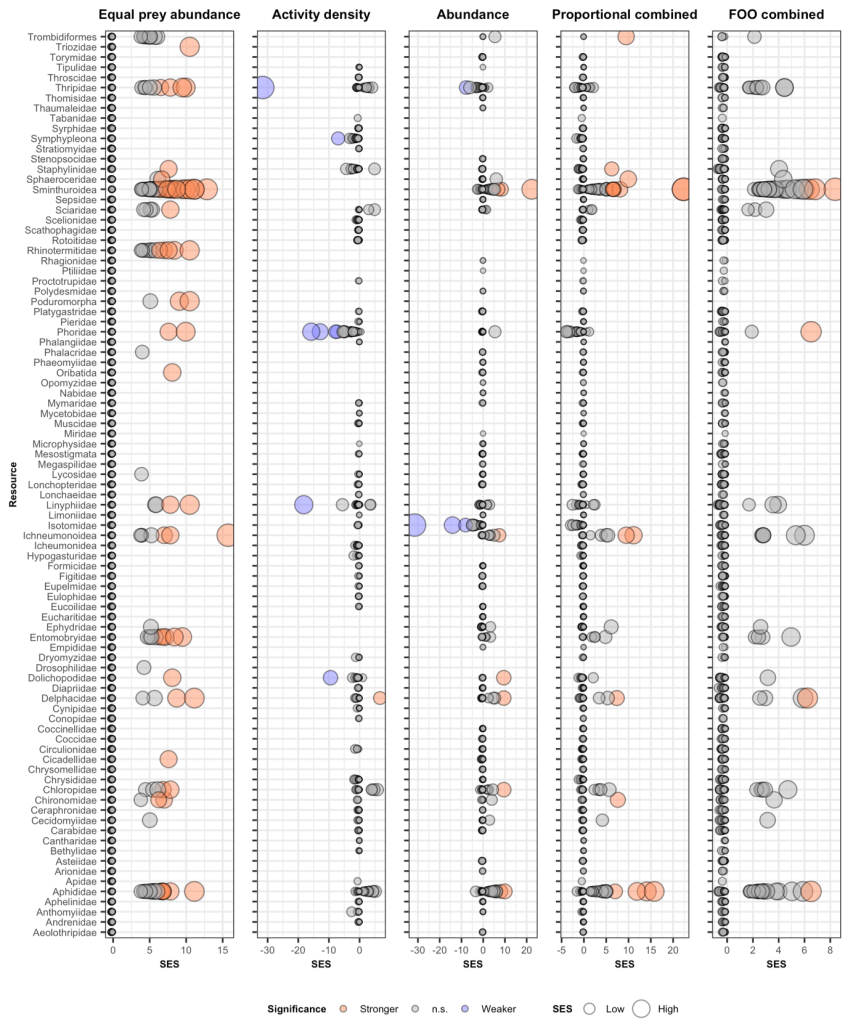
This, quite intuitively, led to differences in their preferences (or at least perceived preferences), with different ‘null diet compositions’ emerging. This makes sense – what comes out must reflect what goes in – but what about the properties of the null networks?
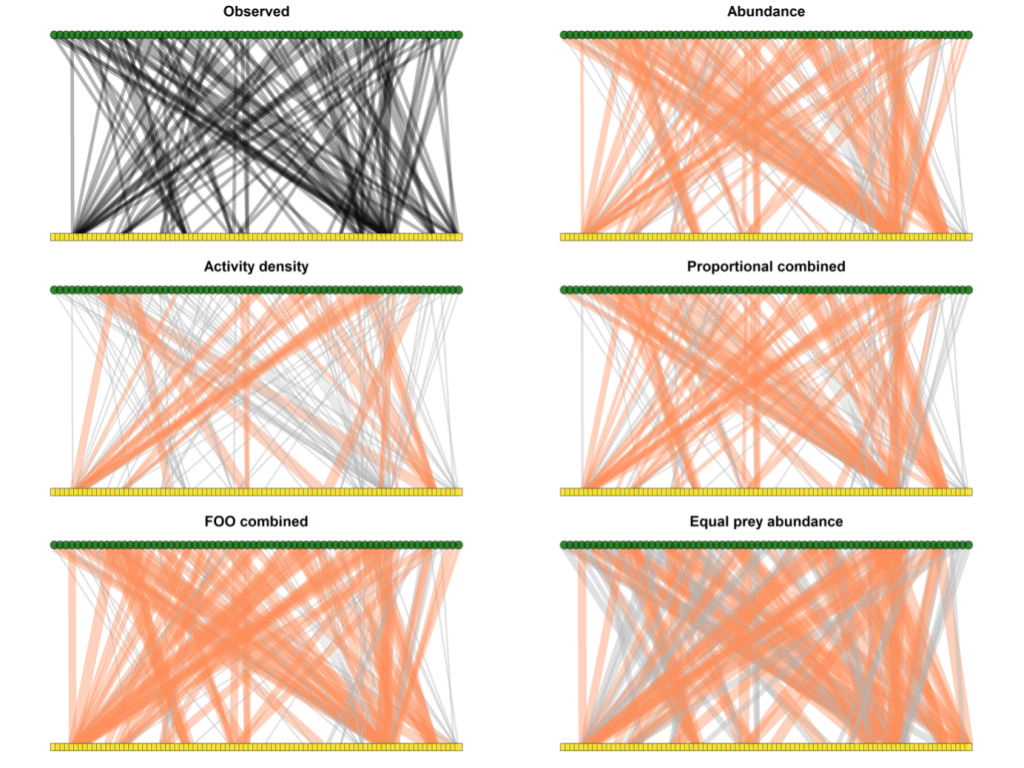
The properties of null networks from the datasets had completely different relationships to the ‘observed’ networks compared to the null diet compositions above. So methods that generated selectivity which reflected observed networks might produce network properties that differed massively from the observed networks.
We repeated all of this with relative read abundances alongside the binary presence-absence dietary metabarcoding data too and, whilst there were some small differences, the overall patterns held, so it doesn’t matter whether the ‘observed’ data are binary or quantitative – we have to choose carefully regardless!
Prey availability data must be carefully considered and must ideally reflect the ecology, physiology and behaviour of the consumers. It is also clear that the focus of the study (e.g., individual selectivity vs. network properties) will also determine which method is optimal.
This was a really great collaboration between Jordan Cuff, Max Tercel, Fred Windsor, Ben Hawthorne, Peter Hamback, James Bell, (the late great) Bill Symondson and Ian Vaughan! This should hopefully be a stepping stone to even more fun investigations of null network modelling!

