
Check out this new preprint, now live on EcoEvoRxiv, from an ongoing collaboration with Forest Research on oak processionary moth biocontrol:
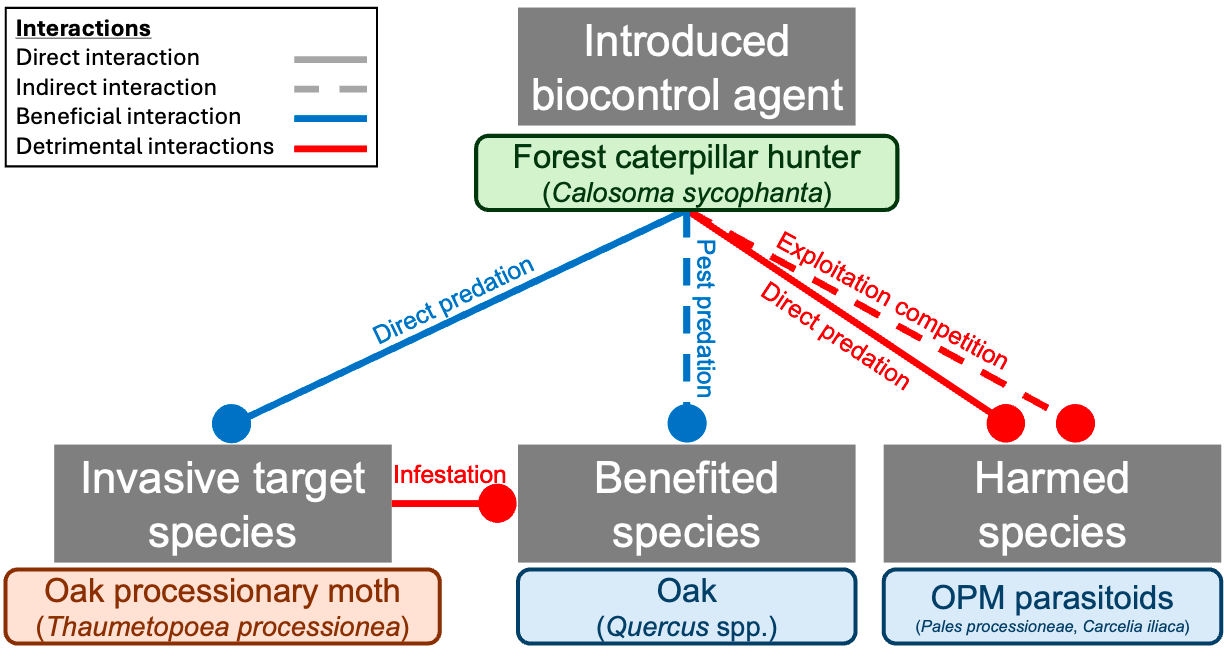
The oak processionary moth (Thaumetopoea processionea; OPM) is an invasive pest in Britain, and lacks natural enemies. The introduction, or reintroduction, of suitable biocontrol agents may therefore be necessary to manage its populations.
The forest caterpillar hunter (Calosoma sycophanta; FCH) is thought to have been historically native to Britain but is now possibly nationally extinct. A voracious predator of caterpillars, FCH could be an effective biocontrol agent of OPM, but we our understanding of its ecology and natural history is scarcely recorded in patchy literature from the past century.
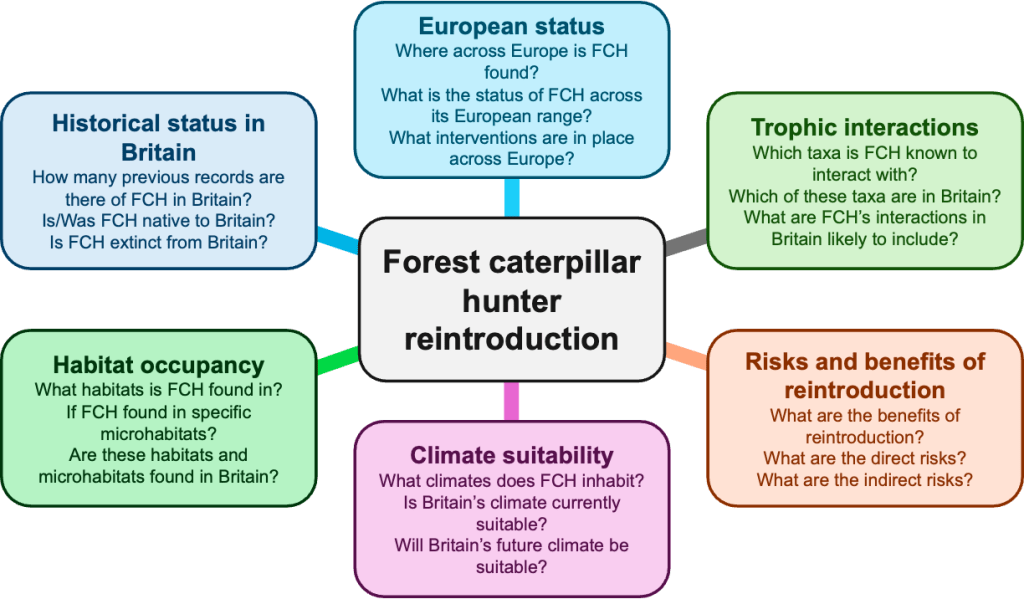
This paper reviews the status of FCH in Britain and Europe, its known trophic interactions and habitat preferences, and the influence of climate on its current and future distributions to inform discussion of the risks and benefits of reintroducing FCH to Britain.
We ultimately suggest that translocation of FCH populations to Britain can be based on the cautious assumption that it is a reintroduction following national extinction, likely due to poor prey availability. The biocontrol of various pest species by FCH, including OPM, is likely, and the suitability of Britain’s climate may increase over time. Reintroduction could help manage OPM whilst also returning an important invertebrate predator to British forests. Further evidence of the wider direct and indirect interactions of extant FCH populations elsewhere, and deeper investigation into FCH’s habitat requirements, are, however, required to safeguard the success and sustainability of prospective reintroduction.
Keep an eye out for the paper appearing in a peer reviewed journal soon, and get ready for future work on this topic where we will be investigating questions posed by this review empirically.
 Foraging Ecology Research Group