
Check out this new paper, led by long-time FERG-friend Max Tercel, now published in Molecular Ecology!
Intraguild interactions drive the dynamics of a complex community of globally invasive ant species
Invasive species adversely affect biodiversity, but little is known about how ecologically similar invaders interact. Such intraguild interactions may drive non-native community dynamics and their broader impacts on biodiversity. In native systems, intraguild interactions are widespread strong eco-evolutionary pressures; understanding whether similar patterns occur among invaders is key to predicting invasion outcomes.
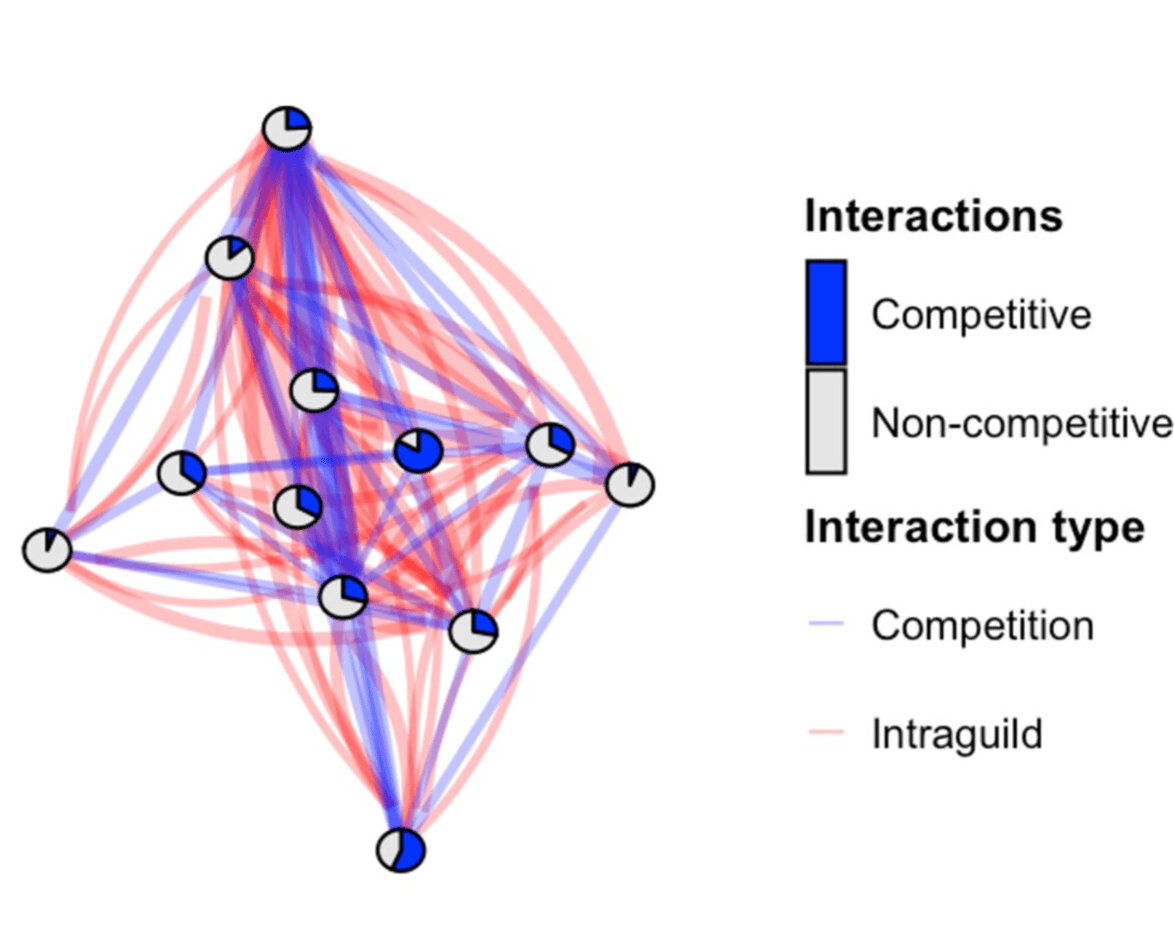
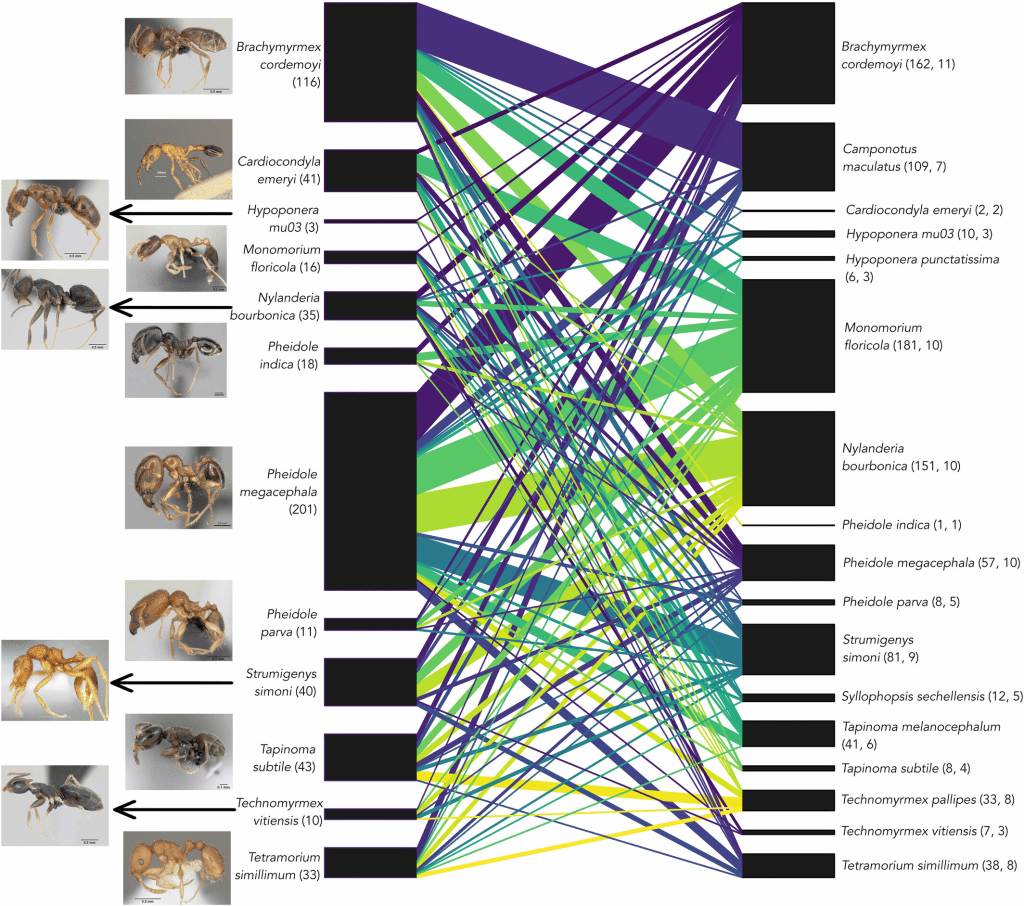
We investigated the role of intraguild predation in a community of non-native ant species inhabiting a tropical island with no native ants. Using dietary metabarcoding, we quantified intraguild predation, applied null models to test dietary and spatial preferences, conducted food bait experiments to assess competition for resources, and quantified potential competition strength using a hypergraph network approach.
Metabarcoding 755 ants across 12 species revealed that ~50% of prey detections represented ant-ant consumption. Ants preferentially consumed other ants over native arthropods but only once the globally invasive big-headed ant, Pheidole megacephala, was removed from the null model analysis due to its hyperabundance. Additionally, 35% of food resources were identified as foci for potential interspecific exploitation where ant species spatially co-occurred.
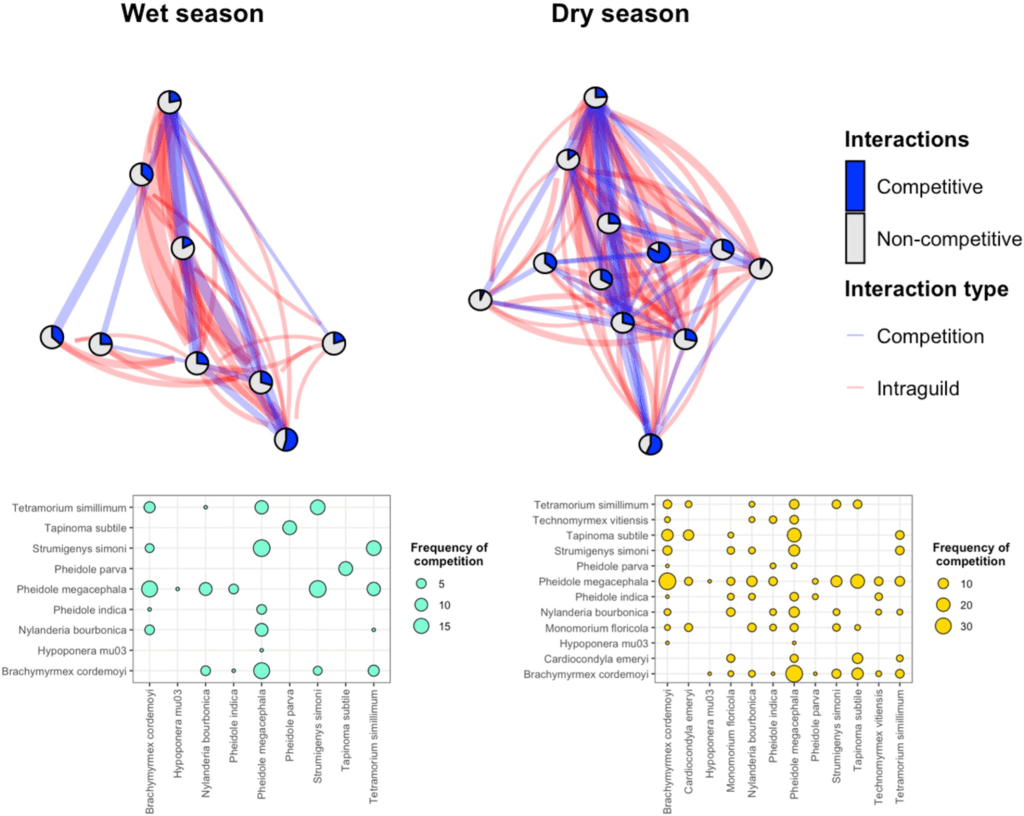
Pheidole megacephala occupied a key structural role in the community: it frequently competed with others for prey, was consumed less often than expected given its abundance, and was spatially avoided by other ants.
Overall, interference competition was dominated by P. megacephala, but exploitation competition was high across the community. These findings suggest that intraguild interactions strongly structure invaded communities, influencing the ecological impact of multiple invaders within the same guild.
This was a publication debut for our hypergraph-based approach to quantifying potential exploitation competition, which we’re currently using across a few different contexts, including other indirect and facilitative interactions, so stay tuned for more on that soon!
Check out the full paper for all of the juicy details!

