Check out this new preprint, now live on EcoEvoRxiv, co-led by Mia and Ben alongside seven other members of FERG (Will, Rosy, Rebecca, Jack, Bethan, Lucy and Jordan):
This paper is a collaborative output from one of our journal club sessions in which we discussed a recent government report!
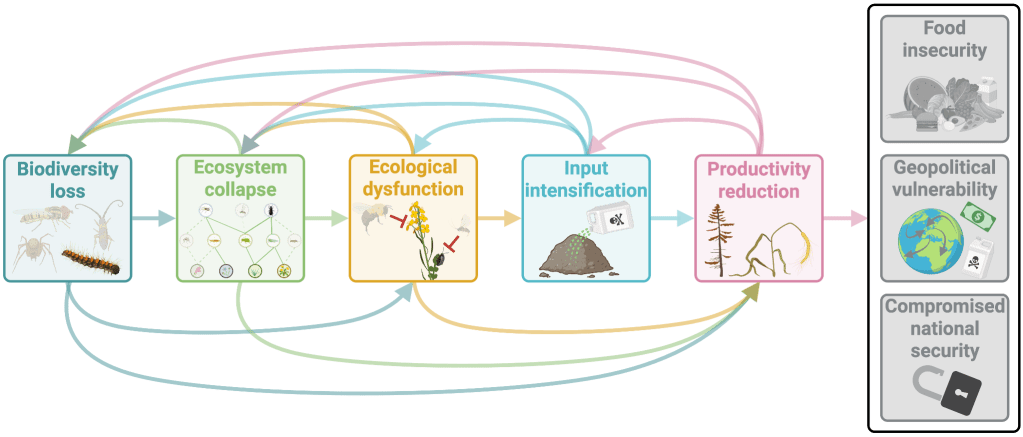
In early 2026, the UK Government published a report assessing how global biodiversity loss and ecosystem collapse represent systematic threats to UK national security through cascading impacts to food security, land use and climate-related feedbacks.
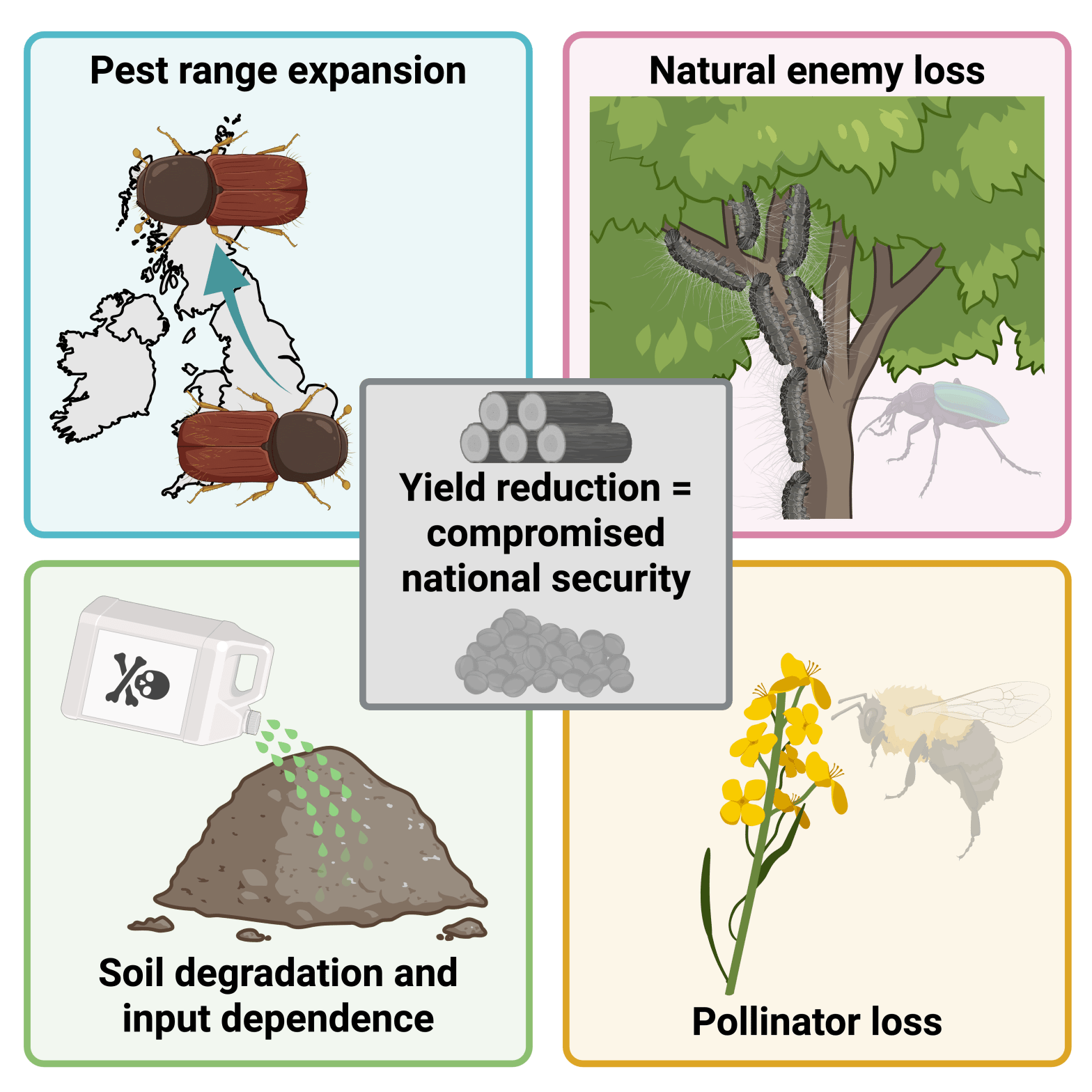
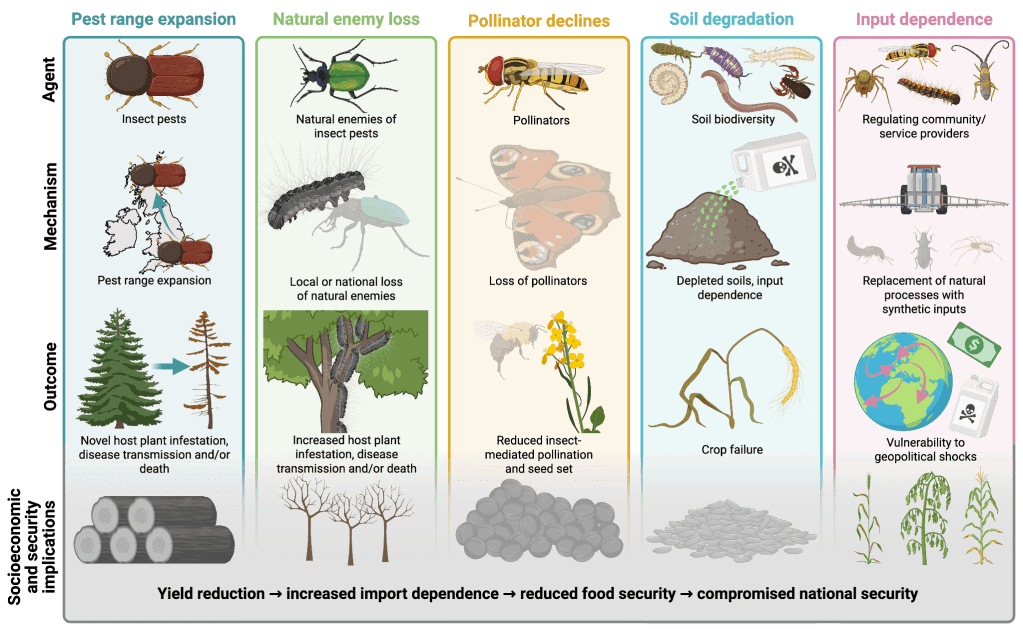
Recontextualising biodiversity and ecosystem health as determinants of national security offers a novel perspective on long observed ecological challenges, many of which are implicitly entomological. Within this entomological context, compromised national security is likely to be driven by pest range expansions, natural enemy losses, pollinator declines, soil degradation and increased input dependence, particularly in production systems like agriculture and forestry.
Here, we explicitly contextualise the report in relation to entomology, aligning the findings with priorities identified already across entomology. In doing so, we hope to bring the report’s findings to the attention of a broader audience, whilst catalysing dialogue on the global efforts required to mitigate impacts to ecosystem, production system and national security.
Altered pest ranges and population dynamics will strain production systems, especially alongside strain on natural enemies from agricultural intensification, climate change and trophic cascades. Similar impacts to soil fauna, alongside synthetic input intensity, will reduce soil health, increasing further dependence on synthetic inputs, the availability of which is vulnerable to global supply chain disruptions. These impacts will interactively destabilise ecosystems, reduce yields and food security, and increase vulnerability to geopolitical shocks.
The recontextualisation of insects as agents for national security demands consideration of “entomological security” in which the capacity of insect-mediated ecosystem processes to sustain food systems, climate regulation, and socio-economic stability is considered a paramount component of national security.
Keep your eyes peeled for the peer-reviewed paper in the coming months!