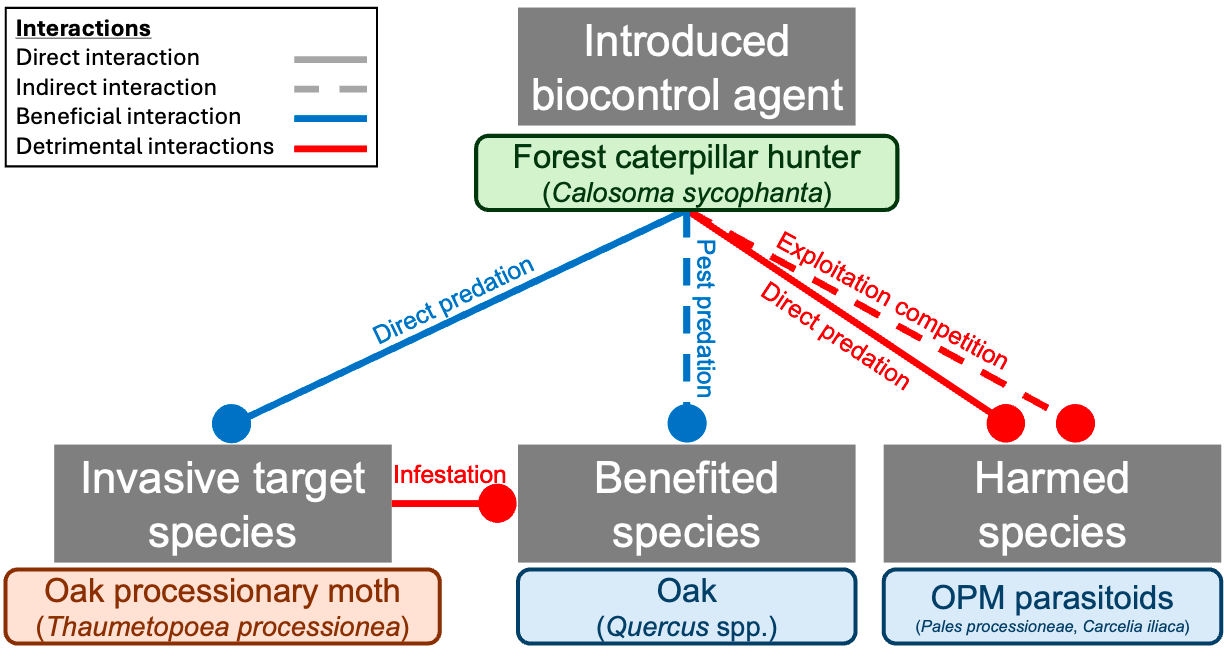
Check out this new preprint, now live on EcoEvoRxiv, from an ongoing collaboration with Forest Research on oak processionary moth biocontrol: Reintroducing a nationally extinct predator, the forest caterpillar hunter (Calosoma sycophanta), for biocontrol of the invasive oak processionary (Thaumetopoea processionea) in Britain: considerations, benefits and risks The oak processionary moth (Thaumetopoea processionea; OPM) isContinueContinue reading “New preprint: Reintroducing a nationally extinct predator, the forest caterpillar hunter (Calosoma sycophanta), for biocontrol of the invasive oak processionary (Thaumetopoea processionea) in Britain: considerations, benefits and risks”
Category Archives: Preprints
NEW PAPER: Ecoacoustics for context-rich direct and indirect trophic interaction data and ecological network construction
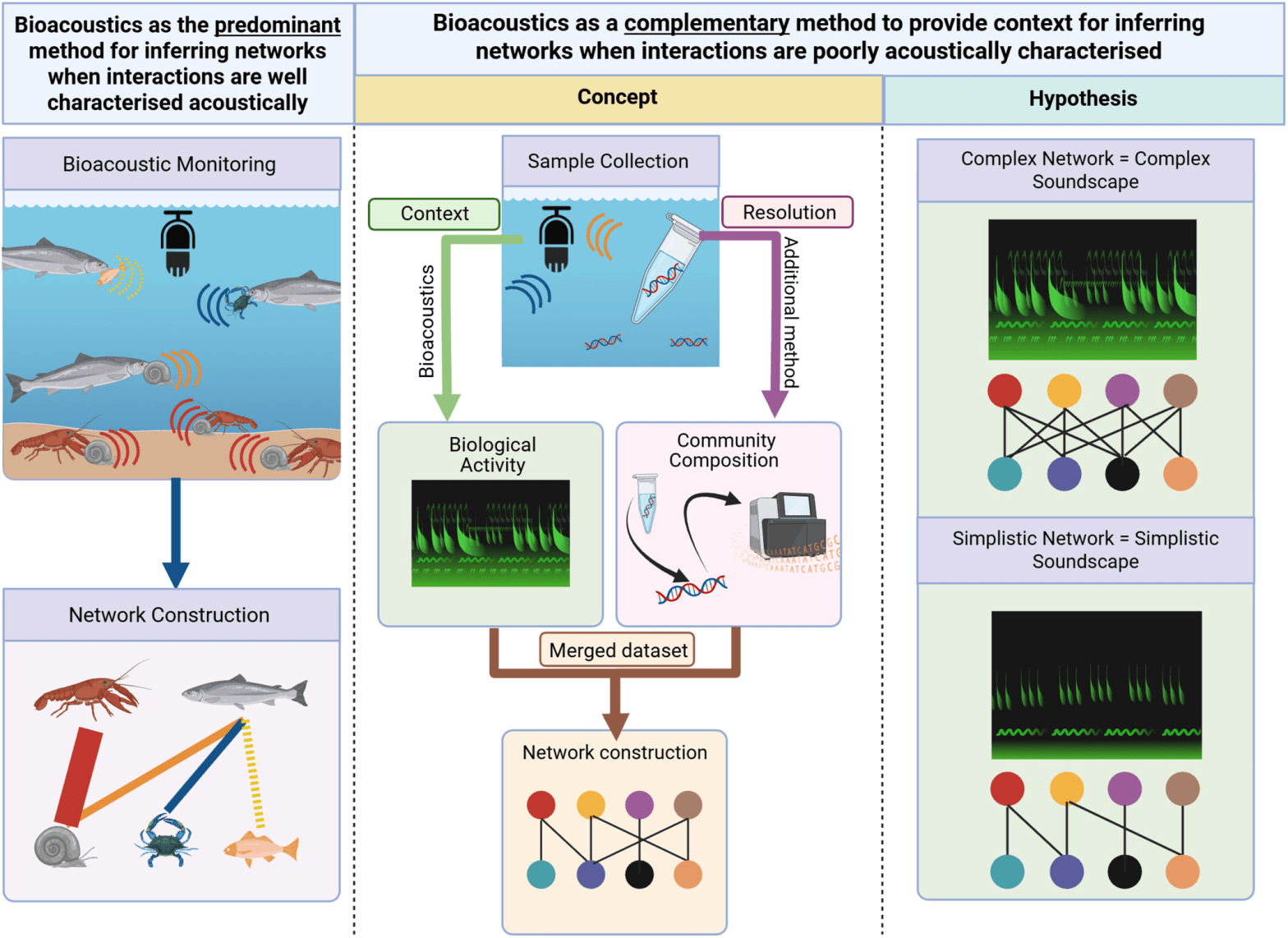
Check out this new paper that Will led alongside his PhD supervisory team across Newcastle University, Fera Science Ltd and Nottingham Trent University! Ecoacoustics for context-rich direct and indirect trophic interaction data and ecological network construction Ecoacoustics can be used to monitor biodiversity across massive spatiotemporal scales, including in ecologically cryptic systems like soil, yetContinueContinue reading “NEW PAPER: Ecoacoustics for context-rich direct and indirect trophic interaction data and ecological network construction”
New preprint: Arthropod predator nutrient content changes with crop sowing period with implications for biocontrol
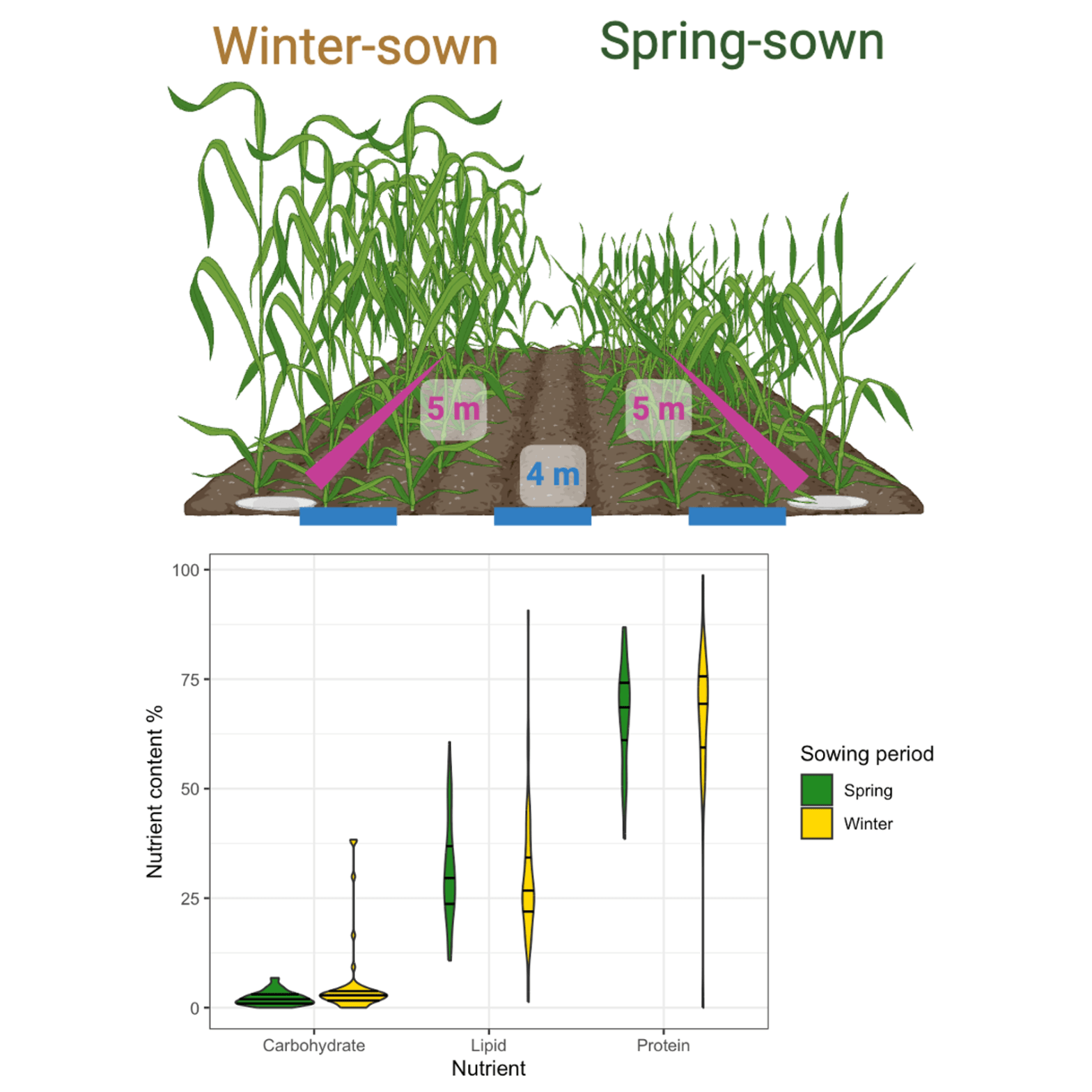
Check out our new preprint on bioRxiv, led collaboratively by Rosy and Rebecca, titled “Arthropod predator nutrient content changes with crop sowing period with implications for biocontrol”! This paper shows that the sowing time of crops can have important nutritional consequences for their arthropod communities, with the macronutrient contents of arthropod predators differing significantly betweenContinueContinue reading “New preprint: Arthropod predator nutrient content changes with crop sowing period with implications for biocontrol”
New preprint: Ecoacoustics for context-rich direct and indirect trophic interaction data and ecological network construction
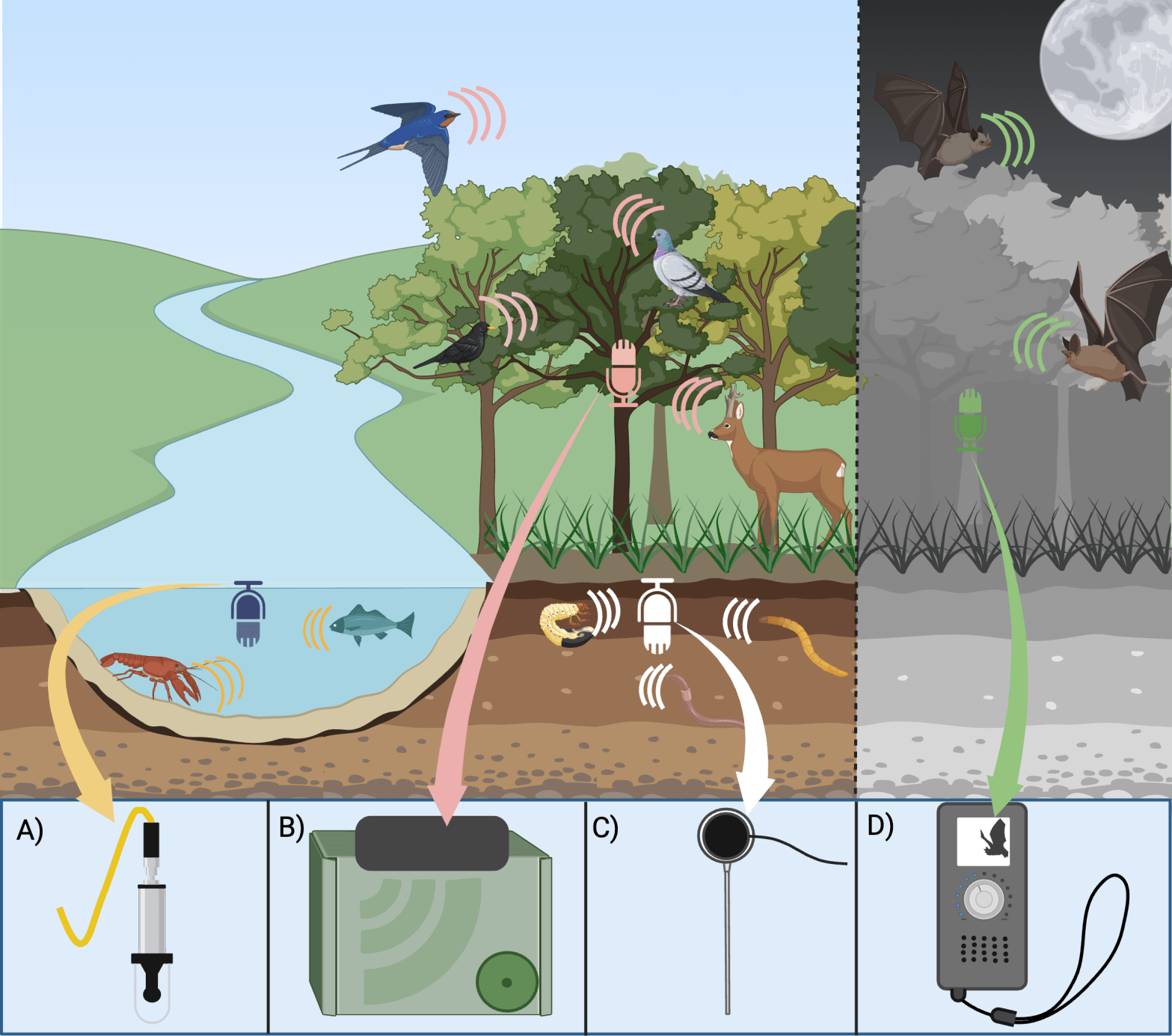
Check out this new preprint that Will led alongside his PhD supervisory team across Newcastle University, Fera Science Ltd and Nottingham Trent University! Ecoacoustics can be used to monitor biodiversity across massive spatiotemporal scales, including in ecologically cryptic systems like soil, yet its application to the detection and characterisation of predator-prey interactions remains poorly developed.ContinueContinue reading “New preprint: Ecoacoustics for context-rich direct and indirect trophic interaction data and ecological network construction”
New preprint: Dietary RNA: diagnostic and functional RNA offer a potential paradigm shift for molecular dietary analyses
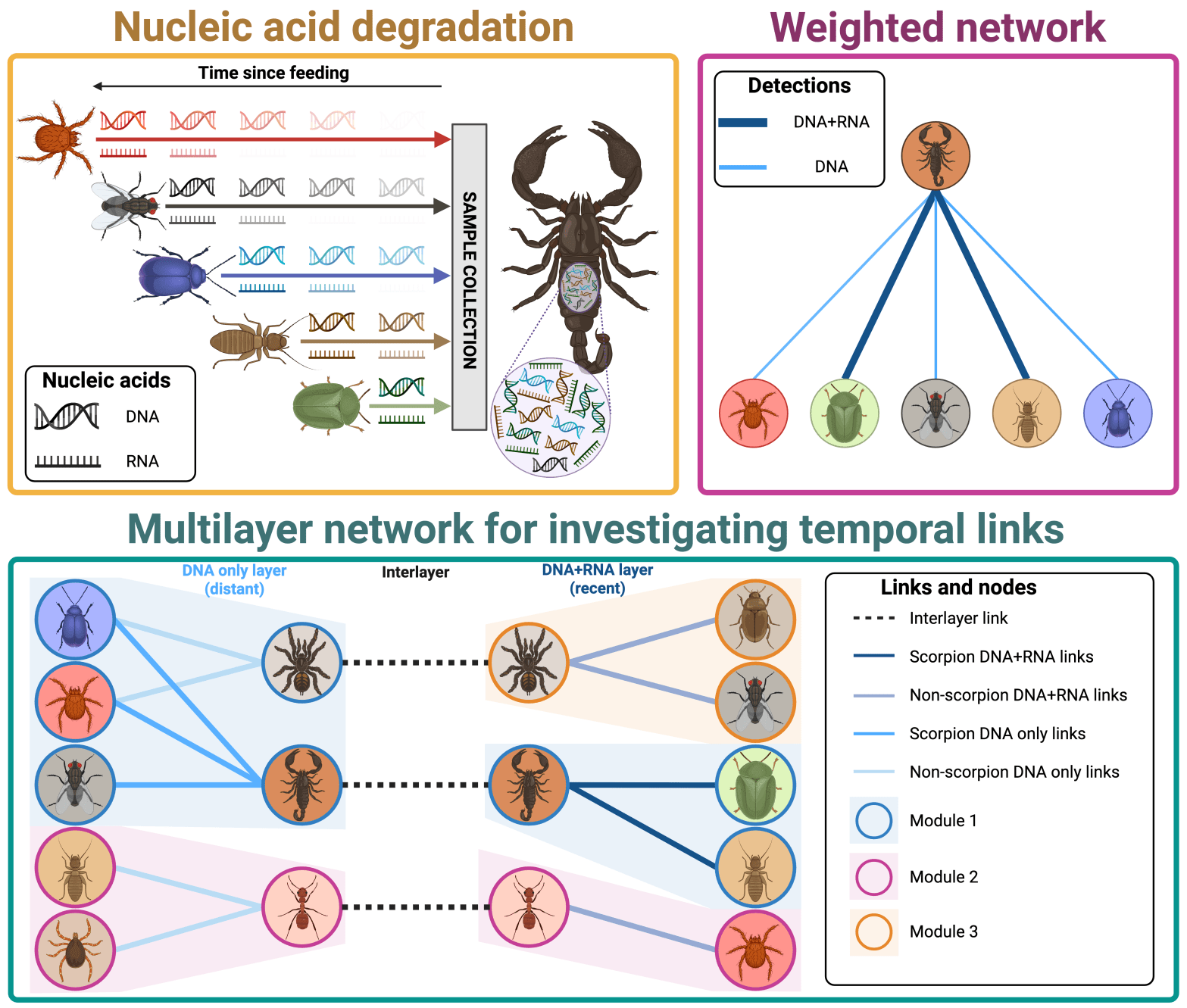
Check out this new preprint that Jordan led with an incredible team of researchers across Newcastle University (including our very own Ben Hawthorne) and the University of Innsbruck! The analysis of DNA from stomachs, faeces and regurgitates has revolutionised trophic ecology over the last two decades, but RNA has scarcely been considered within this context.ContinueContinue reading “New preprint: Dietary RNA: diagnostic and functional RNA offer a potential paradigm shift for molecular dietary analyses”
New preprint: Spatio-temporal variation in diet among age and sex cohorts of a model generalist bird species, the great tit Parus major, revealed by DNA metabarcoding
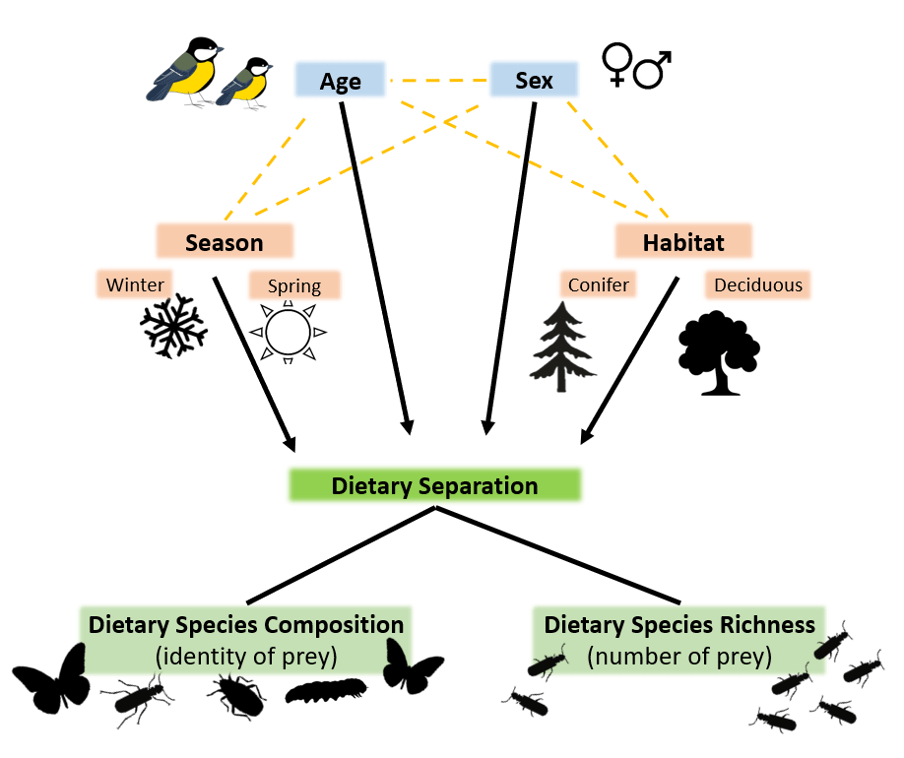
Check out this new preprint that Jordan contributed to, led by Dr Jenny Coomes: Spatio-temporal variation in diet among age and sex cohorts of a model generalist bird species, the great tit Parus major, revealed by DNA metabarcoding This preprint characterises the diet of the great tit, Parus major, using DNA metabarcoding and shows how itsContinueContinue reading “New preprint: Spatio-temporal variation in diet among age and sex cohorts of a model generalist bird species, the great tit Parus major, revealed by DNA metabarcoding”
New preprint: Identifying the Fusarium species involved in foot rot disease of faba beans in the UK using a combined molecular and microbiological approach

Check out this new preprint led by our very own Basem Attar: Identifying the Fusarium species involved in foot rot disease of faba beans in the UK using a combined molecular and microbiological approach! The foot and root rot disease complex is a devastating broad bean productivity globally, including in the UK (the third largestContinueContinue reading “New preprint: Identifying the Fusarium species involved in foot rot disease of faba beans in the UK using a combined molecular and microbiological approach”
New preprint: Biomonitoring of biocontrol across the full annual cycle in temperate climates: post-harvest, winter and early-season interaction data and methodological considerations for its collection

Check out the new preprint led by Jordan: Biomonitoring of biocontrol across the full annual cycle in temperate climates: post-harvest, winter and early-season interaction data and methodological considerations for its collection Conservation biocontrol, the regulation of crop pests by naturally-occurring biocontrol agents (e.g., predators and parasitoids), is predominantly monitored throughout periods of primary crop growth whenContinueContinue reading “New preprint: Biomonitoring of biocontrol across the full annual cycle in temperate climates: post-harvest, winter and early-season interaction data and methodological considerations for its collection”
New preprint: Understanding trophic interactions in a warming world by bridging foraging ecology and biomechanics with network science

Check out this new preprint from a collaboration between Jordan, David Labonte (Imperial College) and Fred Windsor (Cardiff University): Understanding trophic interactions in a warming world by bridging foraging ecology and biomechanics with network science Climate change will disrupt biological processes at every scale. Ecosystem functions and services vital to ecological resilience are set toContinueContinue reading “New preprint: Understanding trophic interactions in a warming world by bridging foraging ecology and biomechanics with network science”
New preprint: Metabarcoding advances agricultural invertebrate biomonitoring by enhancing resolution, increasing throughput, and facilitating network inference

Check out the new preprint led by Ben Hawthorne: Metabarcoding advances agricultural invertebrate biomonitoring by enhancing resolution, increasing throughput, and facilitating network inference Massive congrats to Ben on his first first-authored preprint! Biomonitoring of agriculturally important insects is increasingly important given our need to understand a) the severity of impacts by pests and pathogens on cropContinueContinue reading “New preprint: Metabarcoding advances agricultural invertebrate biomonitoring by enhancing resolution, increasing throughput, and facilitating network inference”
 Foraging Ecology Research Group