Check out this new preprint, now live on EcoEvoRxiv, from a Scottish Government-commissioned collaboration across Forest Research, Fera Science Ltd. and Newcastle University, led by Kyle Miller:
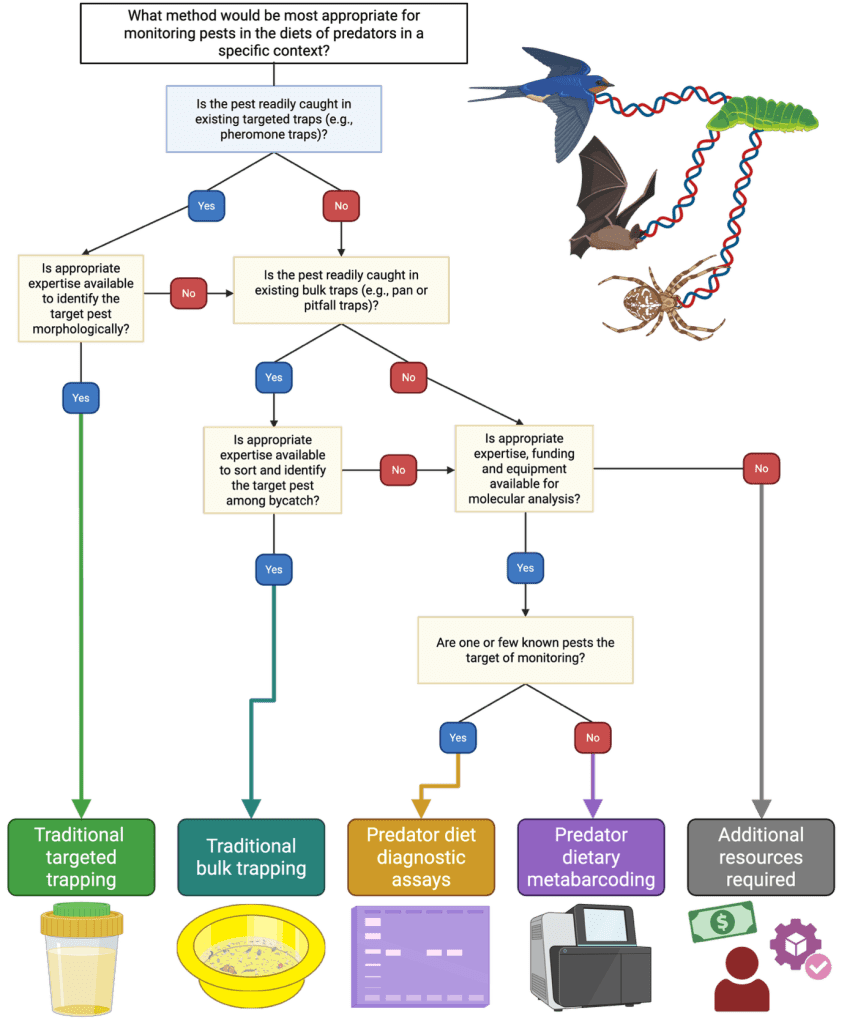
Monitoring plant pests is crucial for maximising yields across agricultural and forest production systems, but also for the mitigation of invasive species spread. Traditional monitoring methods, such as mass trapping and direct observation, scale poorly and introduce latency between collection, detection and response. Since many plant pests are frequently consumed by predators, molecular dietary analyses like dietary DNA metabarcoding could provide effective, scalable and passive monitoring of emerging and established pests.
To understand the efficacy of molecular dietary analysis for pest monitoring, how it can be implemented and the likely obstacles to its success, we conducted a systematic review of the literature to extract information from studies focused on the detection of pests using molecular dietary analysis of predators. Of an initial 667 potential studies, data were extracted from 45.
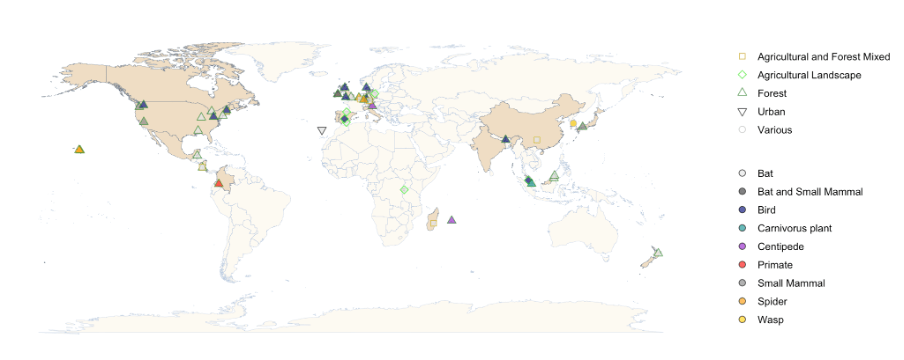
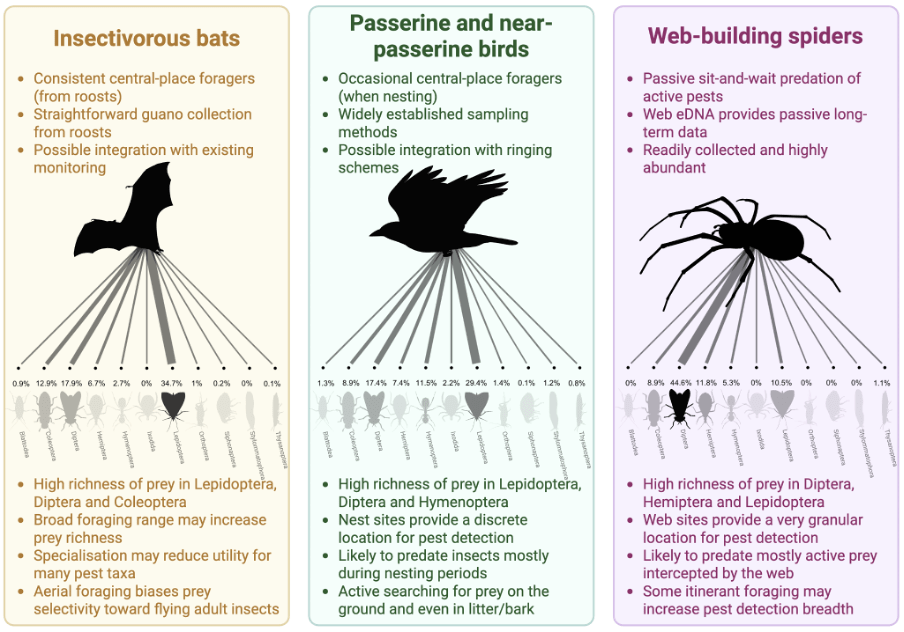
Across eight broad predator groups, these studies demonstrate the efficacy of dietary DNA metabarcoding for detecting a range of potential pest groups, alongside the methodological variation in current applications. Insectivorous bats, passerine and near-passerine birds and web-building spiders were the focal predators of most studies, with critical gaps across broader taxonomic groups. We exemplify the application of dietary metabarcoding to detecting pests in these three predator groups through case studies.
Dietary metabarcoding of predators presents a viable and efficacious monitoring tool for plant pests and could become an integral component of the wider biomonitoring toolbox. For a fully robust monitoring approach using this method, we must, however, streamline implementation, circumvent methodological pitfalls and expedite the generation of usable monitoring datasets.
Keep an eye out for the paper appearing in a peer reviewed journal soon! If you want more, check out the full Scottish Government report, which includes a lot of juicy details that didn’t make the paper.